

Key Takeaways
- Mindfulness is the practice of paying attention to the present moment without judgment — not clearing your mind.
- Beginners benefit most from starting with just two to five minutes of focused breath awareness.
- A wandering mind is normal and expected; returning attention gently is the core skill being practiced.
- Consistency matters more than duration — a short daily session builds more than an occasional long one.
- Everyday activities like walking or eating can become informal mindfulness practices.
Start here
What Mindfulness Actually Is (and Isn't)
Next
What to Expect When You First Start
Then try
Your First Practice: A Simple Starting Point
Build on it
Building a Habit That Actually Sticks
When challenges arise
Common Obstacles and How to Move Through Them
What Mindfulness Actually Is (and Isn't)
Mindfulness is often misunderstood as an exotic technique requiring special training or a perfectly quiet mind. In practice, it is something far simpler: paying deliberate attention to what is happening right now, without judging it. You can do it sitting, standing, walking, or washing dishes.
The concept has roots in contemplative traditions thousands of years old, but the version most Americans encounter today draws heavily from MBSR — a secular, clinically studied program developed by Jon Kabat-Zinn at the University of Massachusetts in the late 1970s. Decades of research since then have examined its effects on stress, attention, and emotional regulation.
What mindfulness is not: a method for emptying the mind, a religious requirement, or a quick fix for anxiety. It is a skill — one that takes repetition and patience — more like learning to ride a bike than swallowing a supplement. If you want to understand the vocabulary you'll encounter along the way, our beginner's glossary of mindfulness terms is a good companion reference.
Present-moment awareness
The practice of directing attention to what is happening right now — sensations, thoughts, sounds — rather than replaying the past or anticipating the future.
Non-judgmental observation
Noticing thoughts and feelings without labeling them as good or bad. You observe them as passing mental events rather than facts or commands.
Breath anchor
The breath used as a focal point during meditation. When attention wanders, returning to the breath gives the mind a neutral, always-available place to land.
Mind-wandering
The natural tendency of the mind to drift from its intended focus to unrelated thoughts, memories, or plans. It is universal and expected, not a sign of failure.
Informal practice
Bringing mindful attention to everyday activities — eating, walking, listening — rather than only during dedicated seated sessions.
MBSR
Mindfulness-Based Stress Reduction — a structured, eight-week program developed for clinical settings that helped establish mindfulness as a mainstream, research-studied practice.
What to Expect When You First Start
New practitioners almost universally share two experiences: their minds wander far more than expected, and sitting still feels surprisingly uncomfortable at first. Both are completely normal.
Research on mind-wandering — including well-cited work from Harvard psychologists Matthew Killingsworth and Daniel Gilbert — suggests the mind is off-task a significant portion of waking life. Mindfulness doesn't eliminate this tendency; it trains you to notice it sooner. That moment of noticing — "Oh, I drifted" — is not failure. It is the practice working exactly as intended.
Physical restlessness is equally common. Sitting quietly with no external stimulation removes the distractions your nervous system is accustomed to. Mild discomfort, drowsiness, or fidgeting are all typical in the first weeks. These tend to ease as the nervous system adapts.
Emotionally, some beginners find that slowing down surfaces feelings they've been too busy to notice. This can feel uncomfortable, but it's also one of mindfulness's most meaningful effects — building the kind of emotional awareness that helps you respond to life rather than react to it.
Your First Practice: A Simple Starting Point
You don't need a cushion, a mantra, or a dedicated room. Here is a straightforward breath-awareness practice you can try right now:
- Choose a time and place. Somewhere reasonably quiet where you won't be interrupted for five minutes. Morning often works well because it precedes the day's demands.
- Set a gentle timer. Start with two to five minutes. Knowing the session has an end point removes the urge to check the clock.
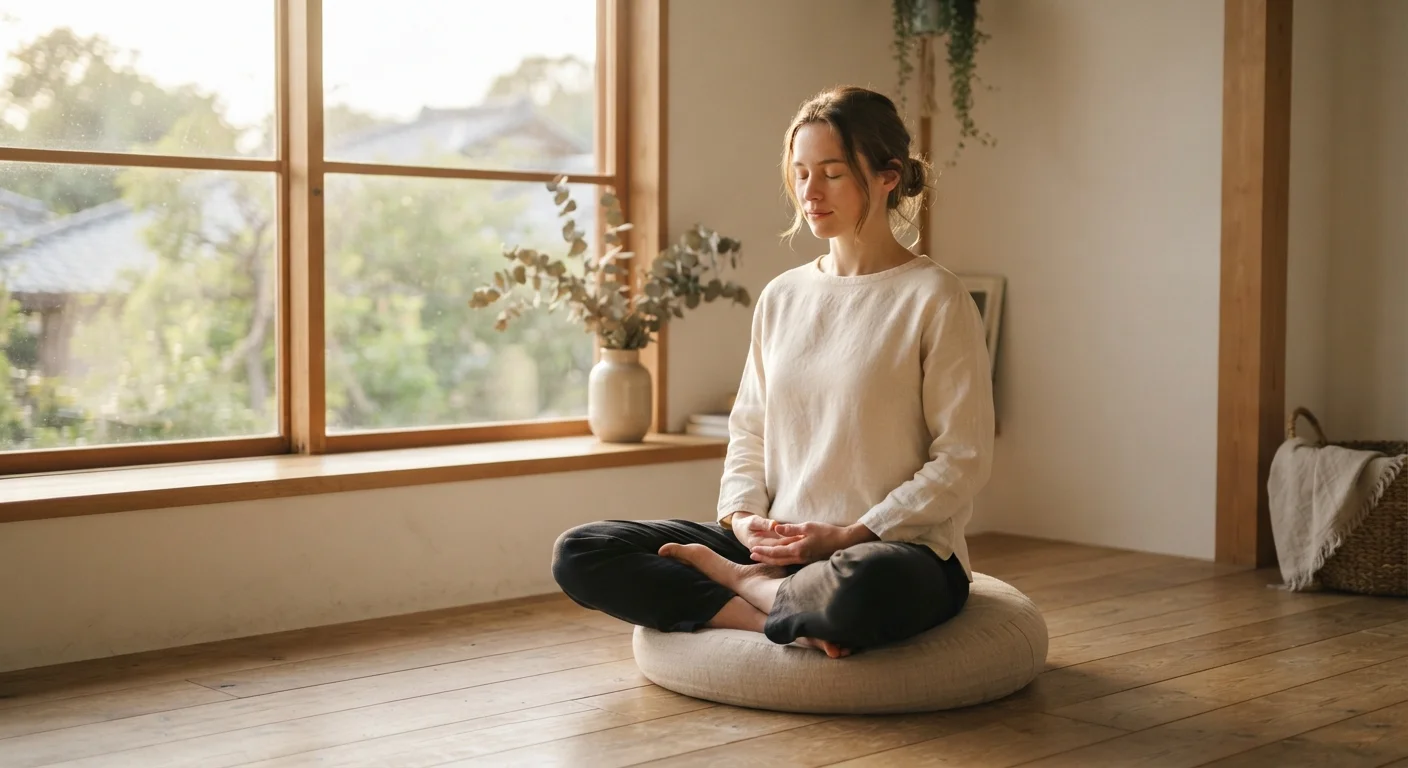
- Find a comfortable position. Sit in a chair with your feet flat on the floor, or on the floor cross-legged — whichever is sustainable. Keep your spine reasonably upright but not rigid.
- Anchor to your breath. Close your eyes or soften your gaze downward. Direct attention to the physical sensation of breathing — the air entering your nostrils, your chest or belly rising and falling.
- Notice and return. When your mind wanders (it will), simply notice that it has wandered and return attention to the breath. No self-criticism. Just a gentle redirect.
That's the whole practice. For a deeper look at breath-focused techniques, see our guide to breathing techniques used in mindfulness.
Start Smaller Than Feels Meaningful
If two minutes feels too short to matter, remember that habit formation is about repetition, not duration. A two-minute session practiced daily for a month builds more neural familiarity than a single 60-minute session. Once the habit feels automatic, extending it is much easier.
Building a Habit That Actually Sticks
Behavioral science is clear on what makes habits durable: consistency, a reliable cue, and modest early expectations. Mindfulness is no exception.
Anchor your practice to an existing routine. Habit-stacking — pairing a new behavior with an established one — is among the most evidence-supported strategies for habit formation. Try sitting for five minutes immediately after your morning coffee, before you open your phone, or right after brushing your teeth at night.
Keep the bar low at first. Commit to two minutes, not twenty. Once you've sat consistently for two weeks, lengthen gradually. Unrealistic expectations are the most common reason new practitioners quit. For a structured month-long progression, our 30-day mindfulness framework offers session-by-session guidance.
Take mindfulness off the cushion. Informal practice — bringing present-moment awareness to ordinary tasks like eating, walking, or washing up — reinforces the skill throughout the day. Our article ways to weave mindfulness into an ordinary day offers practical ideas for doing exactly that.
Mindfulness-Based Stress Reduction (MBSR) Program Overview
The UMass Memorial Health Center for Mindfulness offers public information about the original MBSR program, including its structure and the evidence base behind it. Useful for understanding the clinical roots of modern mindfulness practice.
American Psychological Association: Mindfulness Research Summary
The APA maintains accessible summaries of peer-reviewed research on mindfulness and its applications for stress, attention, and emotional regulation — a trustworthy starting point for evidence-based context.
Common Obstacles and How to Move Through Them
Even practitioners with the best intentions hit walls. Here are the most frequent sticking points — and honest, research-grounded perspectives on each.
- "I don't have time."
- A two-minute practice counts. Research on micro-practices suggests that brief, repeated moments of intentional attention can accumulate meaningfully. If stress is a driving concern, our stress management foundation guide contextualizes where mindfulness fits within a broader toolkit.
- "I keep falling asleep."
- This often signals sleep debt rather than a technique problem. Try practicing at a different time of day, keeping your eyes slightly open, or sitting upright rather than reclining.
- "Nothing is happening."
- Mindfulness benefits tend to be gradual and subtle, not dramatic. Most practitioners report noticing changes in reactivity and attention before they notice changes in mood. Trust the process over a sustained period rather than evaluating session by session.
- "I get frustrated or anxious when I sit."
- Some individuals find that unstructured attention can temporarily heighten distress, particularly those with trauma histories. If sitting practice consistently feels destabilizing, speak with a mental health professional before continuing. Mindfulness is a tool — and like any tool, it isn't the right fit for every situation or moment.
This article is for general informational and educational purposes only and is not medical or mental health advice. If you are experiencing significant stress, anxiety, depression, or other mental health concerns, please consult a qualified healthcare professional.