

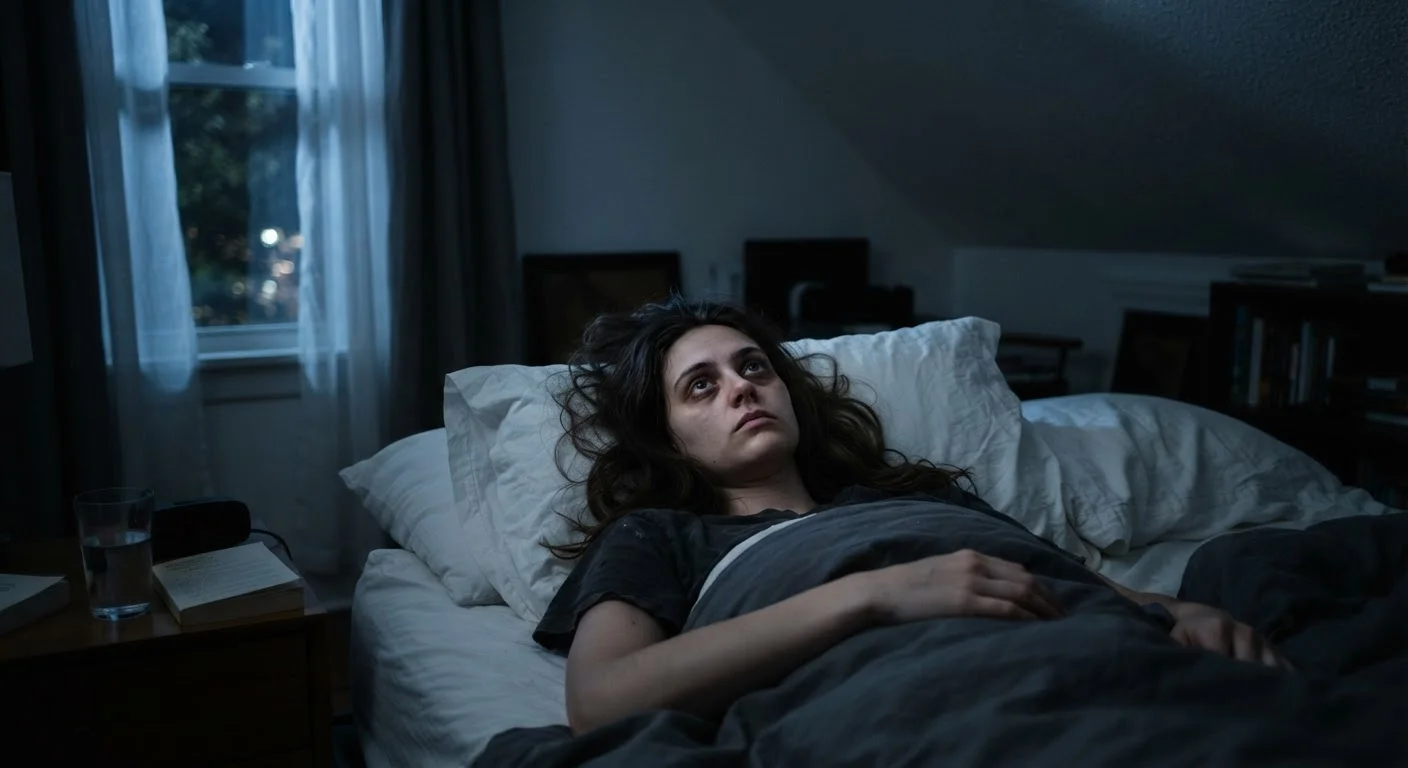
Key Takeaways
- Chronic sleep shortfall impairs the brain's ability to regulate emotions, making everyday stressors feel overwhelming.
- The amygdala — the brain's threat-detection center — becomes significantly more reactive when sleep is insufficient.
- Poor sleep and emotional distress form a self-reinforcing cycle that can be difficult to break without intentional effort.
- Consistent sleep habits are one of the most evidence-supported tools for maintaining emotional balance.
- Underlying sleep disorders can worsen emotional symptoms and may warrant professional evaluation.
Chronic Sleep Shortfall
Chronic sleep shortfall refers to regularly getting less sleep than your body needs over an extended period — not just one bad night, but a sustained pattern. Most adults need between seven and nine hours per night, and consistently falling short has cumulative effects on mood, thinking, and emotional regulation. Unlike acute sleep loss, chronic shortfall builds a "sleep debt" that the body and brain cannot easily recover from with a single good night's rest.
Research distinguishes chronic sleep restriction (habitually truncated sleep) from total sleep deprivation; even mild nightly deficits of one to two hours can impair prefrontal cortex functioning and amplify amygdala reactivity over time.
Why the Sleeping Brain Is Doing Emotional Heavy Lifting
Sleep is far from passive. While you rest, your brain is actively processing the emotional experiences of the day — consolidating memories, clearing metabolic waste, and recalibrating your nervous system for whatever comes next. One of the most important tasks happening during sleep, particularly during REM (rapid eye movement) sleep, is emotional memory processing.
During REM sleep, the brain revisits emotionally charged experiences but does so in a neurochemical environment low in norepinephrine — a stress-related chemical. This allows the brain to integrate difficult experiences without the full emotional sting attached. Sleep researcher Matthew Walker has described this as the brain offering "overnight therapy." When REM sleep is consistently cut short, that emotional processing is incomplete, and yesterday's stresses arrive in the morning still fully charged.
This is one reason sleep and stress recovery are so closely linked. A brain that hasn't finished its nightly reset is far less equipped to handle the next day's demands with steadiness and perspective.
What Happens to the Emotional Brain Under Chronic Sleep Loss
When sleep is regularly curtailed, two key structures in the brain shift in ways that directly undermine emotional stability: the amygdala and the prefrontal cortex.
The amygdala is the brain's alarm system — it flags threats and triggers emotional responses. Under sleep deprivation, amygdala reactivity increases significantly. Neuroimaging studies have shown that sleep-deprived brains show up to 60% greater amygdala activation in response to negative stimuli compared to well-rested brains. In plain terms, this means that small frustrations — a slow driver, a sharp email, a misread comment — can feel genuinely threatening rather than merely annoying.
At the same time, the prefrontal cortex, which provides rational oversight and emotional braking power, becomes less effective. This top-down regulation is what normally allows you to pause, reframe, and respond thoughtfully rather than react. Chronic shortfall weakens that circuit, leaving the amygdala with less oversight. The result is a combination that researchers describe as emotional hyperreactivity — a hair-trigger response system with a sluggish braking mechanism.
~60%
Increase in amygdala reactivity with sleep deprivation
Neuroimaging research published in peer-reviewed sleep and neuroscience journals has found amygdala responses to negative stimuli are substantially amplified in sleep-deprived subjects compared to well-rested controls.
1 in 3
U.S. adults not getting enough sleep
The CDC has reported that approximately one-third of American adults regularly sleep fewer than the recommended seven hours per night.
7–9 hrs
Recommended nightly sleep for most adults
The American Academy of Sleep Medicine and the Sleep Research Society recommend seven to nine hours of sleep per night for adults to support cognitive and emotional functioning.
This also affects how you interpret social cues. Sleep-deprived people are more likely to read neutral facial expressions as hostile and to perceive ambiguous situations as threatening — a pattern that strains relationships and generates unnecessary interpersonal friction.
It's worth noting that mood naturally fluctuates throughout the day for biological reasons, but chronic sleep shortfall amplifies that variability in ways that can feel destabilizing.
The Feedback Loop: When Emotions Disrupt Sleep Right Back
One of the more frustrating realities of this topic is that the relationship runs in both directions. Poor sleep degrades emotional resilience, but emotional distress — anxiety, rumination, low mood — makes quality sleep harder to achieve. You lie awake worrying, which worsens your sleep, which worsens your mood, which worsens your sleep.
“Sleep is the single most effective thing we can do to reset our brain and body health each day — and it is the foundation upon which good mental and physical health is built.”
— Matthew Walker, Professor of Neuroscience and Psychology, University of California, Berkeley, and author on sleep science
This cycle is part of why sleep disorders and mental health conditions so often co-occur. Depression and anxiety can both fragment sleep architecture, reducing restorative slow-wave and REM sleep even when total hours appear adequate. Meanwhile, the resulting fatigue deepens emotional symptoms.
There's also a cortisol dimension to this loop. Chronic sleep loss elevates cortisol — the body's primary stress hormone — and chronically elevated cortisol itself disrupts sleep quality. For a deeper look at that mechanism, see how stress and cortisol undermine restful sleep.
Recognizing the cycle is genuinely empowering — because breaking it at any point, whether by improving sleep habits or addressing emotional distress through professional support, can create positive momentum in both directions.
Building Toward Steadier Emotions Through Consistent Sleep
The good news is that the brain's emotional regulation systems are responsive to improved sleep, often relatively quickly. Many people notice meaningful shifts in mood and irritability within a few nights of more consistent, adequate sleep — though rebuilding from a significant sleep debt takes longer.
Practical starting points grounded in sleep hygiene research include anchoring your wake time first (before worrying about bedtime), which helps stabilize your circadian rhythm. From there, gradually shifting your bedtime earlier in 15-minute increments is gentler than attempting a dramatic schedule change overnight.
Winding down intentionally — dimming lights, stepping away from screens, and doing something low-stimulation for 30 to 60 minutes before bed — signals to your nervous system that it's safe to downshift. For people whose racing thoughts are the primary barrier to sleep, brief mindfulness or relaxation practices before bed have shown meaningful benefit in research settings.
If you suspect an underlying sleep disorder — such as insomnia that's lasted more than a few weeks, loud snoring and daytime fatigue, or restless sensations in your legs — it's worth discussing with a healthcare provider. These are treatable conditions, and addressing them directly often has a pronounced effect on mood and daily functioning.
Sleep is not a luxury or a reward for when all other obligations are met. For emotional balance, it is foundational — as essential as nutrition and movement, and deeply intertwined with how you experience your own life each day.
This article is for general informational purposes only and is not a substitute for professional medical or mental health advice. If you are experiencing persistent emotional difficulties, sleep problems, or other health concerns, please consult a qualified healthcare professional.