

Key Takeaways
- Your food environment influences eating decisions more reliably than willpower or motivation.
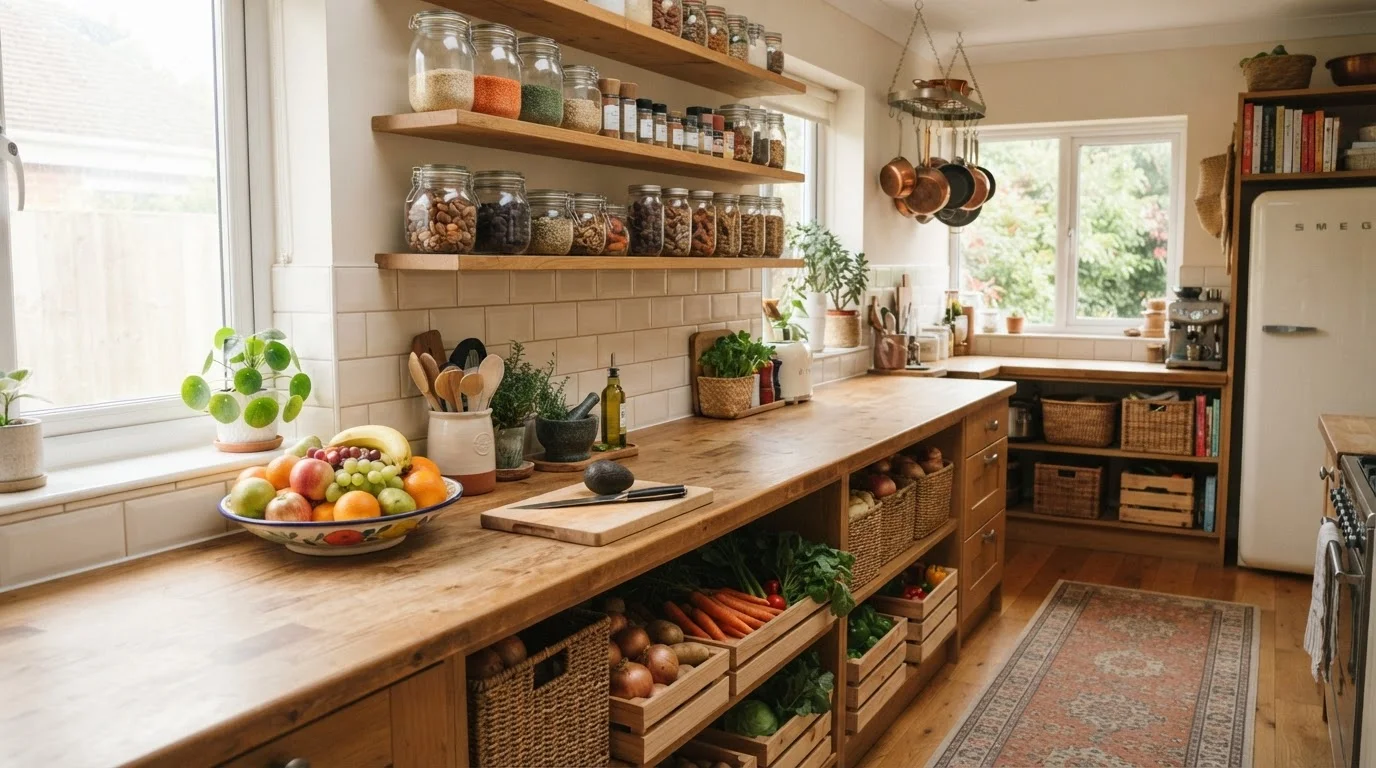
- Visible, accessible healthy foods get eaten more often — placement is a practical tool.
- Reducing friction for nutritious options and increasing it for less nutritious ones shifts behavior gradually.
- A stocked kitchen doesn't require perfection — consistent small changes compound over time.
- These strategies complement, not replace, guidance from a qualified healthcare or nutrition professional.
Why Your Kitchen Environment Matters More Than Willpower
Most people assume that eating well is primarily a matter of discipline. Research in behavioral nutrition suggests otherwise. The foods you see first, the tools within reach, and the layout of your kitchen all quietly steer your choices — often before you've consciously decided anything.
This concept is sometimes called the "food environment," and it's one of the more consistently supported ideas in nutrition behavior research. When healthy options are visible and convenient, people choose them more often. When they require effort to access, they get passed over — not because of weak character, but because that's how decision-making works under everyday conditions.
The good news: you can design your kitchen to work with this reality rather than against it. These practices won't override every craving or eliminate all trade-offs, but they lower the barrier to better choices on ordinary days. For a broader look at eating patterns that hold up in research, see eating habits the research broadly agrees on.
Core Practices for a Health-Supportive Kitchen
The following strategies are grounded in behavioral science and practical nutrition guidance. They work by restructuring defaults — making the healthier choice the easier one, not the harder one.
Keep whole fruits and pre-cut vegetables at eye level and within easy reach.
Visibility is one of the strongest predictors of what gets eaten. Foods placed at eye level in the refrigerator or on the counter are consumed more frequently simply because they're noticed first. Pre-cutting vegetables reduces the effort required, making them a realistic grab-and-go option.
Move less nutritious snacks to less convenient locations.
Inconvenience is a surprisingly effective deterrent. When foods require more steps to access — on a high shelf, in an opaque container, or in a less-trafficked cabinet — they're chosen less impulsively. This isn't about restriction; it's about reducing automatic, low-awareness snacking.
Stock a reliable set of versatile staples rather than aiming for a "perfect" pantry.
Trying to maintain an idealized pantry often leads to decision fatigue and abandonment. A focused core of flexible staples — canned legumes, whole grains, frozen vegetables, eggs, olive oil, and basic spices — supports more meals with less planning overhead. This approach also makes weeknight cooking more sustainable without relying on ultra-processed shortcuts.
Make water the most accessible drink in your kitchen.
Beverage choices are often habitual rather than deliberate. When water is the first and easiest option — a filled pitcher on the counter, a glass already beside the sink — consumption tends to increase without effort. This simple placement shift can reduce reliance on sugary drinks over time.
Prepare components in batches rather than full meals.
Batch-cooking full recipes can feel burdensome and limits variety. Prepping individual components — cooked grains, roasted vegetables, hard-boiled eggs, washed greens — gives maximum flexibility with less daily effort. This supports the kind of balanced plate building that's easier to sustain long-term.
Quick Wins You Can Implement Today
You don't need to reorganize your entire kitchen at once. A few targeted changes can shift your food environment meaningfully within the hour.
For related ideas on building sustainable momentum, sustaining healthy habits over time covers the behavioral patterns that help changes stick through real-life disruptions.
This article is for general informational and educational purposes only and does not constitute medical or dietary advice. Consult a qualified healthcare professional or registered dietitian for guidance tailored to your individual health needs.