

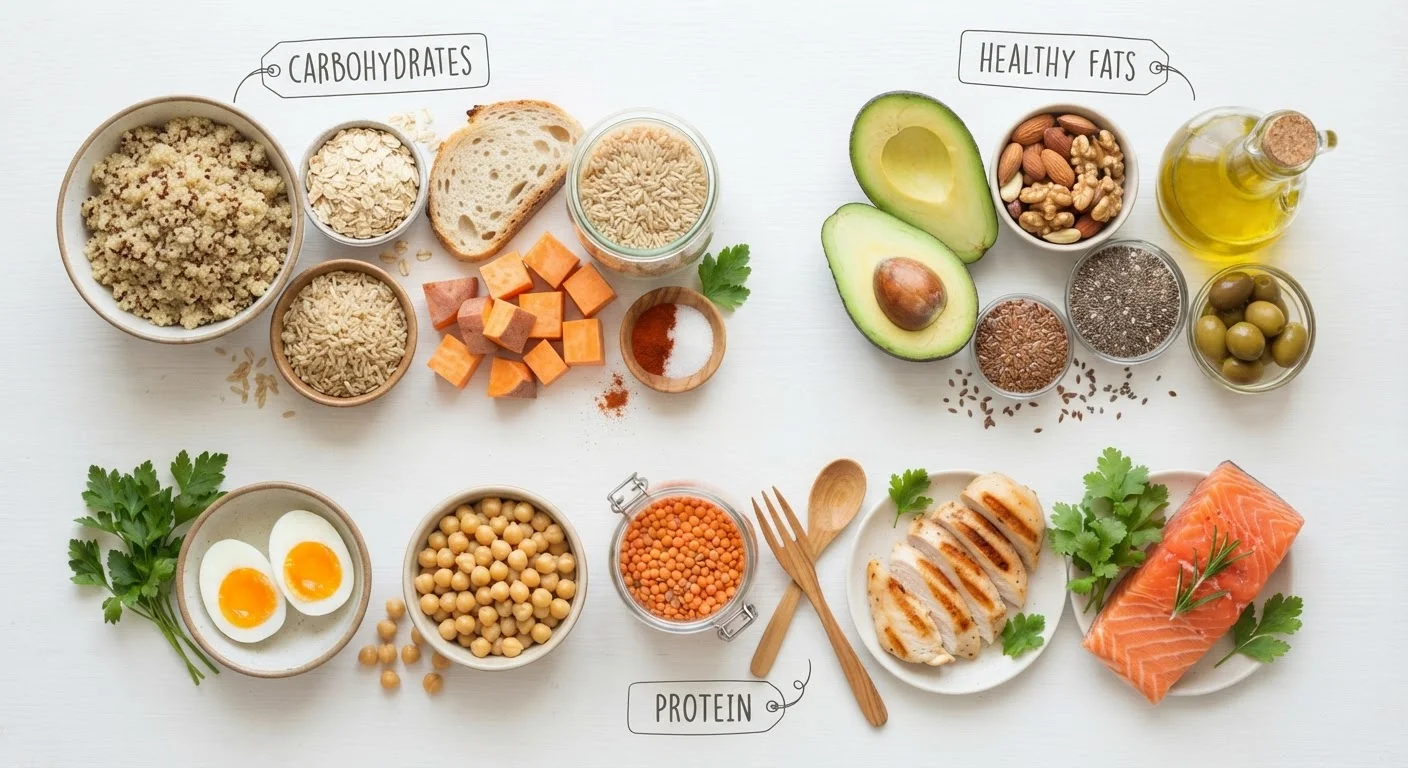
Key Takeaways
- Carbohydrates don't directly cause weight gain — total calorie balance and food quality matter more.
- Dietary fat is essential for hormone production, brain function, and absorbing fat-soluble vitamins.
- More protein isn't always better — the body has a limited capacity to use protein at one time.
- No single macronutrient is inherently 'bad'; context, quantity, and food source all matter.
- Eliminating any macronutrient group entirely can create nutritional gaps over time.
Why Macronutrient Myths Are So Sticky
Macronutrients — carbohydrates, fats, and protein — are the three categories of nutrients the body uses for energy and structural function. They're also among the most misunderstood topics in everyday nutrition, largely because popular diet culture tends to villainize one group at a time while elevating another.
These myths persist partly because they contain a grain of truth, and partly because they get repeated often enough to feel authoritative. Understanding what the evidence actually shows can help you make more grounded food choices — without swinging between extremes. If you're interested in how some nutrition claims get dressed up as science, our piece on common nutrition claims that sound scientific but aren't offers useful context.
Myth
Carbs cause weight gain and should be avoided or severely restricted.
Fact
Weight change is driven by overall energy balance, not carbohydrate intake alone. Carbohydrates are the body's preferred fuel source.
This myth gained traction through the popularity of low-carb diets, which can produce early weight loss — much of it from water stored alongside glycogen, not fat. Carbohydrates provide glucose, the primary energy source for the brain and muscles. The USDA Dietary Guidelines recommend that carbohydrates make up 45–65% of total daily calories for most adults. The source and quantity of carbs matters: whole grains, legumes, and vegetables behave very differently in the body than refined sugars and white flour products. Cutting carbs wholesale often means cutting fiber, B vitamins, and other nutrients that whole-food carbohydrate sources provide.
Myth
Fat is bad for you and eating it makes you gain fat.
Fact
Dietary fat is essential for hormone synthesis, brain health, and absorbing fat-soluble vitamins (A, D, E, and K). Not all fats are alike.
The low-fat diet era of the 1980s and 90s left a lasting impression on how Americans think about fat, but the science has become considerably more nuanced since then. Unsaturated fats — found in foods like olive oil, nuts, seeds, and fatty fish — are associated with cardiovascular and metabolic benefits in a substantial body of research. Saturated and trans fats, by contrast, are the types health guidelines advise limiting. Removing fat indiscriminately from the diet often leads to replacing it with refined carbohydrates, which doesn't necessarily improve health outcomes. For a plain-English breakdown of fat types, see our guide on dietary fat types and what they mean for everyday eating.
Myth
Eating more protein is always better, especially for building muscle.
Fact
Protein needs are real and often undermet, but the body can only utilize a limited amount per meal for muscle protein synthesis — excess is simply metabolized for energy.
Protein has earned its good reputation: it supports muscle repair, immune function, enzyme production, and satiety. However, the idea that more is always better doesn't hold up. Research suggests that spreading protein intake across meals — rather than loading most of it into one sitting — may be more effective for muscle protein synthesis. The NIH and most major nutrition bodies set general protein recommendations at around 0.8 grams per kilogram of body weight for sedentary adults, with higher targets for active individuals, older adults, and during recovery from illness. Consuming protein far above individual needs doesn't appear to provide added muscle benefit and shifts the body's energy processing accordingly. Individuals with certain kidney conditions should consult a healthcare provider before significantly increasing protein intake.
Myth
You need to cut carbs at night to avoid storing them as fat.
Fact
Meal timing has a modest effect on metabolism compared to total daily intake. The body doesn't switch to fat-storing mode simply because it's evening.
This belief likely comes from observations that late-night eating is often associated with higher overall calorie consumption and less nutritious food choices — not because the clock changes how nutrients are processed. While circadian biology does influence metabolism to some degree, the evidence does not support the idea that carbohydrates eaten after a certain hour are automatically stored as fat. What matters most is the overall quality and quantity of food consumed throughout the day. Consistency in meal patterns can support blood sugar stability and appetite regulation, but rigid carb curfews aren't supported by mainstream nutritional science.
Myth
Protein is the only macronutrient that keeps you full.
Fact
Protein does tend to promote satiety strongly, but dietary fat and fiber-rich carbohydrates also play meaningful roles in hunger regulation.
Protein activates satiety hormones and slows gastric emptying, making it a particularly satisfying macronutrient — that part is accurate. But framing it as the only filling macronutrient misses the picture. Dietary fat also slows digestion and signals fullness, while fiber — found in carbohydrate-containing foods like vegetables, legumes, and whole grains — adds bulk and feeds gut bacteria in ways that support appetite regulation. Meals that combine protein, healthy fat, and fiber-rich carbohydrates tend to provide sustained energy and fullness more effectively than meals centered on any single macronutrient alone.
Putting It All Together
The pattern across these myths is consistent: single-nutrient thinking oversimplifies how the body actually works. Your body runs on a coordinated system, and each macronutrient plays a role that the others can't fully substitute for.
45–65%
Recommended carbohydrate share of daily calories
According to the USDA Dietary Guidelines for Americans, this range applies to most healthy adults.
0.8 g/kg
General protein recommendation for sedentary adults
The NIH and major nutrition bodies set this as a baseline; active individuals and older adults typically need more.
20–35%
Recommended fat share of daily calories
The USDA Dietary Guidelines suggest this range, with emphasis on unsaturated fat sources.
Rather than eliminating a macronutrient, most people benefit from examining the quality of what they eat within each category — whole grains over refined, unsaturated fats over heavily processed ones, and protein spread across meals rather than concentrated in one sitting. For a closer look at how different dietary distributions play out in research, see our overview of macronutrient ratios and what research shows.
If you notice persistent fatigue, poor recovery, or constant hunger, those patterns may be worth examining through a macronutrient lens — our article on signs your diet may be unbalanced across macronutrients explores what those signals might mean. As always, a registered dietitian can offer personalized guidance that general information cannot.
This article is for informational purposes only and is not a substitute for professional medical or dietary advice. Consult a qualified healthcare provider before making significant changes to your diet.