

Key Takeaways
- Iron deficiency is the most common nutritional deficiency in the United States and globally.
- Women of reproductive age, infants, and pregnant individuals face the highest risk.
- Two forms of dietary iron — heme and non-heme — are absorbed by the body at very different rates.
- Blood tests measuring ferritin, hemoglobin, and transferrin saturation reveal where someone falls on the deficiency spectrum.
- Pairing non-heme iron sources with vitamin C significantly improves absorption.
- A healthcare provider should interpret lab results and guide any treatment decisions.
Iron Deficiency
Iron deficiency is the condition in which the body does not have enough iron to meet its needs. Iron is a mineral essential for producing hemoglobin, the protein in red blood cells that carries oxygen throughout the body. When iron stores are depleted, cells and tissues receive less oxygen, leading to fatigue and other symptoms. It is the most common nutritional deficiency worldwide, including in the United States.
Iron deficiency exists on a spectrum: depleted iron stores, iron-deficient erythropoiesis (reduced red blood cell production), and iron-deficiency anemia represent progressive stages measured through blood markers such as serum ferritin, transferrin saturation, and hemoglobin levels.
Why Iron Deficiency Is So Prevalent
Iron deficiency affects an estimated 10 million Americans, according to the Centers for Disease Control and Prevention (CDC). It persists not because iron is rare in the food supply, but because multiple biological and dietary factors make it easy to fall short. As part of the broader picture of nutritional shortfalls, iron consistently ranks among the most underfilled gaps — a pattern explored in depth in our analysis of micronutrient gaps in the American diet.
Several groups face disproportionate risk:
- Women of reproductive age lose iron with each menstrual cycle. Heavy periods substantially increase monthly losses.
- Pregnant individuals need significantly more iron to support fetal development and expanded blood volume.
- Infants and toddlers have rapid growth needs that breast milk or cow's milk alone may not fully meet.
- People following plant-based diets rely entirely on non-heme iron, which the body absorbs less efficiently.
- Individuals with GI conditions such as celiac disease or Crohn's disease may absorb iron poorly regardless of intake.
~10M
Americans with iron deficiency
The CDC estimates approximately 10 million people in the United States are iron deficient, with women of reproductive age accounting for the largest share.
~5M
Americans with iron-deficiency anemia
Of those who are iron deficient, roughly 5 million have progressed to iron-deficiency anemia, the more advanced stage involving impaired red blood cell production.
15–35%
Heme iron absorption rate
According to the National Institutes of Health Office of Dietary Supplements, heme iron from animal sources is absorbed at substantially higher rates than plant-based non-heme iron.
2–20%
Non-heme iron absorption rate
Non-heme iron absorption varies widely depending on the body's iron status, dietary inhibitors like phytates and tannins, and whether vitamin C is consumed in the same meal.
Heme vs. Non-Heme Iron: Why the Source Matters
Not all dietary iron is equal. Iron in food exists in two forms, and understanding the difference helps explain why deficiency is more common in certain eating patterns.
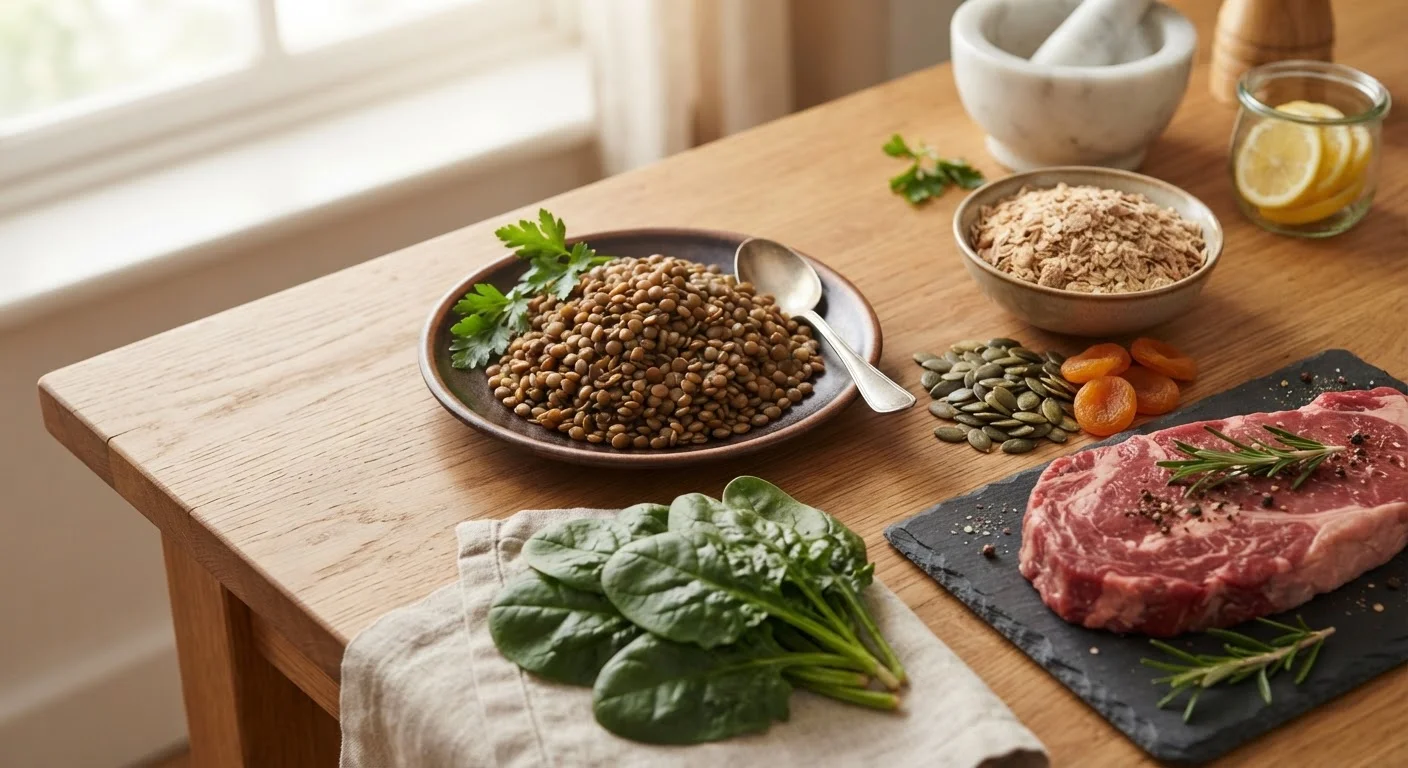
Heme iron is found in animal-based foods — beef, pork, poultry, and seafood. It is absorbed at a rate of roughly 15–35% and is not significantly affected by other foods consumed at the same meal.
Non-heme iron is found in plant foods and iron-fortified products such as beans, lentils, tofu, spinach, and breakfast cereals. Absorption is typically much lower — around 2–20% — and is influenced by what else is eaten alongside it.
Two key dietary interactions affect non-heme iron absorption:
- Vitamin C enhances it. Consuming a vitamin C source (citrus, bell pepper, strawberries) with a plant-based iron source can meaningfully increase how much the body absorbs.
- Calcium, tannins, and phytates inhibit it. Coffee, tea, dairy, and high-phytate grains consumed with an iron-rich meal can reduce absorption.
Pair Plant-Based Iron With Vitamin C
If you rely on legumes, tofu, or leafy greens for iron, make a habit of including a vitamin C source at the same meal — such as a squeeze of lemon juice, sliced bell peppers, or a small serving of strawberries. This simple pairing can meaningfully improve how much iron your body actually absorbs. Conversely, consider spacing coffee or tea consumption away from iron-rich meals when possible.
What the Lab Numbers Actually Mean
Iron status is not measured with a single test. Clinicians typically evaluate several blood markers together to determine where someone falls on the deficiency spectrum.
- Serum Ferritin
- Reflects iron stored in the body. Low ferritin is often the first laboratory sign of depleted stores, even before other markers shift. However, ferritin is an acute-phase protein — it rises during inflammation or infection, which can mask true deficiency.
- Hemoglobin
- Measures the iron-containing protein in red blood cells that carries oxygen. A low hemoglobin level indicates iron-deficiency anemia has developed. Normal ranges differ by age and sex.
- Transferrin Saturation
- Indicates the percentage of iron-carrying protein (transferrin) that is actually bound to iron. A low percentage signals that not enough iron is available for the body's demands.
These numbers are interpreted in clinical context. A healthcare provider considers symptoms, medical history, and dietary patterns before drawing conclusions. Fatigue and other symptoms associated with low iron can overlap with many conditions — if you are experiencing persistent symptoms, consult a qualified healthcare professional rather than self-diagnosing.
Persistent fatigue or poor recovery that you cannot explain may sometimes reflect broader dietary imbalances as well. Our guide to signs of macronutrient imbalance covers additional patterns worth understanding.
This article is for general informational and educational purposes only and is not a substitute for professional medical advice, diagnosis, or treatment. Always consult a qualified healthcare provider with questions about your health or before making changes to your diet or supplementation.