

Key Takeaways
- Most Americans consume roughly half the potassium their bodies need each day.
- Potassium helps counter sodium's blood-pressure-raising effects by promoting sodium excretion.
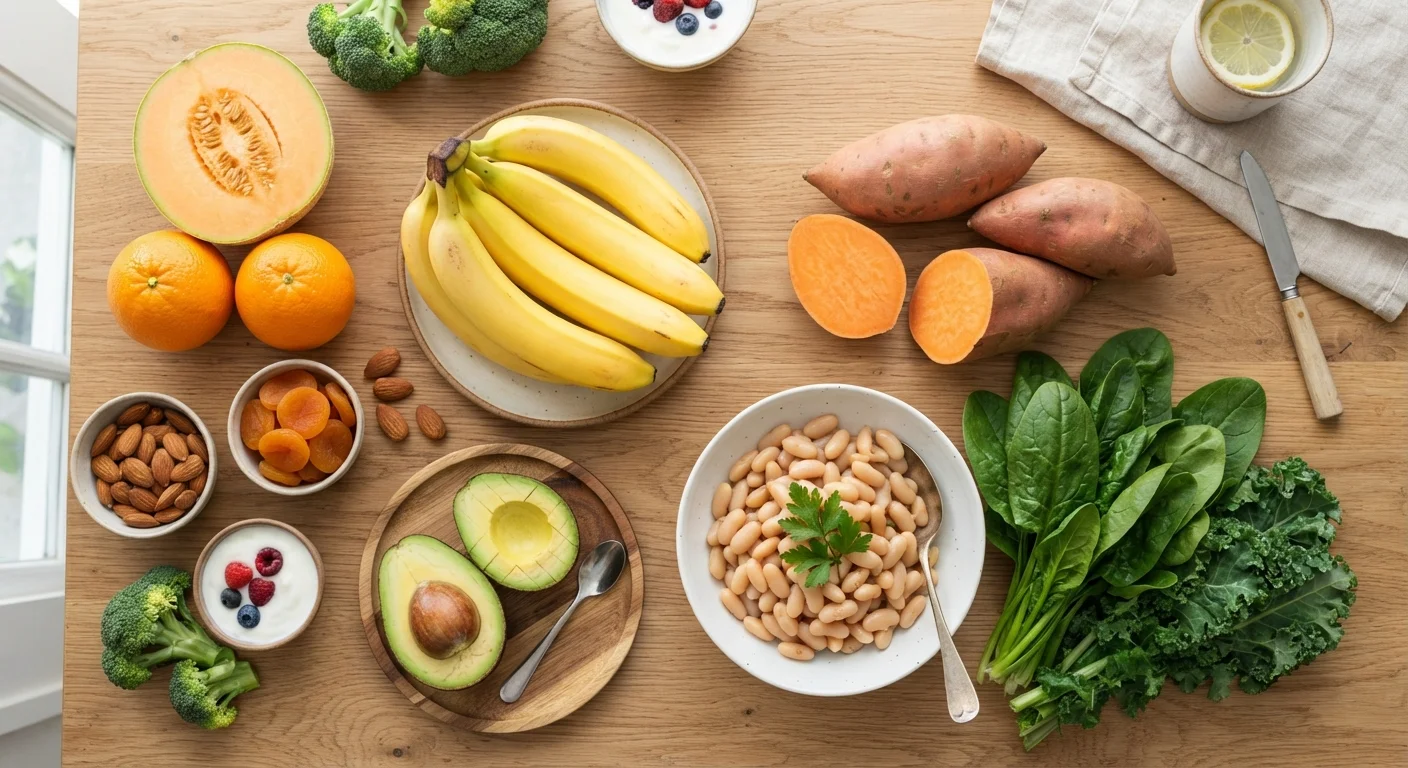
- Whole plant foods — beans, potatoes, leafy greens, and fruit — are among the richest dietary sources.
- Low potassium intake is linked to higher risk of high blood pressure, stroke, and kidney stones.
- People with kidney disease or taking certain medications should consult a doctor before increasing potassium intake.
Potassium
Potassium is an essential mineral and electrolyte that your body cannot produce on its own — it must come from food. It plays a central role in regulating fluid balance, supporting nerve signals, and enabling muscle contractions, including those of the heart. Most Americans consume significantly less than the recommended amount each day.
Potassium functions as a positively charged ion (K⁺) inside cells. It works in concert with sodium to maintain the electrochemical gradients that drive cellular activity, particularly in excitable tissues like nerve and muscle cells.
Why Potassium Matters — and Why Most Americans Fall Short
Potassium is one of the minerals most consistently flagged as underconsumed in the American diet. Federal nutrition data from the National Health and Nutrition Examination Survey (NHANES) shows that average potassium intake falls far below recommended levels for both men and women. This shortfall is part of a broader pattern described in detail in national micronutrient gap data.
The gap persists largely because potassium is concentrated in whole plant foods — fruits, vegetables, legumes, and dairy — that many Americans eat in insufficient quantities. Highly processed foods, which dominate a large share of U.S. caloric intake, are typically low in potassium and high in sodium, a combination that compounds the problem.
~3%
U.S. adults meeting potassium Adequate Intake
NHANES data cited by the 2020–2025 Dietary Guidelines Advisory Committee found that very few Americans reach recommended potassium levels through diet alone.
2,600–3,400 mg
Daily potassium Adequate Intake for adults
The National Academies of Sciences set these targets for adult women and men respectively; average American intake falls well below both figures.
~10 mmHg
Potential systolic blood pressure reduction
Meta-analyses of controlled trials suggest potassium supplementation can reduce systolic blood pressure by approximately this amount in people with hypertension, though individual results vary.
What Potassium Does in Your Body
Potassium's most well-known function involves blood pressure regulation. It works in direct opposition to sodium: while sodium promotes fluid retention and raises blood pressure, potassium promotes the excretion of sodium through the kidneys. Diets rich in potassium are consistently associated with lower blood pressure in observational studies and clinical trials — an effect that appears most pronounced in people who also consume high amounts of sodium.
Beyond blood pressure, potassium is involved in:
- Nerve function: Potassium ions help generate and transmit electrical signals along nerve fibers.
- Muscle contraction: Both skeletal and cardiac muscle depend on proper potassium levels to contract and relax normally.
- Fluid and pH balance: Potassium helps maintain normal fluid distribution across cells and supports the body's acid-base balance.
- Bone health: Some research suggests diets higher in potassium — particularly from alkaline-forming plant foods — may help preserve bone mineral density, though the evidence is still developing.
- Kidney stone prevention: Higher potassium intake from food is associated with reduced risk of calcium oxalate kidney stones, in part by lowering urinary calcium excretion.
Potassium shares some functional territory with other minerals. For context on how it compares to magnesium — another commonly underconsumed mineral — see our article on magnesium's role in sleep, muscle function, and stress.
Best Food Sources of Potassium
Potassium is widely distributed across food groups, but some sources are significantly richer than others. The following whole foods are among the most potassium-dense options available:
- Legumes: White beans, lentils, and kidney beans — one cup of cooked white beans provides over 1,000 mg.
- Potatoes and sweet potatoes: A medium baked potato with skin delivers roughly 900 mg.
- Leafy greens: Spinach, Swiss chard, and beet greens are concentrated sources, especially when cooked.
- Dairy: Milk and plain yogurt offer 350–500 mg per cup.
- Fruit: Avocado (one half: ~487 mg), prunes, dried apricots, and bananas are standouts.
- Fish: Salmon, halibut, and tuna provide meaningful amounts alongside protein.
- Tomato products: Tomato paste, sauce, and juice are concentrated sources.
Build Potassium Into Meals Strategically
Rather than relying on any single food, aim to include potassium-rich ingredients across multiple meals. Pairing beans with grain-based dishes, choosing potatoes as a side, and finishing meals with fruit are simple ways to accumulate meaningful amounts throughout the day. A varied, plant-forward diet naturally tends to be higher in potassium.
It's worth noting that cooking method matters. Boiling vegetables in water leaches potassium into the liquid. Roasting, steaming, or using cooking liquid in soups preserves more of the mineral.
For a broader overview of where potassium fits among the full range of essential micronutrients, see the essential vitamins and minerals every adult needs.
Who Needs to Be Cautious With Potassium
For most healthy adults, increasing potassium through whole foods carries no meaningful risk — functioning kidneys efficiently regulate potassium balance. However, several groups should approach significant changes to potassium intake with medical guidance:
- People with chronic kidney disease (CKD): Impaired kidneys may not excrete potassium effectively, allowing it to accumulate to dangerous levels in the blood — a condition called hyperkalemia. Dietary potassium often needs to be managed carefully under a registered dietitian's supervision.
- People taking certain medications: ACE inhibitors, angiotensin receptor blockers (ARBs), potassium-sparing diuretics, and some other drugs can raise blood potassium levels. Supplementing without medical oversight can be risky in these cases.
- People with type 1 diabetes or adrenal disorders: Conditions that affect potassium regulation may require tailored dietary guidance.
This article provides general nutrition education and is not a substitute for personalized medical advice. If you have a health condition that may affect electrolyte balance, consult a qualified healthcare provider before making significant dietary changes.
This article is for informational purposes only and does not constitute medical advice. Always consult a qualified healthcare professional for guidance specific to your health situation.