

Key Takeaways
- No large-scale study has established a causal link between vaccines and autism.
- Natural immunity exists but is often less predictable and riskier to acquire than vaccine-induced immunity.
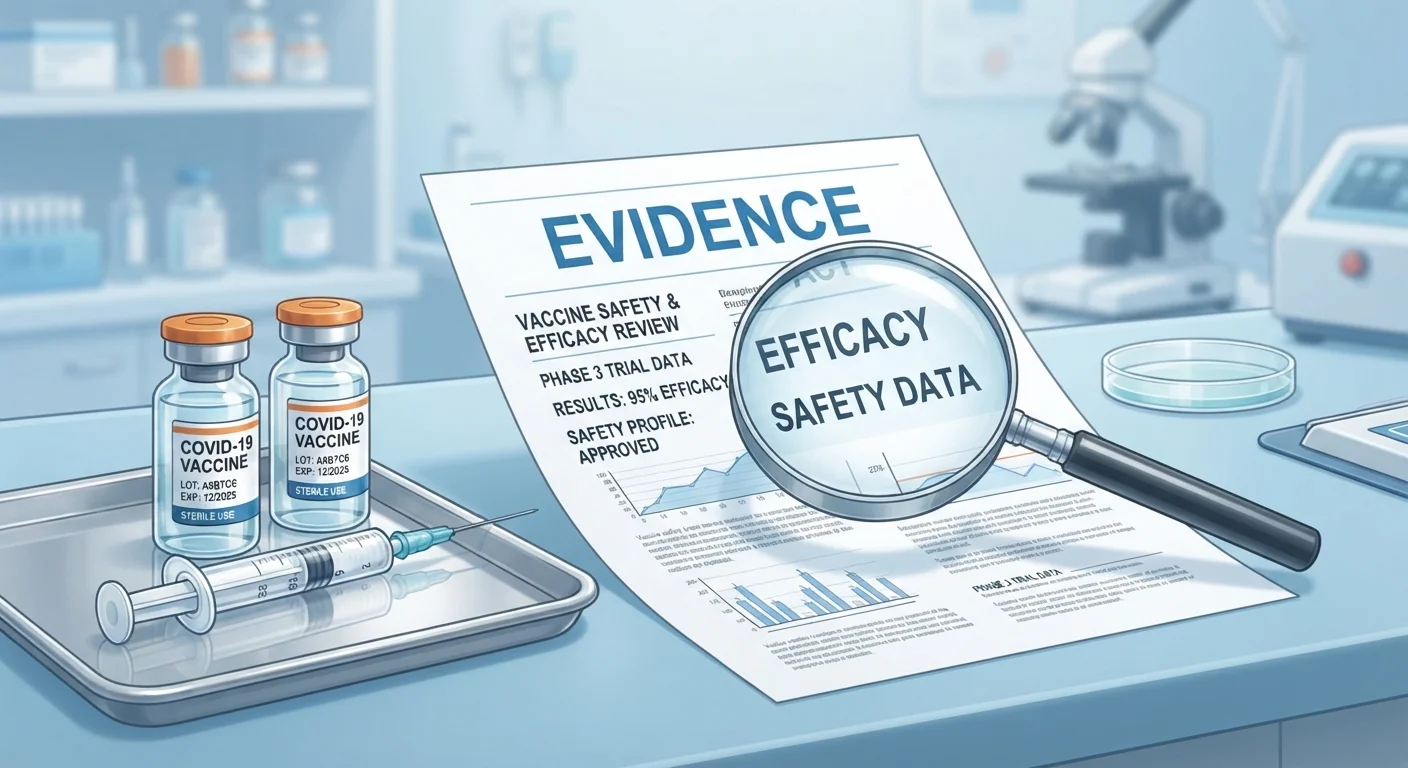
- Vaccines undergo extensive safety testing before approval and ongoing surveillance after authorization.
- Vaccine ingredients appear in trace amounts well below established safety thresholds.
- Vaccinated individuals can still catch some diseases, but typically experience milder illness and fewer complications.
Why Vaccine Myths Are Persistent—and Consequential
Misinformation about vaccines has existed almost as long as vaccines themselves. But in the current media environment, misconceptions spread faster and reach more people than the corrections that follow. Understanding what the evidence actually shows—and why certain myths endure—matters for personal and community health alike.
The myths addressed here are not fringe beliefs. They circulate in everyday conversation, on social media, and sometimes among people who are genuinely trying to make careful health decisions. Correcting them isn't about dismissing concerns; it's about grounding decision-making in the strongest available evidence. For a deeper look at the social and psychological forces behind hesitancy, see why vaccine hesitancy happens.
Myth
Vaccines cause autism. The evidence is clear and the risk is real.
Fact
Decades of large-scale research across millions of children have found no causal link between vaccines and autism spectrum disorder.
This myth traces back to a 1998 paper published in The Lancet that suggested a connection between the MMR (measles, mumps, rubella) vaccine and autism. That paper was subsequently retracted after investigations revealed serious ethical violations and data manipulation. The lead author lost his medical license.
Since then, studies involving millions of children across multiple countries—including a 2019 Danish cohort study of over 650,000 children—have consistently found no association between the MMR vaccine and autism. Major health bodies including the CDC, the World Health Organization, and the American Academy of Pediatrics all affirm this conclusion. The scientific consensus on this question is unusually robust.
Myth
Natural immunity is always stronger than vaccine-induced immunity, so vaccines are unnecessary if you've had the disease.
Fact
Natural immunity varies widely by disease and individual, and is often acquired at the cost of serious illness, complications, or spread to others.
For some diseases, natural infection does generate strong, durable immunity. But this is not universal. Influenza mutates rapidly, meaning past infection offers limited protection against new strains. Tetanus infection does not reliably produce protective immunity at all. And diseases like measles or chickenpox carry real risks of severe complications during the infection itself—complications that vaccination avoids entirely.
Vaccines are specifically engineered to trigger a strong, targeted immune response with a predictable safety profile. In some cases, such as with hepatitis B, vaccines produce more consistent antibody responses than natural infection. The choice to acquire immunity through infection rather than vaccination trades a known, controllable risk for an uncontrolled one.
Myth
Vaccines contain dangerous toxins like mercury and formaldehyde that accumulate in the body.
Fact
Vaccine ingredients are present in trace quantities far below established safety thresholds, and many occur naturally in the human body at higher concentrations.
Formaldehyde is produced naturally by human metabolism and is present in the bloodstream at concentrations that exceed the trace amounts found in any vaccine. The thimerosal (a mercury-based preservative) once used in some multi-dose flu vaccines has been removed or reduced to trace levels in most formulations; childhood vaccines on the recommended schedule do not contain it as a preservative.
Aluminum salts, used in some vaccines as adjuvants to strengthen immune response, are present in amounts that are a fraction of what the average person ingests through food and water daily. Regulatory agencies set limits based on extensive toxicological research, and vaccine ingredient quantities are evaluated against these limits before any product reaches authorization.
Myth
If vaccinated people can still get sick, vaccines clearly don't work.
Fact
No vaccine is 100% effective, but vaccination significantly reduces the risk of infection, severe disease, hospitalization, and death for most diseases.
Vaccine effectiveness is measured against realistic benchmarks, not perfection. A vaccinated person who contracts a disease typically experiences a substantially milder illness than an unvaccinated person would. This distinction matters enormously at both the individual and population level—it is the difference between a managed illness at home and a hospitalization, or between a hospitalization and a fatality.
Breakthrough infections are expected and do not indicate failure; they reflect that immunity, whether from vaccination or prior infection, exists on a spectrum. High vaccination coverage also contributes to community protection by reducing overall transmission—a concept explored more fully in how herd immunity works and where it has limits.
Myth
The vaccine approval process was so rushed that long-term safety cannot be known.
Fact
Vaccines follow a structured multi-phase trial process, and post-authorization surveillance continues to monitor safety in real-world populations over time.
Pre-authorization clinical trials for vaccines typically proceed through Phase I (safety and dosing in small groups), Phase II (broader safety and immune response), and Phase III (large-scale efficacy and safety) before regulatory review. Emergency use authorizations, used during public health crises, still require evidence meeting defined safety and efficacy thresholds—they accelerate review timelines, not the evidence-gathering process itself.
After authorization, multiple independent surveillance systems track adverse events in populations far larger than any clinical trial. These ongoing systems have detected rare side effects—such as myocarditis associated with mRNA COVID-19 vaccines in younger males—quickly enough to update clinical guidance. The existence of these systems reflects the expectation of continued monitoring, not the absence of prior scrutiny.
Understanding Side Effects, Safety Monitoring, and Rare Risks
One of the most persistent sources of vaccine concern is the conflation of common, expected side effects with signals of serious harm. Soreness at the injection site, mild fatigue, and low-grade fever are signs that the immune system is responding—not evidence that something has gone wrong. These typically resolve within one to two days.
Serious adverse events do occur, but they are rare and are actively tracked through systems such as the CDC's Vaccine Adverse Event Reporting System (VAERS) and the Vaccine Safety Datalink. These systems exist precisely to detect safety signals that large clinical trials might miss due to sample size. Knowing how to distinguish a normal post-vaccine response from a rare allergic reaction is genuinely useful—vaccine side effects versus allergic reactions explains what to watch for and when to seek care.
Consult Your Provider Before Making Vaccine Decisions
General health information cannot substitute for individualized medical advice. Vaccine recommendations vary based on age, health status, prior immunization history, and other factors only your healthcare provider can assess. If you have concerns about a specific vaccine or your vaccination history, speak directly with a qualified clinician before drawing conclusions from online sources.
If you have an underlying chronic condition such as diabetes, heart disease, or an immunocompromising diagnosis, your vaccine schedule or specific product choices may differ from standard recommendations. Vaccination and chronic illness covers how these factors interact. Always consult your healthcare provider for guidance tailored to your situation.
650,000+
Children in landmark MMR-autism study
A 2019 Danish cohort study published in the Annals of Internal Medicine followed over 650,000 children and found no increased risk of autism associated with the MMR vaccine.
~90–95%
Measles vaccine effectiveness (two doses)
According to the CDC, two doses of the MMR vaccine are approximately 97% effective at preventing measles in exposed individuals, illustrating how high efficacy reduces outbreak risk.
This article is for informational purposes only and does not constitute medical advice. Consult a qualified healthcare professional for guidance on your specific health needs and vaccination decisions.