

Key Takeaways
- Sleep disorders involve disrupted brain systems, not simply a habit of poor rest.
- The brain cycles through distinct stages each night; disorders interrupt this architecture.
- Insomnia, sleep apnea, and narcolepsy each impair different neurological mechanisms.
- Chronic disruption affects memory consolidation, emotional regulation, and cellular repair.
- Recognizing patterns — not just tiredness — is key to seeking timely evaluation.
Sleep Disorder (Neurological Basis)
A sleep disorder is a condition in which the brain's systems for regulating sleep and wakefulness fail to function as expected. Rather than simply causing tiredness, these conditions interfere with the precise orchestration of brain states, hormones, and neural circuits that healthy sleep depends on. The result can affect memory, mood, physical repair, and long-term health.
Sleep is regulated by two interacting systems: the homeostatic sleep drive (Process S) and the circadian clock (Process C). Most sleep disorders involve dysfunction in one or both of these systems at the neurological level.
The Brain's Sleep Architecture — and Why Disruption Matters
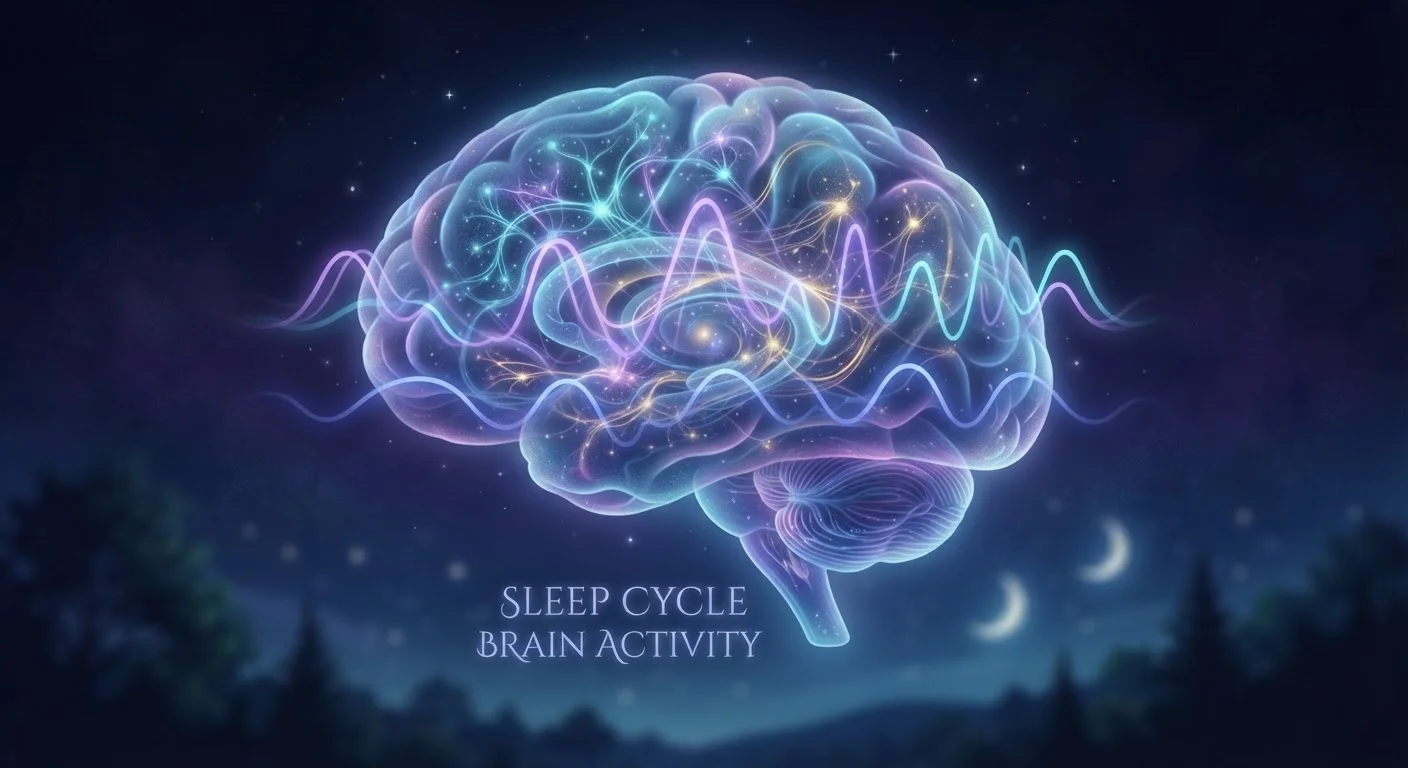
Healthy sleep isn't a single uniform state. Each night, the brain moves through a repeating series of stages: light non-REM sleep, deep slow-wave sleep, and REM sleep. Each stage serves a distinct biological purpose — from cellular repair during deep sleep to memory consolidation and emotional processing during REM.
When a sleep disorder is present, this architecture breaks down. The brain may fail to reach deep sleep, exit REM prematurely, or oscillate erratically between stages. The consequences extend well beyond feeling tired in the morning. Disrupted architecture affects how the brain clears metabolic waste, reinforces learned information, and regulates stress hormones.
For a broader look at the conditions that interrupt this process, see our overview of common sleep disorders.
~70 million
Americans affected by chronic sleep disorders
According to estimates from the Centers for Disease Control and Prevention and the National Sleep Foundation, roughly 70 million Americans experience a chronic sleep or wakefulness disorder.
4–6x
Higher stroke risk linked to severe untreated sleep apnea
Multiple prospective studies have found that individuals with severe obstructive sleep apnea face substantially elevated cardiovascular risk, including stroke, compared to those without the condition.
20–25%
Of total sleep time spent in REM in healthy adults
In a typical healthy adult, roughly one-fifth to one-quarter of the sleep period consists of REM sleep, the stage most closely tied to emotional processing and memory consolidation.
What Happens Neurologically in Specific Disorders
Insomnia is characterized by hyperarousal — the brain's wake-promoting systems remain abnormally active at night. Neuroimaging studies show elevated glucose metabolism in the prefrontal cortex and limbic regions during sleep in people with chronic insomnia, patterns not seen in typical sleepers. The brain, in effect, cannot disengage from alertness.
Obstructive sleep apnea causes repeated micro-arousals as the airway partially or fully closes. Each arousal triggers a stress-hormone spike — particularly cortisol and adrenaline — fragmenting sleep architecture and keeping the brain's threat-response systems on edge. Over time, this is associated with measurable changes in regions tied to attention and decision-making.
Narcolepsy involves a loss of neurons that produce hypocretin (also called orexin), a neurotransmitter that stabilizes wakefulness. Without adequate hypocretin signaling, the boundary between sleep and waking becomes unstable — producing symptoms like sudden muscle weakness (cataplexy) and intrusions of REM elements into waking life. Our article on narcolepsy beyond the Hollywood stereotype addresses common misconceptions about this condition.
“Sleep is not merely a passive state. It is an active, regulated neurobiological process — and when that process is disrupted, the effects extend into virtually every domain of brain function.”
— Matthew Walker, Professor of Neuroscience and Psychology, University of California, Berkeley; author of peer-reviewed sleep research
The Ripple Effects on Memory, Mood, and Physical Health
Sleep is when the brain consolidates memories — transferring experiences from short-term to long-term storage through processes that depend on intact slow-wave and REM sleep. When these stages are disrupted, that transfer is impaired. Research consistently links fragmented or insufficient sleep to reduced recall, slower learning, and greater susceptibility to false memories.
Emotional regulation follows a similar pattern. The amygdala — a region central to threat detection and emotional response — becomes less efficiently modulated by the prefrontal cortex after poor sleep. This contributes to the irritability, anxiety, and low mood that many people with sleep disorders report, often before they recognize the connection to sleep itself.
Physical recovery is also at stake. Growth hormone, which supports tissue repair and immune function, is released predominantly during slow-wave sleep. Disorders that reduce time in this stage can blunt that release. Common myths about sleep disorders often cause people to underestimate these downstream effects.
Recognizing Patterns and Knowing When to Act
Not every bad night signals a disorder. The neurological disruptions described above become clinically significant when patterns persist — typically for weeks or months — and begin affecting daytime functioning. Key signals include consistent difficulty falling or staying asleep, unrefreshing sleep despite adequate time in bed, or excessive daytime sleepiness that interferes with daily tasks.
Some disorders, like parasomnias, manifest as unusual nighttime behaviors rather than sleepiness. Our companion piece on sleepwalking, night terrors, and REM behavior disorder explains how these conditions are defined and assessed.
If patterns are persistent or worsening, a clinical evaluation is the appropriate next step. A sleep specialist can determine whether an overnight study is warranted and what the findings might mean. This is general health information — for any personal symptoms or concerns, consult a qualified healthcare professional.
This article is for informational purposes only and does not constitute medical advice. Always consult a qualified healthcare provider for concerns about your sleep or health.