

Key Takeaways
- Sleep hygiene refers to daily habits and environment, not personal cleanliness.
- Consistent sleep timing is considered one of the most impactful hygiene factors.
- Light exposure, temperature, and pre-bed routines all measurably affect sleep quality.
- Sleep hygiene alone may not resolve clinical sleep disorders — professional evaluation matters.
- Small, sustainable changes tend to produce more lasting results than overnight overhauls.
Sleep Hygiene
Sleep hygiene is the collection of behavioral habits and environmental conditions that support consistent, restful sleep. The term borrows "hygiene" in the public-health sense — routine practices that promote wellbeing — not cleanliness. Researchers and clinicians use it to describe the manageable factors within your daily schedule and surroundings that influence how easily you fall asleep, stay asleep, and feel refreshed in the morning.
Sleep hygiene is distinct from sleep disorders such as insomnia disorder or sleep apnea; it addresses modifiable lifestyle factors rather than underlying physiological or psychological conditions requiring clinical treatment.
Where the Term Comes From
The phrase sleep hygiene was popularized in the 1970s by sleep researcher Peter Hauri, who used it to describe the everyday habits and conditions that either support or undermine sleep. Like hand-washing in the context of infection control, the idea was that routine behavioral choices accumulate into meaningful outcomes — in this case, the quality of your nightly rest.
Today, sleep hygiene is a standard concept in both clinical sleep medicine and public health guidance. It doesn't imply that sleep problems are caused by laziness or poor self-discipline. Rather, it acknowledges that modern life is full of sleep-disrupting pressures — irregular schedules, artificial light, digital devices, and chronic stress — and that small, intentional habits can serve as a counterbalance.
Sleep Hygiene vs. Sleep Disorders
Sleep hygiene describes modifiable lifestyle factors — it is not a diagnosis. Conditions like obstructive sleep apnea, insomnia disorder, or narcolepsy are clinical diagnoses that require professional evaluation. Improving sleep habits can support overall sleep health, but it does not replace medical assessment when a disorder is suspected.
The Core Elements of Sleep Hygiene
Sleep hygiene encompasses several interconnected categories. Understanding each one helps explain why researchers treat them as a system rather than a checklist.
- Sleep timing: Going to bed and waking at consistent times — even on weekends — reinforces the body's circadian rhythm, the roughly 24-hour biological clock that regulates alertness and sleepiness.
- Light exposure: Bright light in the morning helps anchor your wake time, while reducing light exposure in the evening — especially blue-wavelength light from screens — supports the natural rise of melatonin.
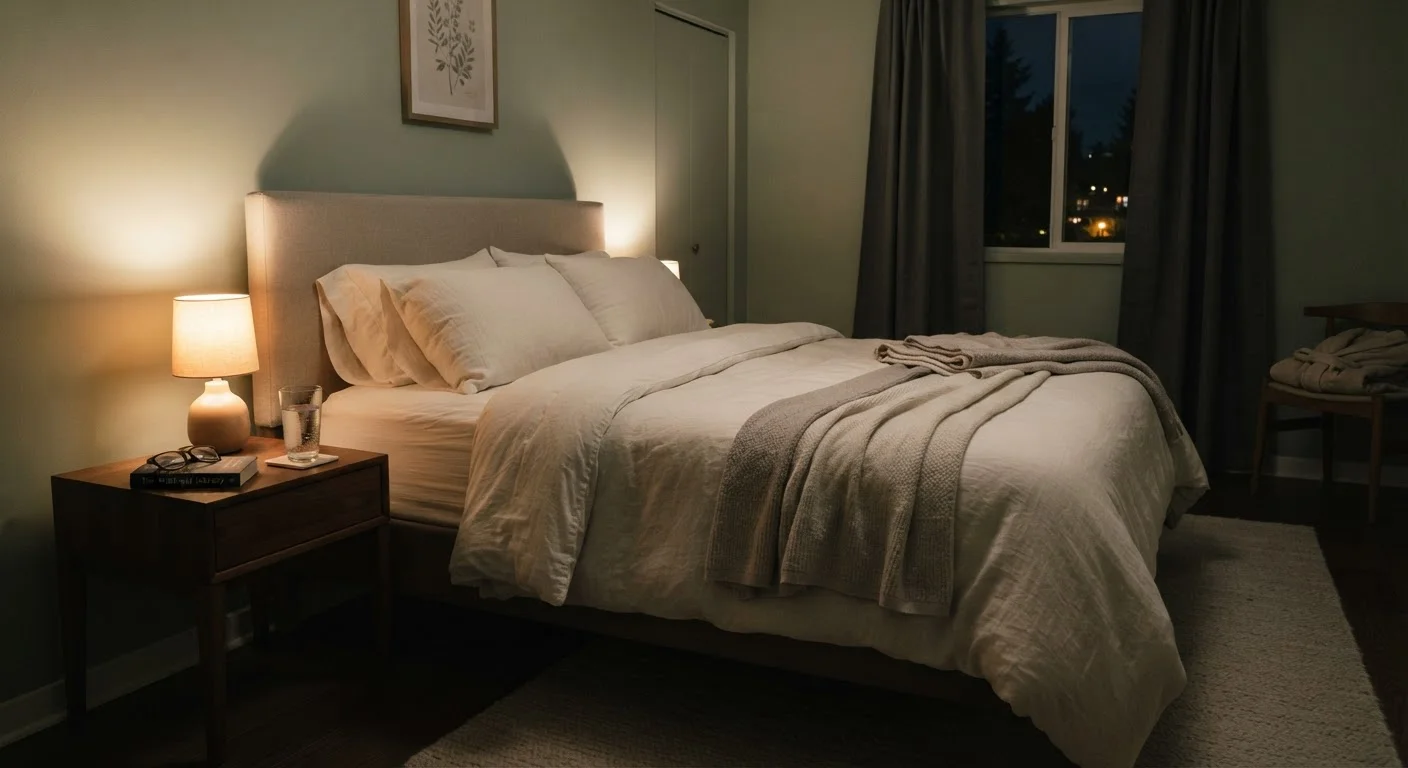
- Sleep environment: A cool, dark, and quiet room is broadly associated with better sleep onset and fewer nighttime awakenings. Temperature regulation in particular plays a documented role in sleep architecture.
- Pre-sleep behaviors: Caffeine consumed in the afternoon can still be detectable in the body at bedtime for many people. Alcohol, despite causing initial drowsiness, tends to fragment sleep in the second half of the night.
- Wind-down routine: A consistent, calming pre-bed routine — reading, light stretching, or quiet conversation — signals the nervous system that sleep is approaching.
1 in 3
U.S. adults not getting enough sleep
The CDC has reported that roughly one in three American adults regularly get less than the recommended seven hours of sleep per night.
5–6 hrs
Caffeine half-life in most adults
Pharmacological data indicate caffeine's half-life averages five to six hours, meaning afternoon consumption can still affect sleep onset at night.
~1°F
Core body temperature drop linked to sleep onset
Sleep research has documented that core body temperature naturally drops as the body prepares for sleep, which is why a cooler bedroom environment is broadly recommended.
What Sleep Hygiene Can and Cannot Do
Sleep hygiene is a useful foundation, but it's important to be clear about its limits. For people with mild to moderate sleep difficulties — trouble falling asleep, waking too early, or feeling unrefreshed — hygiene improvements can make a meaningful difference.
However, sleep hygiene alone is generally not sufficient for diagnosing or treating clinical sleep disorders. Conditions such as insomnia disorder, obstructive sleep apnea, restless legs syndrome, or circadian rhythm disorders require evaluation by a qualified healthcare provider. If sleep problems persist despite consistent hygiene efforts, that's a reasonable signal to seek professional input rather than simply adding more habits. For a deeper look at when sleep difficulties cross into clinical territory, see the Sleep Disorders hub.
It's also worth recognizing that sleep hygiene advice can sometimes feel deceptively simple. As explored in Sleep Hygiene Habits That Are Harder to Keep Than They Look, recommendations like "go to bed at the same time every night" run into real-world friction — shift work, caregiving responsibilities, and social schedules don't always bend to ideal bedtimes.
Start With One Consistent Change
Rather than overhauling your entire sleep routine at once, research on habit formation suggests that anchoring one change — such as a fixed wake time — tends to be more sustainable. Once that becomes automatic, layering in additional habits is more likely to stick. Gradual, consistent adjustments generally outperform dramatic overnight changes.
This article is for general informational purposes only and is not a substitute for professional medical advice, diagnosis, or treatment. If you have concerns about your sleep or health, consult a qualified healthcare provider.