

Key Takeaways
- Exercise creates controlled micro-damage in muscle fibers that the body rebuilds stronger during rest.
- Inflammation after a workout is a normal and necessary step in the repair process.
- Satellite cells - muscle stem cells - play a critical role in rebuilding and growing muscle tissue.
- Protein synthesis peaks in the hours after exercise, making nutrition and rest timing meaningful.
- Skipping adequate recovery can stall progress and increase injury risk over time.
- Rest is not passive - it is when the actual fitness adaptation takes place.
Muscle Repair (Post-Exercise)
After you exercise, your muscles undergo a structured repair process in which tiny structural disruptions caused by physical effort are rebuilt stronger than before. This process - driven by the immune system, satellite cells, and protein synthesis - is what actually produces fitness gains. Rest periods are when this repair happens, making recovery as important as the workout itself.
The primary mechanism behind muscle adaptation is myofibrillar remodeling: damaged actin and myosin proteins are broken down and replaced with new, denser structures through a process regulated by mTOR (mechanistic target of rapamycin) signaling pathways.
What Exercise Actually Does to Muscle Tissue
When you lift weights, run, or perform any resistance-based movement, your muscle fibers experience mechanical stress. At a microscopic level, this stress produces small disruptions - often called micro-tears - in the structural proteins (actin and myosin) that make up each fiber. This is not injury in the clinical sense; it is a controlled, expected response to physical load.
These disruptions are most pronounced during eccentric contractions - the lowering phase of a movement, such as descending in a squat - because the muscle is generating force while lengthening. This is why exercises with a significant eccentric component, like downhill running or slow-tempo strength training, tend to produce more noticeable post-workout soreness.
The key insight is that this micro-disruption is the trigger, not the problem. The body's response to it is what produces stronger, more resilient muscle over time.
The Repair Cascade: Inflammation, Satellite Cells, and Protein Synthesis
Within hours of a workout, the body launches a coordinated repair response. Understanding its stages reframes rest from something passive into something biologically productive.
24-48 hrs
Window of elevated muscle protein synthesis post-exercise
Exercise physiology research consistently shows synthesis rates remain elevated for at least one to two days following resistance training in healthy adults.
~72 hrs
Typical full recovery window after intense sessions
High-intensity or high-volume workouts targeting unfamiliar movement patterns may require up to 72 hours before full muscular function is restored.
7-9 hrs
Sleep recommended for optimal muscle repair
The National Sleep Foundation identifies this range as the adult target; growth hormone secretion - which supports tissue repair - peaks during deep sleep stages.
Stage 1: Inflammatory Signaling
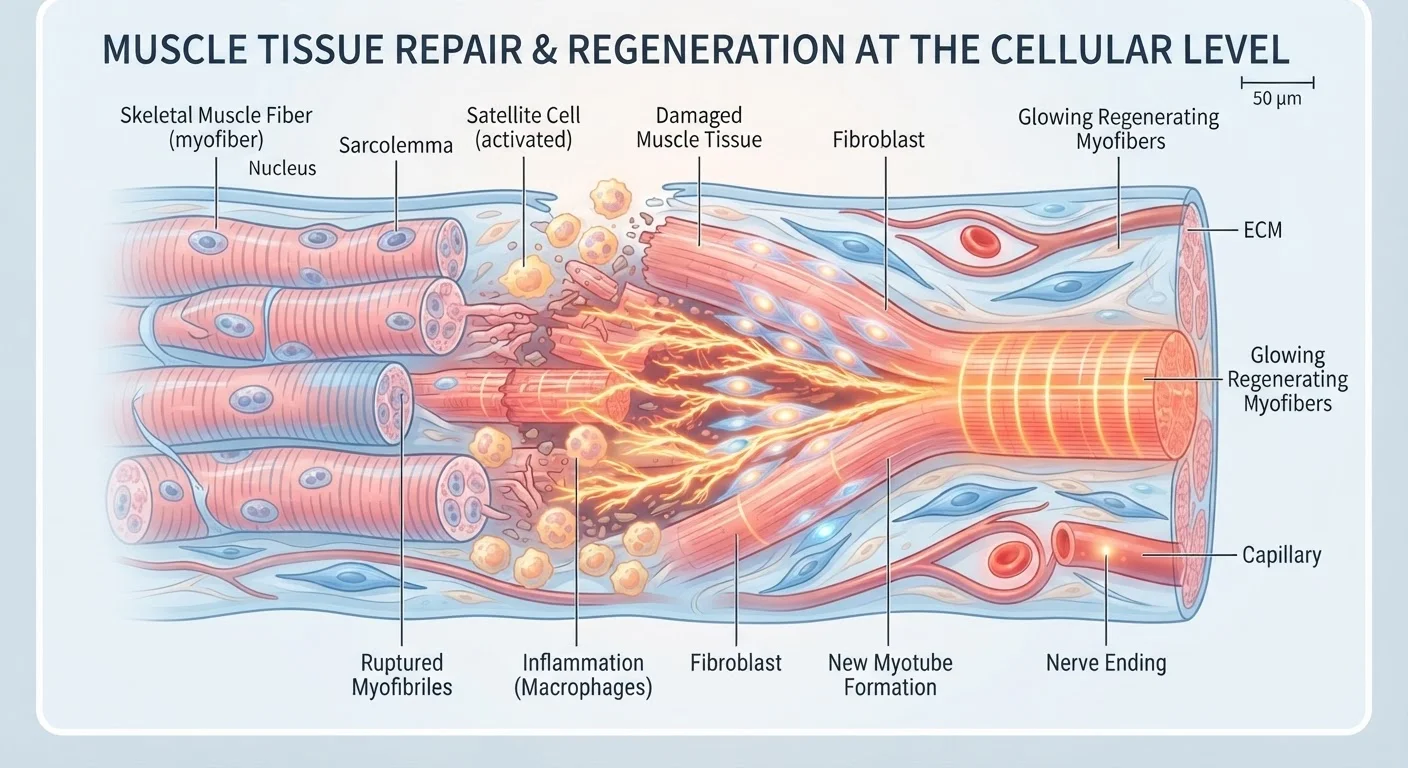
The immune system identifies damaged muscle tissue and dispatches cells - primarily neutrophils and macrophages - to clear debris and signal for repair. This acute inflammation is normal and necessary. Aggressively suppressing it with anti-inflammatory medications immediately after every workout may actually interfere with adaptation, according to some exercise physiology research, though this remains an area of ongoing study.
Stage 2: Satellite Cell Activation
Satellite cells are muscle-specific stem cells that sit dormant until activated by mechanical stress and inflammatory signals. Once mobilized, they proliferate and fuse with damaged fibers, donating nuclei that support the production of new structural proteins. This process is fundamental to muscle hypertrophy (growth in size) and repair of any significant fiber disruption.
Stage 3: Protein Synthesis
The final and most sustained phase is muscle protein synthesis - the assembly of new actin and myosin proteins to replace and reinforce damaged structures. Protein synthesis is elevated for up to 24-48 hours post-exercise in trained individuals and potentially longer after novel or high-intensity sessions. This is why nutrition timing matters during recovery - the body needs amino acids available to fuel this rebuilding process.
Why Rest Is the Active Ingredient in Fitness Progress
Fitness gains do not occur during the workout - they occur in the hours and days afterward. This distinction changes how most people should think about their training schedule. A workout is a stimulus; rest is where the adaptation happens.
Prioritize Sleep for Faster Muscle Repair
Growth hormone, which plays a key role in tissue repair and protein synthesis, is released primarily during deep sleep. Consistently getting seven to nine hours of quality sleep is one of the most evidence-supported ways to support the muscle repair process. Poor or shortened sleep can meaningfully reduce the body's repair efficiency over time.
When recovery is consistently cut short - through overtraining, poor sleep, or inadequate nutrition - protein breakdown can outpace synthesis. The result is stalled progress, persistent fatigue, and elevated injury risk. This state is sometimes called overreaching, and if chronic, it can develop into overtraining syndrome, a recognized condition that may require extended rest to resolve.
Structuring rest thoughtfully does not mean avoiding all movement. Light movement on rest days - walking, stretching, or gentle cycling - can promote blood flow to repairing tissues without adding meaningful mechanical stress. The choice between active recovery and complete rest depends on training load and how the body is responding.
For a closer look at how food choices influence this repair window, see our guide on post-workout nutrition.
This article is for general informational purposes only and is not a substitute for medical advice. Consult a qualified healthcare professional before beginning or significantly changing any exercise program, especially if you have an existing health condition.