

Key Takeaways
- Antibiotics target bacteria broadly, reducing both harmful and beneficial gut microbes.
- The gut microbiome directly influences how immune cells develop and respond to threats.
- Microbiome disruption after antibiotics can temporarily alter immune regulation.
- Recovery of microbiome diversity varies by individual, antibiotic type, and other lifestyle factors.
- Consulting a healthcare provider about post-antibiotic gut health is advisable for ongoing concerns.
Gut-Immune Axis Disruption
The gut-immune axis is the two-way communication system between your digestive tract's microbial community and your immune system. When antibiotics eliminate harmful bacteria during an infection, they also reduce populations of beneficial microbes that help train and regulate immune responses. This unintended disruption can temporarily weaken immune defenses or contribute to inflammation.
Antibiotics act broadly on bacterial populations, often reducing microbial diversity and altering the relative abundance of key taxa — such as Lactobacillus and Bifidobacterium — that produce short-chain fatty acids critical to immune signaling.
The Gut as an Immune Organ
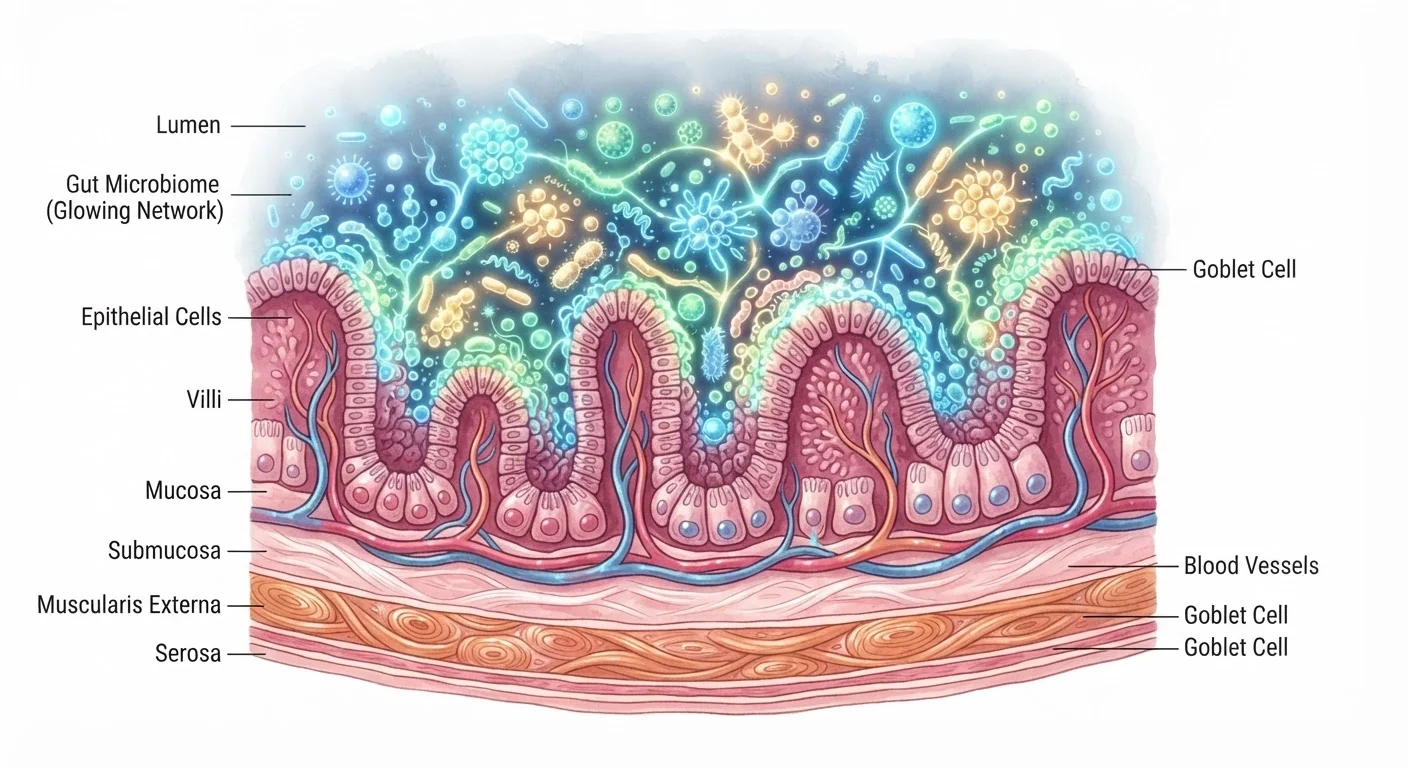
Most people think of the gut as a digestive structure — but it is also one of the body's most active immune environments. Roughly 70% of immune tissue resides in or around the gastrointestinal tract, and the trillions of microbes living there — collectively called the gut microbiome — are central to how that immune tissue develops and functions.
Beneficial bacteria help calibrate immune responses: they signal which threats are genuine, suppress excessive inflammation, and support the development of immune cell populations such as regulatory T cells. Without a diverse, balanced microbiome, this calibration becomes less precise. As explained in our overview of gut bacteria and inflammation, microbial imbalance can nudge the immune system toward chronic overreaction.
~70%
Of immune tissue located in or near the gut
Gastroenterology and immunology research consistently identifies the gastrointestinal tract as the body's largest immune organ by tissue volume.
1 in 6
Antibiotic users who develop digestive side effects
The U.S. Centers for Disease Control and Prevention notes that digestive disruption — including diarrhea — is among the most commonly reported antibiotic side effects.
500+
Bacterial species typically present in a healthy gut
Human Microbiome Project research established that a diverse gut ecosystem with hundreds of bacterial species is characteristic of good gut health.
How Antibiotics Alter the Microbial Landscape
Antibiotics are designed to kill bacteria — and they are remarkably effective at it. The problem is that most antibiotic classes cannot distinguish between the pathogen causing your infection and the beneficial microbes sustaining your gut ecosystem. Broad-spectrum antibiotics, in particular, can reduce overall bacterial diversity substantially within days of the first dose.
This reduction affects more than just bacterial counts. Fewer beneficial microbes means reduced production of short-chain fatty acids (SCFAs) — metabolites like butyrate that directly regulate immune cell behavior and gut barrier integrity. A compromised gut barrier allows bacterial fragments and other molecules to cross into the bloodstream more easily, potentially triggering systemic inflammatory signals. For a broader look at how common behaviors affect microbial balance, see habits that quietly disrupt your gut bacteria.
Use Antibiotics Only as Prescribed
Taking antibiotics only when prescribed by a healthcare provider — and completing the full course as directed — remains the best way to balance effective treatment with minimal unnecessary microbiome disruption. Never use antibiotics left over from a previous prescription or taken for viral illnesses like the flu or common cold, where they provide no benefit.
What Immune Disruption Can Look Like
The immune consequences of antibiotic-related microbiome disruption are not always dramatic, but they are measurable. Research has linked antibiotic use to increased susceptibility to secondary infections — including Clostridioides difficile (C. diff), an opportunistic bacterium that flourishes when competitor microbes are wiped out. In this sense, antibiotics can inadvertently create conditions that invite new microbial threats.
There is also growing evidence connecting early and repeated antibiotic exposure to higher rates of immune-related conditions, including allergies and inflammatory bowel conditions, though research in this area continues to evolve and causality is not fully established. For most adults, post-antibiotic immune effects are temporary and self-resolving, but they underscore why antibiotics should be used only when medically necessary.
Recovery and Supporting Your Gut After Antibiotics
The microbiome is resilient, but recovery after antibiotics is not guaranteed to be complete or swift. Diversity tends to decline sharply during treatment and then gradually rebound — but the pace depends on the individual, the antibiotic regimen, and lifestyle factors like diet and stress levels.
Diets rich in fiber and fermented foods provide substrates and live microorganisms that may support microbial recovery, though the evidence for specific interventions remains an active area of research. Similarly, some probiotic strains have shown promise in clinical settings, but their effectiveness varies considerably — always discuss supplementation with a healthcare provider. Our companion article on what changes and recovers after antibiotics examines the science of microbiome recovery in greater depth. Broader lifestyle strategies are explored in our guide to daily habits that shape the gut-immune relationship.
This article is for general informational and educational purposes only and is not a substitute for professional medical advice, diagnosis, or treatment. Always consult a qualified healthcare provider regarding any questions about antibiotic use, gut health, or immune function.