

Key Takeaways
- Roughly 70% of the body's immune cells are located in or around the gut.
- Microbial imbalance (dysbiosis) can trigger chronic, low-grade inflammation linked to multiple diseases.
- Beneficial gut bacteria produce compounds called SCFAs that actively calm immune overreaction.
- Diet, sleep, stress, and antibiotic use are among the most established factors shaping microbiome balance.
- Chronic inflammation driven by gut dysbiosis is an active area of research, not yet fully understood.
- Always consult a healthcare professional before making changes to address gut or immune concerns.
Gut-Immune Axis
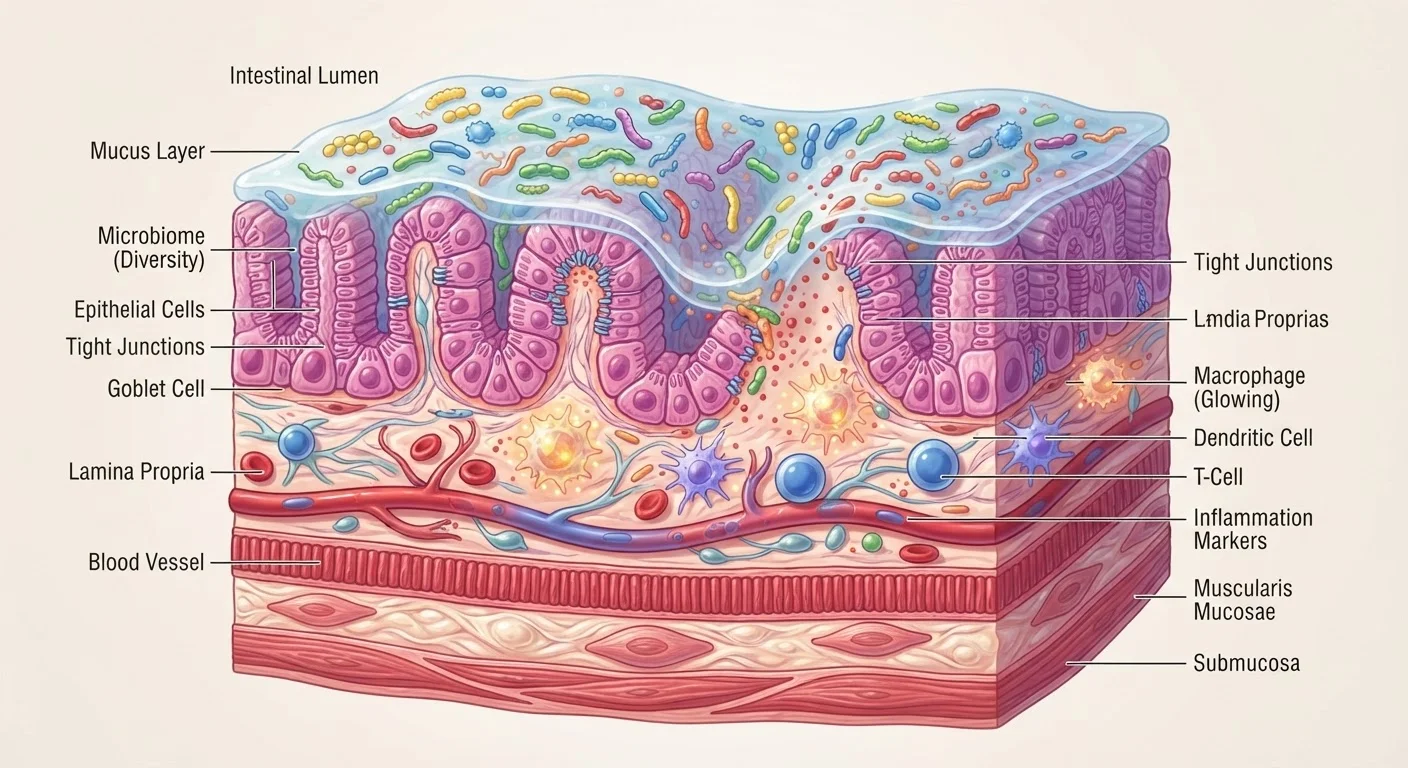
The gut-immune axis is the two-way communication system between the trillions of bacteria living in your digestive tract and the immune cells that defend your body. Your gut microbiome helps train and regulate your immune responses, influencing whether your body reacts appropriately to threats or tips into harmful, chronic inflammation. When the microbial community becomes imbalanced — a state called dysbiosis — the immune system can shift into an overactive mode, driving inflammation throughout the body.
Mechanistically, gut bacteria influence immunity through metabolites such as short-chain fatty acids (SCFAs), direct signaling via pattern recognition receptors on intestinal epithelial cells, and modulation of regulatory T-cell populations within gut-associated lymphoid tissue (GALT).
Why the Gut Is Your Immune System's Headquarters
Most people think of the immune system as living in the blood or lymph nodes. In reality, approximately 70% of the body's immune cells are concentrated in and around the gastrointestinal tract. This isn't coincidental — the gut is where the outside world (in the form of food, pathogens, and environmental substances) meets the body's interior, making it the frontline of immune defense.
Within the gut wall sits a dense network called gut-associated lymphoid tissue (GALT). This tissue constantly monitors the contents of the intestine, deciding what to tolerate and what to attack. Trillions of gut bacteria — your microbiome — are central to this process, acting as educators and regulators of GALT activity.
Beneficial bacteria help immune cells learn tolerance: the ability to coexist peacefully with harmless food proteins and commensals (friendly microbes) while staying alert to genuine threats. Without this microbial education, the immune system becomes poorly calibrated.
“The gut microbiome has emerged as a key regulator of immune homeostasis, with mounting evidence that shifts in microbial composition can have far-reaching consequences for inflammatory disease risk.”
— Eran Segal, Computational biologist and microbiome researcher, Weizmann Institute of Science
Dysbiosis: When the Microbial Balance Tips
Dysbiosis describes a shift in the gut microbial community away from a healthy, diverse state — often involving a loss of beneficial bacteria, reduced overall diversity, or the rise of inflammatory species. It doesn't take a dramatic event to trigger dysbiosis; common disruptors include prolonged antibiotic use, highly processed diets, chronic stress, poor sleep, and sedentary behavior.
When dysbiosis sets in, several things begin to go wrong simultaneously:
- The gut lining may become more permeable, allowing bacterial fragments and other immune-activating molecules to enter the bloodstream.
- Production of anti-inflammatory compounds called short-chain fatty acids (SCFAs) declines, reducing the signal that tells immune cells to stand down.
- Certain harmful bacterial products — like lipopolysaccharide (LPS) — can enter circulation and trigger immune alarm responses.
The result is often chronic, low-grade systemic inflammation: a persistent state of immune activation that, over time, is associated with conditions ranging from metabolic disorders to autoimmune disease. Researchers emphasize this is an association, not a proven direct cause, and the field continues to evolve.
~70%
Of immune cells located in or near the gut
A well-established figure in immunology reflecting the concentration of gut-associated lymphoid tissue (GALT) in the gastrointestinal tract.
38 trillion
Estimated bacterial cells in the human body
A 2016 estimate published in Cell by Sender et al. suggests the number of bacterial cells is roughly equal to the number of human cells.
1,000+
Bacterial species identified in the human gut
Research from large-scale microbiome projects has catalogued over a thousand distinct bacterial species, though any individual carries a subset of these.
SCFAs: The Gut's Built-In Anti-Inflammatory Messengers
One of the most important mechanisms linking gut bacteria to immune regulation is the production of short-chain fatty acids. SCFAs — primarily butyrate, propionate, and acetate — are produced when beneficial bacteria ferment dietary fiber in the colon.
These compounds do remarkable work. Butyrate, for example, serves as the primary fuel source for the cells lining the colon, keeping the gut wall strong and intact. Beyond that, SCFAs interact directly with immune cells, promoting the development of regulatory T cells — a class of immune cell whose job is to prevent excessive inflammatory responses.
A diet low in fiber means less substrate for SCFA-producing bacteria, which translates to weaker gut-lining integrity and a less well-regulated immune system. This is one mechanistic reason why dietary patterns are thought to influence systemic inflammation, though individual responses vary considerably.
For a deeper look at this process, see our explainer on how SCFAs messenger between the gut and immune system.
What This Means for Everyday Health Decisions
Understanding the gut-immune axis doesn't require a biology degree — the practical implications are relatively straightforward. A diverse, fiber-rich diet; consistent sleep; regular movement; and managing chronic stress are the lifestyle factors most consistently linked in research to healthier microbiome composition and lower inflammatory markers.
That said, the gut-immune axis is not a simple lever you can pull. Individual responses to dietary and lifestyle changes vary significantly based on genetics, existing health conditions, medications, and the unique composition of each person's microbiome. What robustly shifts one person's inflammatory markers may have minimal effect on another's.
For a broader look at what shapes microbiome balance day to day, the gut health basics explainer covers established and emerging evidence across diet, sleep, and stress. And for those navigating the terminology of this field, the gut-immune axis reference guide offers a plain-language breakdown of key concepts.
This article is for general informational and educational purposes only and does not constitute medical advice. If you have concerns about digestive symptoms, immune function, or chronic inflammation, please consult a qualified healthcare professional.