

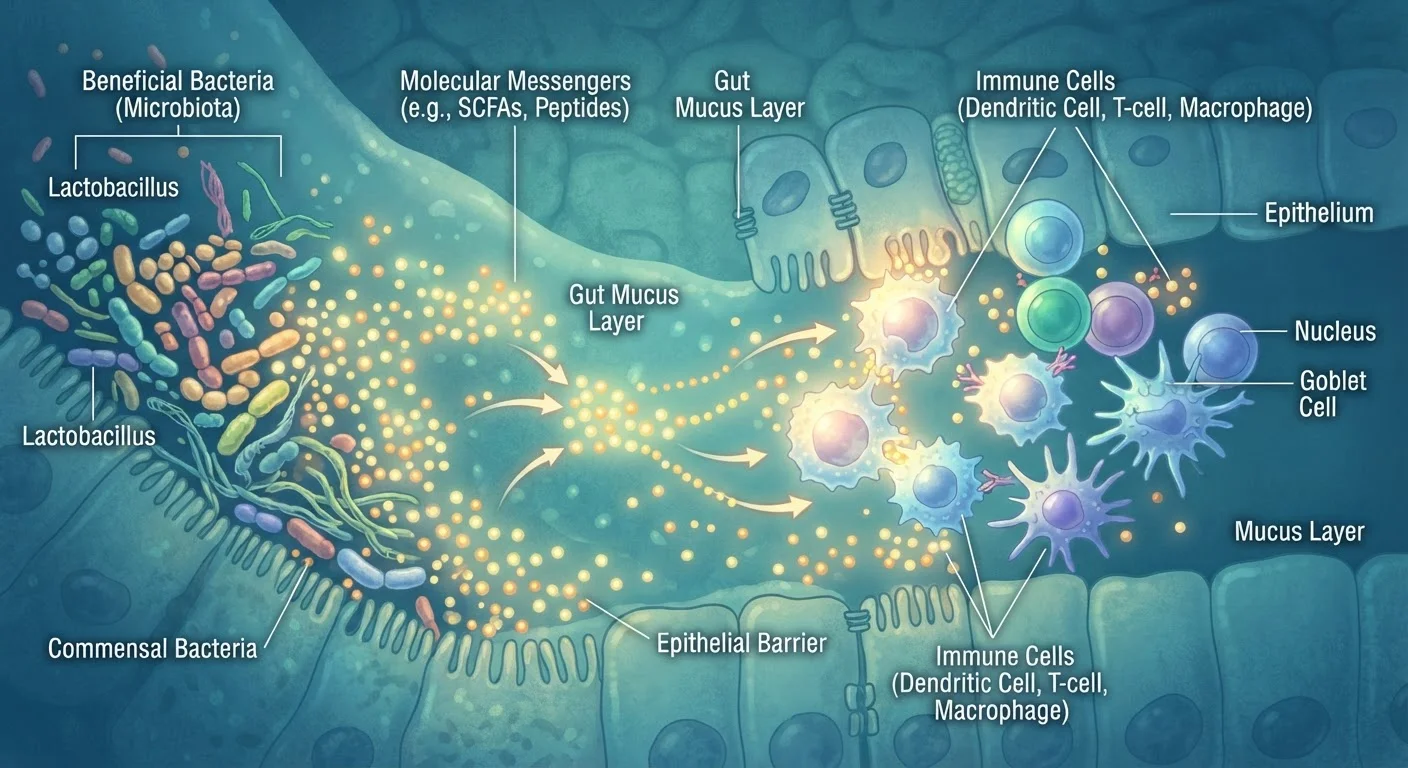
Key Takeaways
- SCFAs are produced by gut bacteria fermenting dietary fiber — not directly from the foods themselves.
- Butyrate, propionate, and acetate are the three primary SCFAs with distinct roles in gut and immune health.
- SCFAs help regulate the immune system by promoting anti-inflammatory signals and suppressing overreaction.
- A fiber-rich diet is the most evidence-supported way to encourage SCFA production.
- Low SCFA levels have been linked to conditions involving chronic inflammation, though research is ongoing.
Short-Chain Fatty Acids (SCFAs)
Short-chain fatty acids are small molecules produced when beneficial gut bacteria break down dietary fiber through a process called fermentation. The three most important SCFAs are butyrate, propionate, and acetate. They serve as chemical messengers that help regulate immune responses, reduce harmful inflammation, and maintain the integrity of the gut lining.
SCFAs exert their effects partly by inhibiting histone deacetylases (HDACs) — enzymes that influence gene expression — and by binding to G-protein-coupled receptors on immune and intestinal epithelial cells.
What SCFAs Are and Where They Come From
Your gut is home to trillions of microorganisms — a community collectively called the microbiome. As explained in our primer on the gut microbiome, these microbes perform critical functions that human cells cannot do alone. One of the most important is fermenting dietary fiber into short-chain fatty acids.
When you eat fiber-rich plant foods, much of that fiber passes undigested into the large intestine. There, bacterial species — particularly Firmicutes and Bacteroidetes — break it down and, as a byproduct, release SCFAs. The three primary ones are:
- Butyrate — the main fuel for colon-lining cells and the most extensively studied SCFA for immune regulation.
- Propionate — transported to the liver, where it influences metabolic processes and inflammatory signaling.
- Acetate — the most abundant SCFA, with roles in peripheral tissues and metabolic regulation.
The quantity and ratio of SCFAs produced depend heavily on the types and diversity of bacteria present, as well as the amount and variety of fiber consumed.
How SCFAs Communicate With the Immune System
The gut hosts roughly 70 percent of the body's immune cells — making the conversation between gut bacteria and immune tissue one of the most consequential in human biology. SCFAs are primary participants in that conversation. To understand the broader framework, see our article on the gut-immune axis.
~70%
Of immune cells located in the gut
Estimates consistently place the majority of the body's immune tissue in or around the gastrointestinal tract, underscoring its central role in systemic immunity.
3
Primary SCFAs produced by gut bacteria
Butyrate, propionate, and acetate are the main short-chain fatty acids generated through microbial fermentation of dietary fiber in the colon.
~10g/day
Average American daily fiber intake shortfall
Most Americans consume significantly less fiber than the recommended 25–38 grams per day, which researchers link to reduced SCFA-producing bacterial activity.
SCFAs act through two main mechanisms. First, they bind to specialized receptors on immune cells and intestinal epithelial cells, triggering anti-inflammatory signaling cascades. Second, they inhibit enzymes called histone deacetylases, which in turn influences which genes immune cells express — effectively dialing down inflammatory responses.
One particularly well-studied outcome is the promotion of regulatory T cells (Tregs). These immune cells act as referees, preventing the immune system from attacking the body's own tissues or overreacting to harmless triggers. Butyrate, in particular, has been shown in research settings to encourage Treg development in the colon.
SCFAs also reinforce the gut barrier — the single-cell-thick lining that separates intestinal contents from the bloodstream. A stronger barrier means fewer bacterial fragments and inflammatory molecules leak through, reducing the risk of systemic immune activation. This connection between microbial imbalance and inflammation is explored further in our article on gut bacteria and inflammation.
“The metabolites produced by gut microbes — particularly short-chain fatty acids — are not mere waste products. They are active signals that help calibrate the immune system, and their absence or reduction may have real consequences for inflammatory disease.”
— Justin Sonnenburg, Professor of Microbiology and Immunology, Stanford University School of Medicine
Supporting SCFA Production Through Everyday Choices
You cannot take a meaningful shortcut around the basics: SCFA production is fundamentally driven by what you feed your gut bacteria. The dietary pattern most consistently linked to robust fermentation in research is one high in diverse, minimally processed plant foods.
Key fiber sources that support SCFA-producing bacteria include:
- Legumes — lentils, chickpeas, black beans
- Whole grains — oats, barley, whole wheat
- Vegetables — especially Jerusalem artichokes, garlic, onions, and leeks
- Fruits — berries, apples, and pears contain fermentable fibers
Beyond diet, factors like antibiotic use, chronic stress, poor sleep, and low physical activity can reduce the populations of SCFA-producing bacteria. Our guide to everyday habits that influence the microbiome covers these interactions in detail.
It is worth noting that the research, while compelling, is still maturing. Scientists understand that SCFAs influence immune function; the precise mechanisms and optimal levels in humans remain active areas of investigation. This is general health information — not a substitute for personalized medical guidance.
This article is for informational purposes only and does not constitute medical advice. Consult a qualified healthcare professional for any personal health concerns or before making significant changes to your diet or lifestyle.