

Key Takeaways
- Dietary fiber is the single most evidence-backed driver of a diverse, healthy gut microbiome.
- Chronic stress and poor sleep can measurably shift gut bacteria composition in negative ways.
- Regular physical activity is independently associated with greater microbiome diversity.
- Unnecessary antibiotic use is one of the most disruptive forces on the gut microbiome.
- Probiotic and prebiotic supplements show promise but are not a replacement for whole-food dietary patterns.
- Much of gut microbiome science is still emerging — individual responses to interventions vary widely.
Gut Microbiome
Your gut microbiome is the vast community of bacteria, fungi, viruses, and other microorganisms living in your digestive tract — primarily the large intestine. These trillions of microbes help digest food, produce certain vitamins, regulate immune responses, and even communicate with your brain. The balance and diversity of these organisms is closely linked to many aspects of your health.
Microbiome composition is measured by analyzing microbial DNA in stool samples; diversity indices such as alpha diversity (species richness within a sample) are commonly used as markers of gut health in research settings.
Why Your Microbiome Responds to Daily Life
Your gut microbiome is not static. Unlike your genetic code, its composition shifts continuously in response to what you eat, how you sleep, how you handle stress, and how much you move. This plasticity is both an opportunity and a responsibility — it means everyday choices genuinely matter, but it also means no single intervention works the same way for everyone.
For a foundational understanding of what the microbiome is and how it functions, see our microbiome explainer. This article focuses specifically on the evidence behind the habits most likely to support — or undermine — that microbial community over time.
~38 trillion
Microbial cells in the average human gut
Estimates from a 2016 analysis by Sender et al. in Cell suggest microbial cells in the body are roughly equal in number to human cells, with the majority residing in the colon.
30+ plants/week
Plant variety associated with greater microbiome diversity
The American Gut Project, one of the largest citizen-science microbiome studies, found participants eating 30 or more different plant foods weekly had significantly more diverse gut microbiomes.
Up to 90%
Of body's serotonin produced in the gut
Research indicates that the vast majority of the body's serotonin — a key neurotransmitter — is synthesized in the gastrointestinal tract, highlighting the gut-brain connection.
Diet: The Most Powerful Lever
Of all lifestyle variables studied, diet has the strongest and most consistent evidence behind it. Dietary fiber — found in vegetables, fruits, legumes, and whole grains — acts as a prebiotic, meaning it feeds beneficial bacteria rather than being digested by your own cells. Bacteria that ferment fiber produce short-chain fatty acids (SCFAs), compounds that help regulate immune function and reduce inflammation in the gut lining.
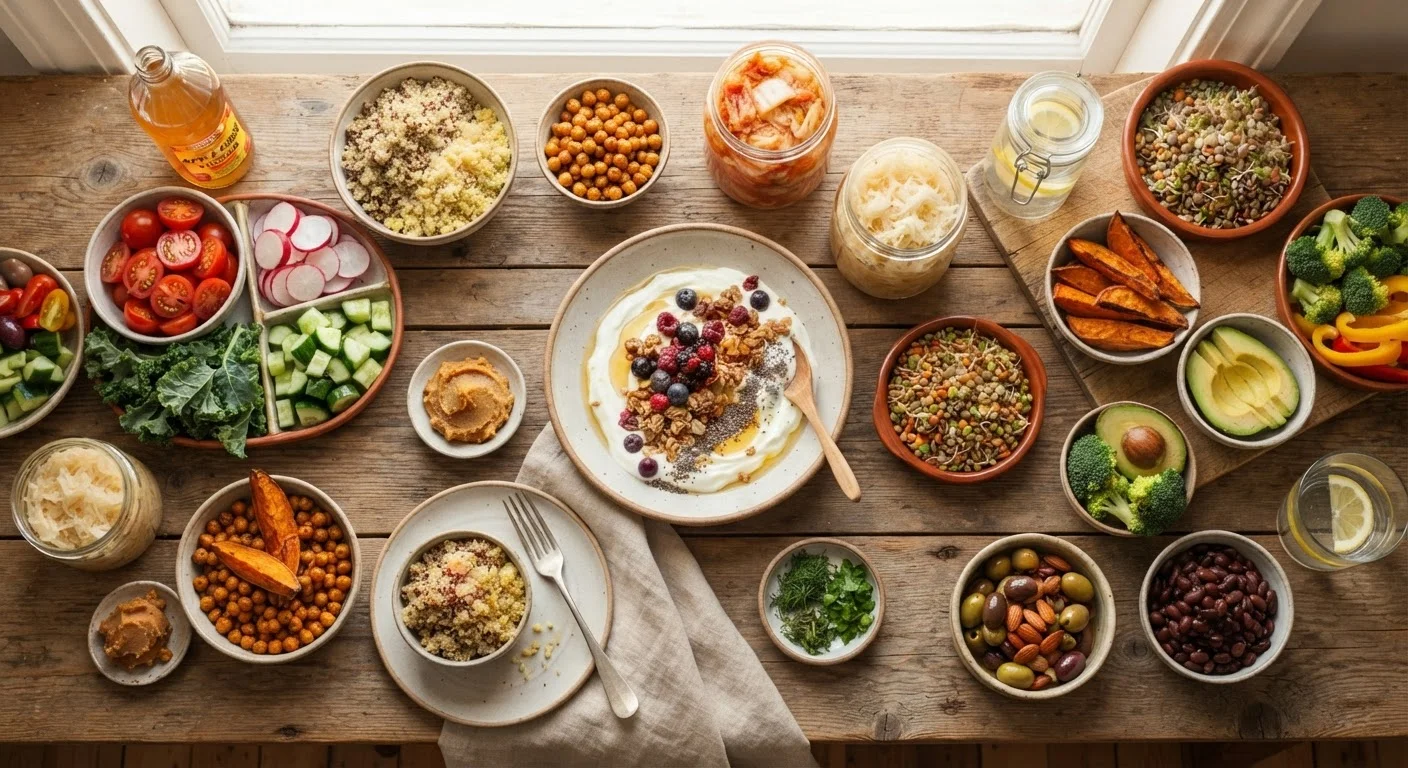
Research published in leading nutrition journals consistently finds that people eating a wide variety of plant foods — sometimes described as 30 or more distinct plant sources per week — tend to have more diverse microbiomes. Diversity itself is associated with resilience: a more varied microbial community is generally better equipped to handle disruptions.
Fermented foods such as plain yogurt, kefir, kimchi, miso, and tempeh introduce live microorganisms directly into the gut. A well-designed 2021 clinical trial from Stanford University found that a high-fermented-food diet increased microbiome diversity and decreased markers of immune activation in healthy adults. Ultra-processed foods, by contrast, are consistently linked in observational research to lower microbial diversity and increased intestinal inflammation.
For a closer look at how prebiotics and probiotics differ — and where supplements fit in — see our prebiotics and probiotics explainer.
Aim for Variety, Not Just Volume
Adding more plants to your diet matters, but diversifying which plants you eat appears to matter even more for microbiome health. Try rotating your vegetable, grain, and legume choices week to week rather than relying on the same handful of favorites. Small additions — a new type of bean, a different leafy green — can cumulatively expand the range of fibers your gut bacteria have access to.
Sleep, Stress, and the Gut-Brain Axis
The gut and the brain communicate constantly through a network of nerves, hormones, and immune signals known as the gut-brain axis. This bidirectional relationship means that what happens in your mind genuinely influences your gut — and vice versa. The gut-brain connection and its implications for mood are explored in depth in a companion article.
Chronic psychological stress activates the hypothalamic-pituitary-adrenal (HPA) axis, releasing cortisol and other stress hormones that can increase intestinal permeability and shift the composition of gut bacteria toward more pro-inflammatory species. Even short-term acute stress has been shown to temporarily alter microbial balance in animal and human studies.
Sleep quality is an underappreciated factor. Studies have found associations between sleep disruption and reduced populations of beneficial Lactobacillus and Bifidobacterium species. The relationship appears bidirectional: a disrupted microbiome may also impair sleep quality through its effects on neurotransmitter precursors like serotonin, much of which is produced in the gut.
The Science Is Still Developing
Gut microbiome research has accelerated dramatically over the past decade, but many findings are still based on observational studies or small clinical trials. Individual microbiome responses to the same intervention — the same food, the same stress, the same exercise dose — can vary widely between people. Treat current guidance as evidence-informed best practice, not a fixed prescription, and be skeptical of products making sweeping microbiome health claims.
Exercise, Antibiotics, and Other Factors
Regular physical activity is independently associated with greater microbiome diversity. Studies comparing sedentary and active adults — controlling for diet — find that physically active individuals tend to have higher proportions of butyrate-producing bacteria, which support gut-lining integrity. The effect appears dose-dependent up to a point, with moderate consistent exercise showing stronger associations than extreme endurance training.
Antibiotic use represents one of the most significant disruptors of the gut microbiome. While antibiotics are essential and life-saving medications, they affect beneficial bacteria alongside harmful ones. Recovery of the microbiome after a course of antibiotics can take weeks to months, and some species may not fully return. This does not mean avoiding necessary antibiotics — it means using them only when clinically warranted, as guided by your healthcare provider.
Other factors with emerging or moderate evidence include: chronic alcohol use (associated with reduced microbial diversity), smoking (linked to altered microbial composition), and environmental exposures. Early-life factors — mode of birth, breastfeeding — also shape the microbiome in ways that can persist, though these are outside adult lifestyle control.
For a comprehensive view of how these habits interact with immune function, see daily habits that shape the gut-immune relationship and the broader gut-immune connection hub.
This article is for general informational purposes only and does not constitute medical advice. Always consult a qualified healthcare professional before making significant changes to your diet, exercise routine, or supplement use, particularly if you have a chronic condition or digestive health concerns.