

Key Takeaways
- Your gut and brain communicate constantly through nerves, hormones, and immune signals.
- About 90% of the body's serotonin is produced in the gut, not the brain.
- Chronic stress can disrupt gut bacteria, which may in turn affect mood regulation.
- Diet, sleep, and movement are among the lifestyle factors that interact with the gut-brain axis.
- Current research is promising but still evolving — many mechanisms are not yet fully understood.
- Always consult a qualified healthcare professional before making changes to address mood or gut health concerns.
The Gut-Brain Axis
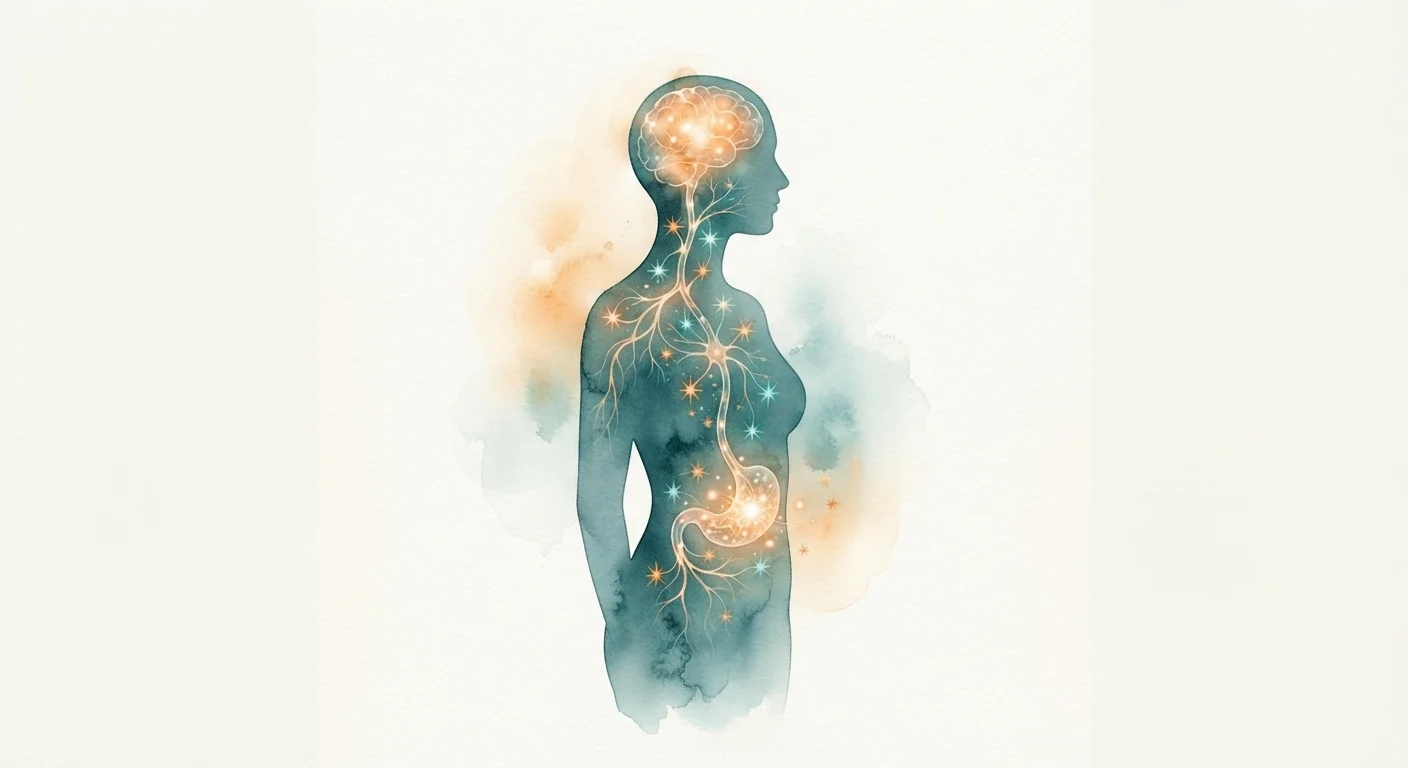
The gut-brain axis is a two-way communication network linking your digestive system and your brain. It operates through nerves, hormones, and immune signals — meaning your gut can influence how you feel emotionally, and your mental state can affect how your gut behaves. Researchers consider this connection central to understanding mood, stress, and overall mental wellness.
The vagus nerve is the primary physical highway of this axis, carrying signals in both directions. Gut microbes also produce or stimulate the production of neurotransmitters — including roughly 90% of the body's serotonin — that influence brain function.
More Than a Feeling: The Biology Behind the Gut-Brain Link
Most of us have felt it — butterflies before a big presentation, an upset stomach during a stressful week, or a sudden sense of calm after a satisfying meal. These sensations aren't coincidences. They're glimpses of a sophisticated biological communication network that scientists call the gut-brain axis.
Your digestive tract contains roughly 500 million neurons — part of what researchers call the enteric nervous system, sometimes nicknamed the "second brain." This network doesn't just manage digestion; it exchanges a continuous stream of chemical and electrical messages with your central nervous system. To understand the full scope of how your gut shapes your overall health, learn what your gut microbiome actually does.
Critically, this communication runs in both directions. Your brain can trigger gut symptoms during stress or anxiety, and signals originating in the gut can travel upward and influence brain activity, including the regions associated with emotion and decision-making.
~500M
Neurons in the enteric nervous system
The gut's own neural network rivals the complexity of the spinal cord, according to neurogastroenterology research.
~90%
Of body's serotonin produced in the gut
Research published in peer-reviewed gastroenterology journals consistently estimates this proportion, though gut and brain serotonin serve different functions.
2-way
Direction of gut-brain communication
The vagus nerve carries signals both from brain to gut and gut to brain, making the relationship bidirectional rather than a one-way broadcast.
Serotonin, Microbes, and the Mood Connection
One of the most striking discoveries in gut-brain research is how much serotonin — a neurotransmitter strongly associated with mood — originates in the gut. Specialized cells lining the intestinal wall produce the vast majority of the body's serotonin supply, primarily to coordinate intestinal movement. While this gut-derived serotonin doesn't cross into the brain directly, it interacts with local nerves in ways researchers are still working to understand.
The trillions of microorganisms living in your digestive tract — your gut microbiome — also play a role. Certain gut bacteria produce short-chain fatty acids, amino acids, and other compounds that interact with the gut lining, immune cells, and the vagus nerve. This positions the microbiome as a potential influence on how stress signals are processed throughout the body.
It's important to be clear about what the science does and doesn't yet show. Research in both animals and humans has found associations between microbiome composition and mood-related measures, but the field is still establishing which relationships are causal and which are correlational. Explore the deeper science behind how your digestive system affects your mood.
Where the Science Currently Stands
Much gut-brain research has been conducted in animal models or small human trials, which limits how confidently findings can be generalized. The gut-mood connection is real and increasingly well-documented, but claims that specific foods or supplements can reliably treat mood disorders are not yet supported by strong clinical evidence. Treat emerging findings with curiosity rather than certainty.
Everyday Habits That Support the Gut-Brain Axis
You don't need a specialist to start supporting this connection. Several well-researched lifestyle behaviors are associated with both gut health and emotional resilience — often because they influence the same underlying pathways.
- Varied, fiber-rich diet: Plant diversity feeds beneficial gut bacteria. Fermented foods like yogurt, kefir, and kimchi have been associated with greater microbiome diversity in observational studies.
- Consistent sleep: Poor sleep disrupts gut bacteria composition and elevates stress hormones, creating a cycle that can affect mood. Protecting sleep is one of the most evidence-backed moves you can make for both gut and mental health.
- Regular physical movement: Exercise is associated with more diverse gut microbiomes and improved mood — partly through direct neurological effects, partly through downstream gut benefits.
- Stress management practices: Because stress measurably alters gut function, practices that calm the nervous system — like slow breathing, mindfulness, and social connection — may help buffer the gut-brain feedback loop. See how anxiety physically affects your gut to understand why this matters.
For a practical breakdown of how these habits shape gut bacteria over time, see what everyday habits actually influence your microbiome.
Start With What's Already Proven
Rather than focusing on supplements or trending interventions, the most evidence-backed approach to supporting the gut-brain axis is foundational: eat a varied diet with plenty of plant foods, prioritize sleep, move your body regularly, and actively manage stress. These habits benefit both gut health and mental wellness through overlapping, well-documented mechanisms.
This article is for general informational purposes only and is not a substitute for professional medical advice, diagnosis, or treatment. If you are experiencing persistent mood concerns, digestive symptoms, or mental health challenges, please speak with a qualified healthcare provider.