

Key Takeaways
- Stress activates the fight-or-flight response, which physically slows or accelerates gut motility depending on stress type and duration.
- Chronic stress can compromise the gut's mucosal lining, potentially increasing intestinal permeability.
- Stress hormones alter the composition of gut bacteria, reducing diversity and beneficial species.
- The gut contains its own nervous system that communicates bidirectionally with the brain via the vagus nerve.
- Managing stress is a legitimate gut health strategy, not just a mental wellness concern.
The Gut-Brain Stress Response
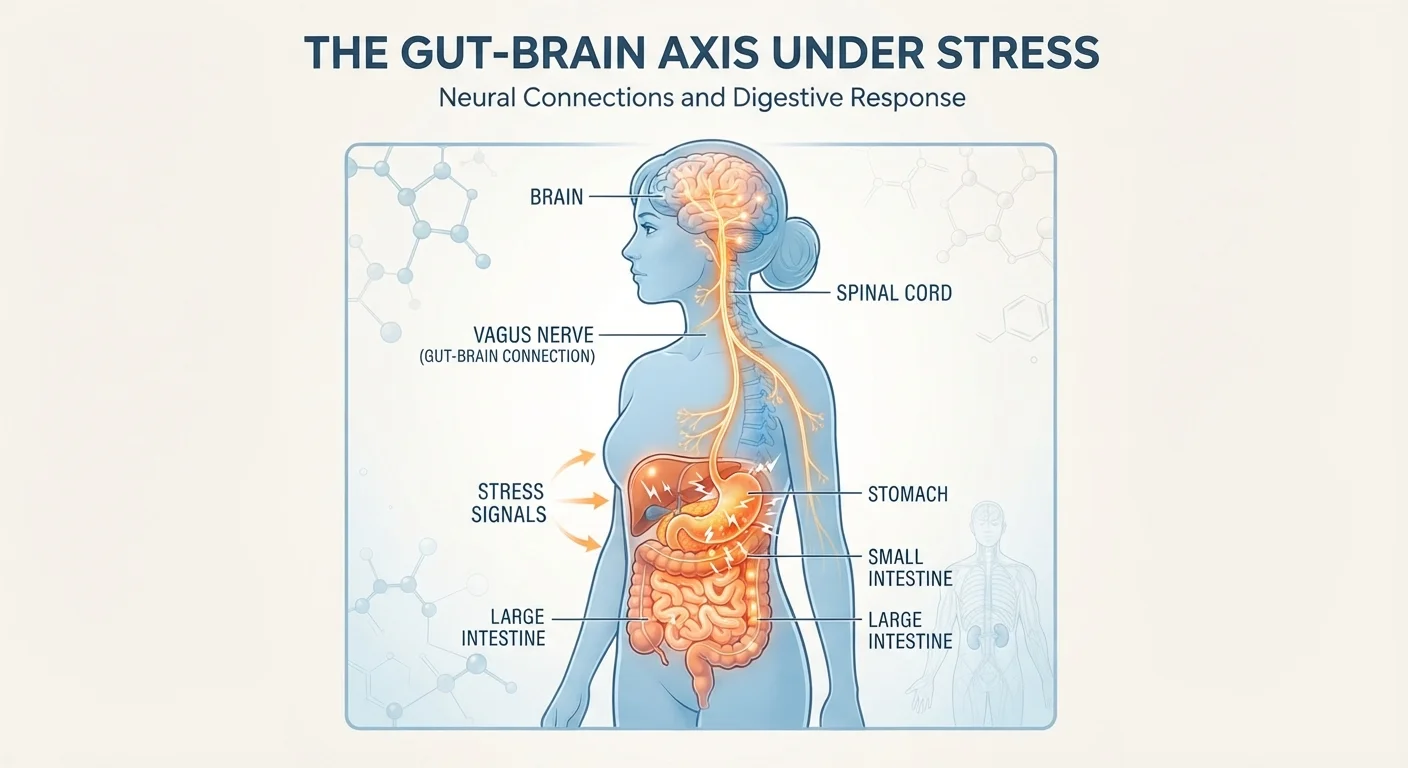
When you experience stress or anxiety, your brain sends signals through the nervous system that directly alter how your digestive system functions. This isn't just a feeling — it's a physical process involving hormones, nerve pathways, and immune activity that can change gut movement, bacteria balance, and the integrity of the intestinal lining. The relationship runs in both directions: a stressed brain disrupts the gut, and a disrupted gut can amplify stress signals back to the brain.
The primary communication highway involved is the enteric nervous system — a dense network of over 500 million neurons lining the gastrointestinal tract — coordinated with the vagus nerve and regulated by stress hormones including cortisol and corticotropin-releasing factor (CRF).
How Stress Hijacks Your Digestive System
Most people have felt it: the knotted stomach before a difficult conversation, the sudden nausea before a high-stakes moment, or the digestive chaos that follows a period of prolonged anxiety. These aren't coincidences or purely psychological reactions. Stress triggers a cascade of physiological changes that physically reshape how your gut operates.
When the brain perceives a threat — real or imagined — it activates the sympathetic nervous system, the so-called fight-or-flight branch of the autonomic nervous system. To understand why this system evolved, see our explainer on the biology of stress. Among its first priorities: redirecting energy away from digestion toward muscles and vital organs. Blood flow to the gut drops. Digestive enzyme production decreases. The coordinated muscular contractions that move food through your intestines — a process called peristalsis — become dysregulated.
Acute stress can slow gastric emptying (causing that heavy, nauseous feeling) or accelerate colonic transit (triggering urgency and loose stools). The specific response depends on stress intensity, duration, and individual variation.
~90%
Of body's serotonin produced in the gut
Research consistently shows that the vast majority of serotonin — a key neurotransmitter — is synthesized in gastrointestinal cells, not the brain.
500M+
Neurons in the enteric nervous system
The gut's own neural network contains more neurons than the spinal cord, earning it the informal title of the body's 'second brain.'
~40%
Of IBS patients report anxiety or depression
Studies published in gastroenterology journals consistently find high rates of co-occurring psychological distress among people diagnosed with irritable bowel syndrome.
The Role of Stress Hormones in Gut Function
The stress hormone cortisol plays a central role in mediating digestive disruption. Released by the adrenal glands in response to brain signals, cortisol influences gut motility, immune activity in the intestinal lining, and even the permeability of the gut wall itself.
Equally important is corticotropin-releasing factor (CRF), a neuropeptide secreted by the brain under stress. CRF receptors are present throughout the gastrointestinal tract, and when activated, they can increase gut sensitivity, promote inflammation in the intestinal lining, and alter fluid secretion — all contributors to the urgency, bloating, and discomfort people experience under stress.
Chronic exposure to these hormones — as opposed to short-term spikes — is where lasting damage can accumulate. Research has linked sustained cortisol elevation to increased intestinal permeability, sometimes described informally as "leaky gut," where the tight junctions between intestinal cells loosen, allowing substances to cross the gut wall that wouldn't normally do so. This can trigger low-grade immune responses and systemic inflammation.
Stress Management Is a Gut Health Strategy
Evidence-based stress reduction techniques — including diaphragmatic breathing, regular moderate exercise, and mindfulness practices — have been shown in research to positively influence gut motility and microbiome composition. Addressing stress isn't separate from caring for your digestive health; for many people, it's central to it. Speak with your healthcare provider about integrating behavioral approaches alongside any dietary changes.
Stress and Your Gut Microbiome
The trillions of bacteria, fungi, and other microorganisms that make up the gut microbiome don't exist in isolation from your mental state. Stress hormones alter the intestinal environment — changing pH, mucus thickness, and immune signaling — in ways that directly influence which microbes thrive and which decline.
Animal studies and growing human research suggest that psychological stress reduces the diversity of gut bacteria and depresses populations of beneficial species, including Lactobacillus and Bifidobacterium. At the same time, populations of potentially harmful bacteria may increase. The result is a microbiome under pressure — less resilient and less capable of performing its normal functions, including producing short-chain fatty acids that feed the gut lining and supporting immune regulation.
For a broader look at how everyday habits influence microbial balance, our gut health basics guide covers the established evidence. And if you're noticing symptoms that suggest disruption, recognizing signs of a microbiome under stress is a useful next read.
The Gut Talks Back: Why This Is a Two-Way Street
Perhaps the most important insight from modern gut research is that communication between the gut and brain is bidirectional. The enteric nervous system — a network of roughly 500 million neurons embedded in the gut wall — processes information largely independently of the brain and sends a continuous stream of signals upward via the vagus nerve.
Gut bacteria themselves produce neuroactive compounds. Around 90% of the body's serotonin is manufactured in the gut. Bacteria also synthesize gamma-aminobutyric acid (GABA), dopamine precursors, and other molecules that influence brain function and emotional regulation. This means a microbiome disrupted by stress doesn't just affect digestion — it can alter the very neurochemical signals that shape mood and anxiety levels.
Our companion article on how the digestive system affects your mood explores this feedback loop in detail, and what the gut-brain axis means for emotional health covers the mood implications further. The gut-immune dimension of this system is explored in our gut-immune connection hub.
This article is for general informational purposes only and does not constitute medical advice. If you are experiencing persistent digestive symptoms, anxiety, or related concerns, please consult a qualified healthcare professional.