

Key Takeaways
- Your gut contains about 500 million neurons, forming its own independent nervous system.
- Roughly 90% of the body's serotonin is produced in the gut, not the brain.
- Gut bacteria actively influence neurotransmitter production and stress-hormone signaling.
- The gut-brain connection is bidirectional — mental stress can disrupt digestion, and gut imbalance can affect mood.
- Supporting a diverse gut microbiome is one evidence-informed way to support this system.
Gut-Brain Axis
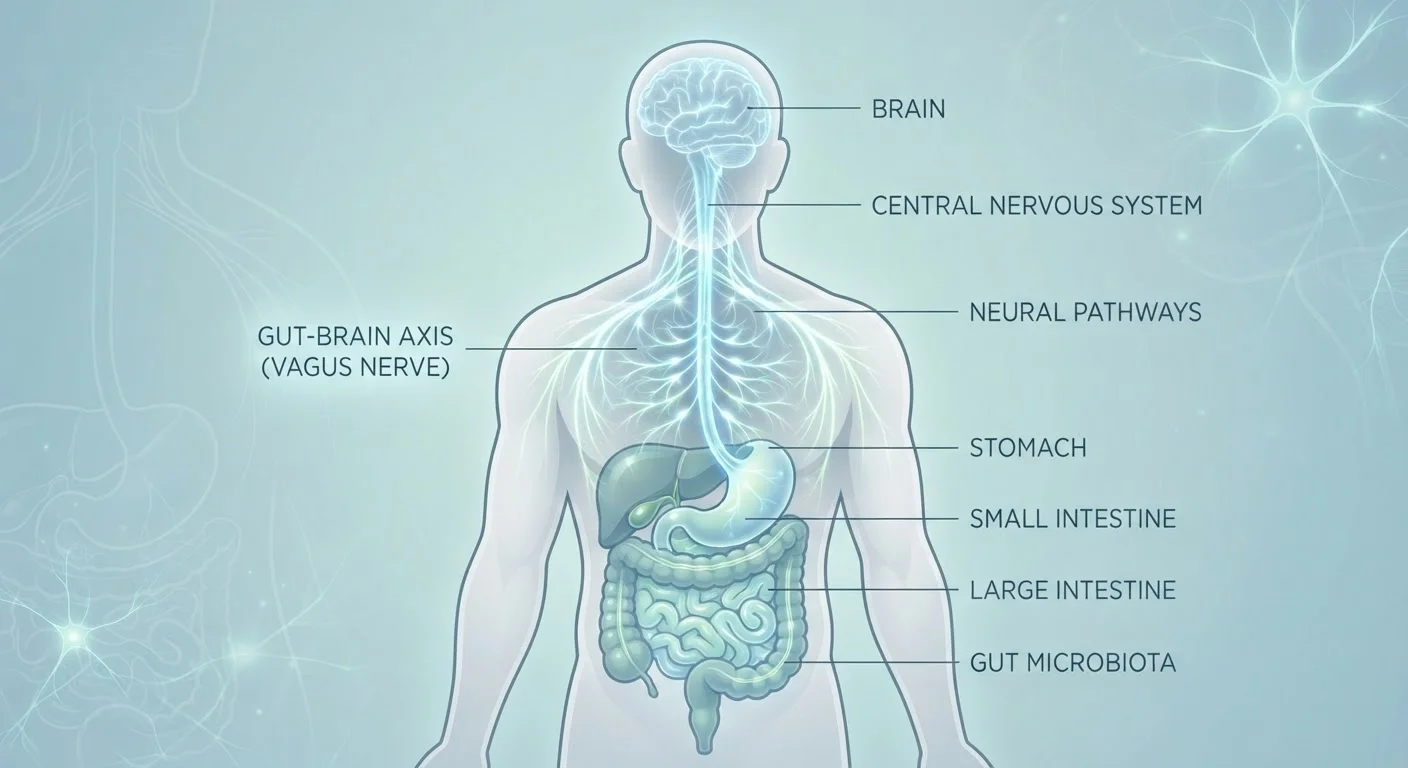
The gut-brain axis is the bidirectional communication network linking your digestive system and your brain. It operates through nerve signals, hormones, and immune messengers that travel in both directions — meaning your gut influences your mood just as your brain influences your digestion. Researchers sometimes call the gut the "second brain" because it contains its own extensive nervous system capable of functioning independently.
The enteric nervous system (ENS) — a mesh-like network of roughly 500 million neurons lining the gastrointestinal tract — drives much of this communication, with the vagus nerve serving as the primary highway between gut and brain.
Your Gut Has Its Own Nervous System
Most people think of the brain as the body's control center — but tucked inside the walls of your digestive tract is a vast neural network known as the enteric nervous system (ENS). Comprising roughly 500 million neurons, the ENS lines the gastrointestinal tract from the esophagus to the rectum. It regulates the wave-like muscular contractions that move food through the gut, coordinates secretion of digestive enzymes, and manages blood flow within the intestinal walls — all largely without waiting for instructions from the brain.
This operational independence is why neurogastroenterologists describe the gut as a "second brain." It doesn't generate conscious thought, but it processes sensory data and coordinates muscular responses with remarkable autonomy. The ENS communicates with the central nervous system — primarily through the vagus nerve, which acts as a high-capacity cable running from the brainstem down to the abdomen. Crucially, about 80–90% of the signals on the vagus nerve travel upward, from gut to brain, rather than the other way around.
To understand more about the microbial community that interacts with this neural network, see our guide to the gut microbiome.
Neurotransmitters, Hormones, and the Mood Connection
One of the most striking findings in gut-brain research is where serotonin comes from. Often called the "feel-good" neurotransmitter, serotonin is predominantly manufactured not in the brain but in the gut — approximately 90% of the body's serotonin is produced by enterochromaffin cells in the intestinal lining. While this gut-derived serotonin does not cross the blood-brain barrier directly, it governs intestinal motility and feeds into neural signaling loops that influence overall nervous system function.
Gut bacteria also play a direct role in neurotransmitter chemistry. Certain microbial species produce or stimulate the production of short-chain fatty acids, GABA precursors, and other neuroactive compounds that interact with ENS neurons and vagal pathways. Disruptions in the microbiome's composition — a state researchers call dysbiosis — have been associated in observational studies with altered mood, heightened anxiety responses, and changes in stress-hormone levels.
~500M
Neurons in the enteric nervous system
The gut's neural network rivals the complexity of the spinal cord, according to neurogastroenterology research.
~90%
Of body's serotonin produced in the gut
Research published in gastroenterology literature consistently finds the majority of serotonin synthesis occurs in intestinal enterochromaffin cells.
80–90%
Of vagus nerve signals travel gut-to-brain
Studies on vagal nerve anatomy indicate most fibers are afferent, carrying information from the gut upward to the brainstem.
The gut also communicates through the hypothalamic-pituitary-adrenal (HPA) axis, a hormone-signaling chain that governs the body's stress response. Signals from gut bacteria appear to modulate HPA activity, which helps explain why chronic digestive disturbance often coincides with elevated psychological stress — and vice versa. Stress can measurably alter gut motility and bacterial balance, creating a feedback loop that runs in both directions.
What This Means for Everyday Wellness
Understanding the gut-brain axis reframes how we think about everyday habits. Diet, sleep, physical activity, and stress management don't just affect digestion or mental health in isolation — they influence both systems simultaneously through this shared communication network.
Support the Gut-Brain Axis With Daily Habits
Eating a varied, fiber-rich diet supports the diversity of gut bacteria that interact with your nervous system. Regular physical activity and consistent sleep patterns also positively influence both gut motility and stress-hormone regulation. These habits won't replace medical care, but they create a foundation that supports both digestive and mental wellbeing.
Dietary fiber, for instance, feeds beneficial gut bacteria that produce short-chain fatty acids, which in turn support the integrity of the gut lining and interact with ENS neurons. Fermented foods introduce live microbial cultures that may contribute to microbiome diversity. Neither approach is a guaranteed remedy for mood symptoms, but evidence consistently links diverse, fiber-rich diets with healthier gut composition and, in some population studies, more favorable mental health markers.
The gut-brain connection also has implications for immune health. A significant portion of the body's immune activity is coordinated in the gut — and that immune activity intersects with both the microbiome and the nervous system. For a deeper look at those overlapping systems, see how the gut-immune axis works.
It's worth emphasizing that gut health is one contributing factor among many when it comes to mood and mental wellbeing. Current research is promising but still developing. If you're experiencing persistent mood symptoms or digestive concerns, consult a qualified healthcare professional — this information is intended as general education, not medical advice.
This article is for informational purposes only and does not constitute medical advice. Always consult a qualified healthcare provider for personal health concerns, diagnosis, or treatment decisions.