

Key Takeaways
- Your gut microbiome contains trillions of microorganisms that actively influence your health.
- Microbial diversity — having many different species — is widely considered a marker of a healthy gut.
- The microbiome plays a direct role in immune function, metabolism, and even mood regulation.
- Diet, especially fiber intake, is one of the most powerful levers for shaping microbiome composition.
- Disruptions to microbial balance, called dysbiosis, are linked to a range of health conditions.
- Always consult a healthcare professional before making significant changes to address gut health concerns.
Gut Microbiome
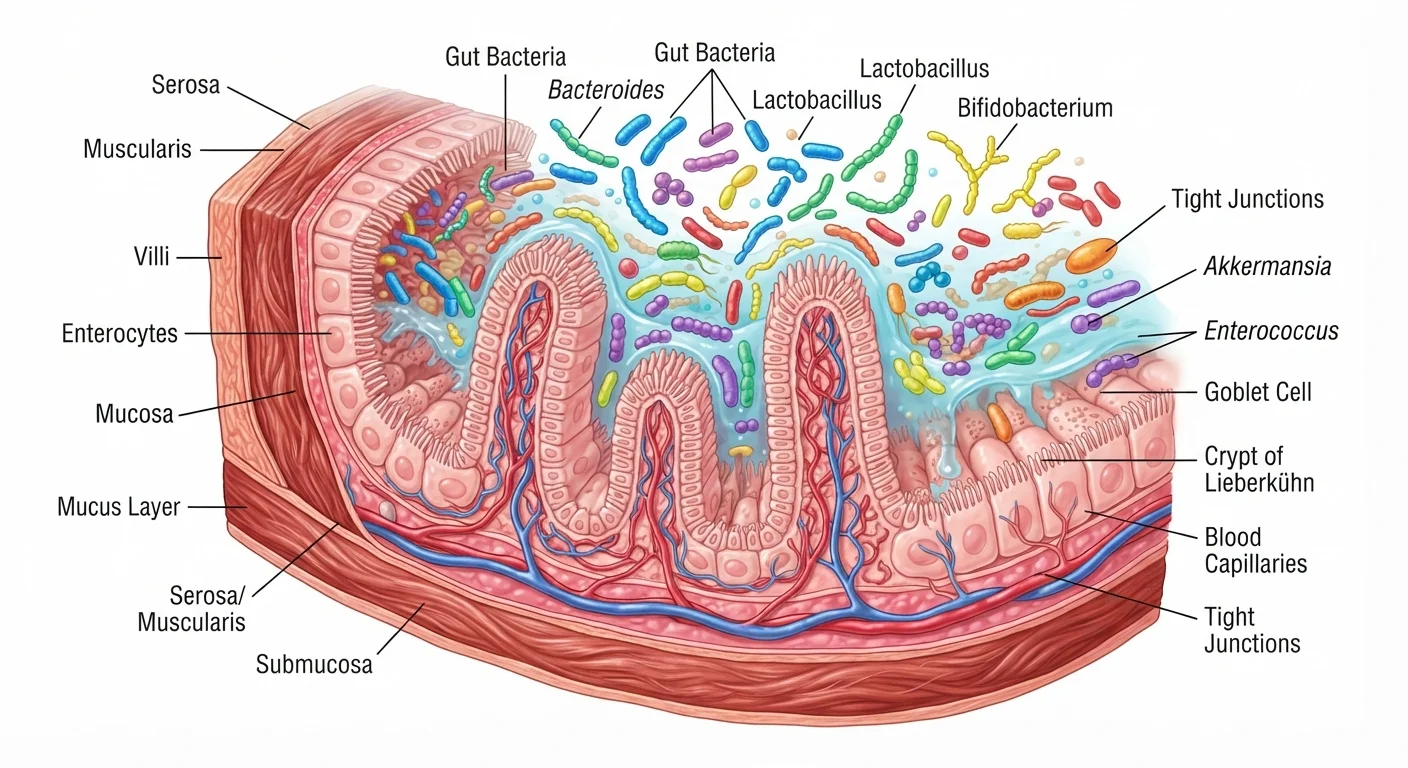
The gut microbiome is the vast community of microorganisms — bacteria, viruses, fungi, and other microbes — that live in your digestive tract, primarily in the large intestine. These trillions of microbes are not passive passengers; they actively help digest food, produce essential nutrients, regulate inflammation, and communicate with your immune system. Each person's microbiome is unique, shaped by genetics, diet, environment, and life history.
Researchers estimate the human gut harbors somewhere between 500 and 1,000 distinct microbial species, with the bacterial component alone encoding roughly 150 times more genes than the human genome itself.
What the Gut Microbiome Actually Is
The word "microbiome" gets used often, but what does it really mean for your body? Simply put, it's the entire ecosystem of microorganisms living in your gastrointestinal tract — a community so large and metabolically active that many researchers consider it a functional organ in its own right.
Most of this community resides in the large intestine (colon), where conditions are ideal for microbial life: warm, nutrient-rich, and low in oxygen. These microbes aren't just surviving there — they're working. They break down dietary fiber your own digestive enzymes can't process, synthesize vitamins like B12 and K2, and train your immune system to distinguish threats from harmless substances.
For a broader look at how all these elements connect, see our complete gut health overview.
~38 trillion
Microbial cells in the human body
A widely cited estimate from Sender et al. (2016) suggests human and microbial cells exist in roughly a 1:1 ratio, placing the gut microbiome's scale in striking perspective.
500–1,000
Distinct bacterial species in a typical gut
Research published in Nature Reviews Microbiology estimates the average adult gut hosts hundreds of bacterial species, with composition varying substantially between individuals.
~70%
Of immune cells located in or near the gut
Multiple immunology reviews cite this figure, underscoring the gut's central role as a site of immune regulation and surveillance.
Why Diversity Is the Goal
Not all microbiomes are created equal. Research consistently links microbial diversity — the presence of many different species — with better health outcomes, while a less varied microbiome has been associated with conditions ranging from inflammatory bowel disease to type 2 diabetes.
Think of diversity as ecological resilience. A gut with many species can adapt when one group is disrupted. A low-diversity microbiome is more fragile: remove a key player — through antibiotics, illness, or a poor diet — and the whole system may tip toward imbalance, a state researchers call dysbiosis.
What drives diversity? Diet is the single most modifiable factor. Plant foods contain a wide range of prebiotic fibers that selectively feed beneficial bacteria. Studies suggest that people who regularly eat 30 or more different plant foods per week tend to have more diverse microbiomes than those eating fewer varieties.
Eat the Rainbow for Your Microbes
Aiming for variety in plant foods — different vegetables, fruits, legumes, nuts, and whole grains — provides a wider range of prebiotic fibers that feed different beneficial bacterial species. Some researchers suggest 30 or more distinct plant foods per week as a practical diversity target, though any increase from your current baseline is a meaningful step forward.
The Microbiome's Reach Beyond Digestion
The gut microbiome's influence extends well beyond breaking down food. Three key areas where its impact is increasingly well-documented are immunity, metabolism, and the gut-brain axis.
Immunity
Roughly 70% of the body's immune cells are located in or around the gut lining. Gut microbes interact directly with these immune cells, helping calibrate responses so the immune system attacks genuine pathogens without overreacting to harmless substances. This dialogue begins in infancy and continues throughout life. To explore this connection in depth, read our article on the gut-immune connection.
Metabolism
Gut bacteria produce short-chain fatty acids (SCFAs) when fermenting fiber. These compounds influence fat storage, blood sugar regulation, and appetite-signaling hormones. Imbalances in microbial communities have been observed alongside metabolic conditions, though researchers are still working to establish cause-and-effect relationships in many cases.
The Gut-Brain Axis
Via the vagus nerve, neurotransmitter production, and immune signaling, the gut and brain communicate bidirectionally. Early research suggests that microbiome composition may affect mood, stress response, and cognitive function — though this field is still emerging and should not be overstated.
For a structured introduction to how the microbiome shapes immune function specifically, see The Gut Microbiome and Immune Function: A Beginner's Roadmap.
What Disrupts the Microbiome — and What Supports It
Several everyday factors can tip the microbiome toward dysbiosis:
- Antibiotics — necessary and life-saving when prescribed, but broadly disruptive to microbial communities; recovery can take weeks to months.
- Highly processed diets — low in fiber and high in additives that some studies suggest may reduce beneficial bacteria.
- Chronic stress — affects gut motility and the gut-brain axis in ways that alter microbial balance.
- Poor sleep — emerging research links disrupted sleep patterns to shifts in microbiome composition.
On the supportive side, a diet rich in diverse plant foods, fermented foods (such as yogurt, kefir, and kimchi), and adequate fiber is consistently associated with a healthier microbiome. Gut health also intersects with nutritional adequacy — exploring key vitamins and minerals can further inform a gut-supportive diet.
Microbiome Science Is Still Evolving
While associations between gut microbial composition and various health conditions are increasingly well-documented, many cause-and-effect relationships are still being established. Not every finding from animal studies translates directly to humans. Treat emerging claims with appropriate skepticism and rely on established guidance from healthcare professionals for personal health decisions.
This article is for general informational purposes only and does not constitute medical advice. If you have concerns about your digestive health, consult a qualified healthcare professional.