

Key Takeaways
- The gut microbiome is a vast community of trillions of microorganisms that live primarily in your large intestine.
- An estimated 70% of the body's immune cells are located in or near the gut lining.
- The gut and immune system communicate constantly through chemical signals, immune cells, and the gut barrier.
- Disruptions to microbial balance — called dysbiosis — are linked to increased inflammation and immune dysfunction.
- Everyday habits like diet, sleep, and stress management meaningfully influence gut-immune health.
Start here
What Is the Gut Microbiome?
Next
How the Gut and Immune System Communicate
Dig deeper
What Disrupts the Balance?
Apply it
Supporting Your Gut-Immune Axis Every Day
What Is the Gut Microbiome?
Your digestive tract is home to a vast, living ecosystem. The gut microbiome — the collective community of trillions of bacteria, fungi, viruses, and other microorganisms in your intestines — is now understood to be far more than a byproduct of digestion. It is an active participant in your health.
The majority of these microbes live in the large intestine, where they ferment dietary fiber, produce vitamins, and generate chemical compounds that travel throughout the body. Each person's microbiome is as individual as a fingerprint, shaped by genetics, early-life exposures, diet, medications, and environment.
Gut microbiome
The entire community of microorganisms — bacteria, fungi, viruses, and more — living in your digestive tract. Collectively they perform vital roles in digestion, immune function, and metabolic health.
Dysbiosis
An imbalance in the gut microbial community, often characterized by reduced diversity or dominance of potentially harmful microbes. Associated with various digestive and immune disruptions.
Gut-immune axis
The bidirectional communication network between the gastrointestinal tract and the immune system, mediated by microbial signals, immune cells, and the gut lining.
Intestinal barrier
The single-cell-thick lining of the gut that selectively allows nutrients to pass into the bloodstream while blocking harmful substances and pathogens.
Short-chain fatty acids (SCFAs)
Compounds produced when gut bacteria ferment dietary fiber. SCFAs help nourish the gut lining, regulate inflammation, and support immune cell development.
Mucosal immunity
The layer of immune defense operating at the body's mucosal surfaces — including the gut lining — which acts as a first line of defense against pathogens encountered through food and drink.
For a broader look at how gut health connects to digestion and overall wellness, the Gut Health Basics hub is a solid starting point.
How the Gut and Immune System Communicate
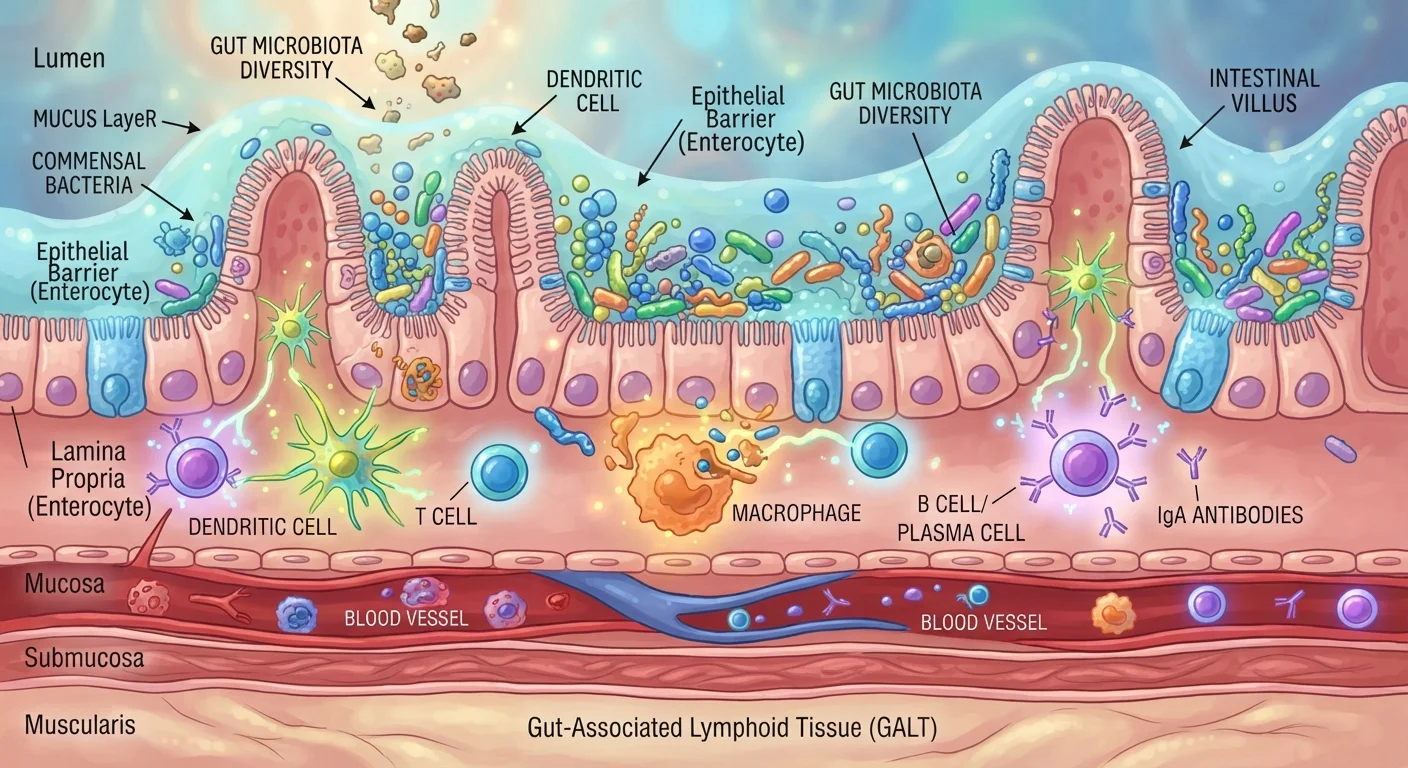
Perhaps the most striking fact in gut science is that an estimated 70% of the body's immune cells reside in or directly adjacent to the gut lining. This isn't coincidental — it reflects the gut's unique role as the body's largest interface with the external environment. Everything you eat brings foreign material into contact with your internal tissues, so a powerful, local immune system is essential.
The gut and immune system interact through several channels:
- The intestinal barrier: A single-cell-thick lining separates gut contents from the bloodstream. When healthy, it allows nutrients through while blocking pathogens and toxins. When compromised, unwanted substances can trigger immune responses.
- Short-chain fatty acids (SCFAs): Gut bacteria produce these compounds by fermenting fiber. SCFAs directly influence immune cell behavior, helping calibrate the balance between defensive inflammation and immune tolerance.
- Mucosal immune structures: Specialized tissues like Peyer's patches sample gut contents continuously, training the immune system to distinguish harmless food proteins from genuine threats.
This two-way relationship is what researchers call the gut-immune axis. For a more detailed breakdown of what that term encompasses, see what the gut-immune axis actually is.
Diversity Is the Goal, Not Perfection
Research consistently shows that a diverse microbiome — one containing many different species — is associated with better immune resilience. Rather than focusing on any single 'superfood,' aim for a wide variety of plant-based foods across the week. Small, consistent dietary additions tend to have a more lasting impact than dramatic short-term changes.
What Disrupts the Balance?
When the microbial community loses diversity or becomes dominated by less beneficial species — a state called dysbiosis — the immune system can shift toward chronic, low-grade inflammation. Research has linked dysbiosis to conditions including inflammatory bowel disease, allergies, and metabolic disorders, though causation versus correlation is still being studied in many cases.
Common contributors to dysbiosis include:
- Diet: Highly processed foods low in fiber tend to reduce microbial diversity; high-variety, fiber-rich diets support it.
- Antibiotics: While medically necessary in many situations, antibiotics affect both harmful and beneficial bacteria, sometimes causing lasting shifts in microbial composition.
- Chronic stress: The gut-brain axis means psychological stress can alter gut motility and microbial balance.
- Sleep disruption: Emerging research suggests poor sleep quality is associated with reduced microbial diversity.
Antibiotics Affect Your Microbiome
Antibiotics are often medically necessary, but they don't distinguish between harmful bacteria and beneficial microbes — they affect both. Unnecessary or frequent antibiotic use is one of the better-documented contributors to dysbiosis. Never take antibiotics without medical guidance, and always complete a prescribed course as directed by your healthcare provider.
To understand how microbial imbalance specifically drives immune overreaction and inflammation, gut bacteria, inflammation, and immunity simplified explores the mechanism in accessible detail.
Supporting Your Gut-Immune Axis Every Day
While no single habit rewires the microbiome overnight, the research consistently points to a cluster of everyday behaviors that support microbial diversity and gut-immune balance.
- Eat a wide variety of plants: Dietary fiber feeds beneficial bacteria. Aiming for variety — different vegetables, legumes, whole grains, fruits — supports a richer microbial community.
- Include fermented foods: Foods like yogurt, kefir, kimchi, and sauerkraut introduce live microorganisms and have been associated with microbiome diversity in observational studies.
- Manage stress actively: Mind-body practices such as regular physical activity, adequate sleep, and stress-reduction techniques all have documented associations with gut health markers.
- Use medications judiciously: Work with your healthcare provider to use antibiotics only when necessary, and discuss gut health considerations if you're on long-term medications.
The Science Is Still Evolving
Gut microbiome research is a rapidly advancing field, and many findings — while promising — are still being replicated and refined. What's established as consensus today may be nuanced by future studies. Treat current evidence as a useful guide, not a final word, and be cautious of health claims that outpace the science.
This is general health information, not a prescription. Individual needs vary significantly, and anyone with persistent digestive symptoms, immune concerns, or a complex health history should work directly with a qualified healthcare professional. For readers ready to go further, our full reference guide to gut-immune terms and concepts provides a comprehensive next step.
This article is for informational and educational purposes only. It is not medical advice and is not a substitute for professional medical guidance, diagnosis, or treatment. Always consult a qualified healthcare professional with questions about your health.