

Key Takeaways
- Roughly 70% of the body's immune cells are located in and around the gut.
- The gut microbiome actively trains immune cells to tell friend from foe.
- Disruption of the gut-immune axis is linked to increased inflammation and susceptibility to illness.
- Everyday habits — diet, sleep, stress management — directly influence gut-immune health.
- The gut also communicates with the brain, forming a broader network affecting mood and cognition.
Gut-Immune Axis
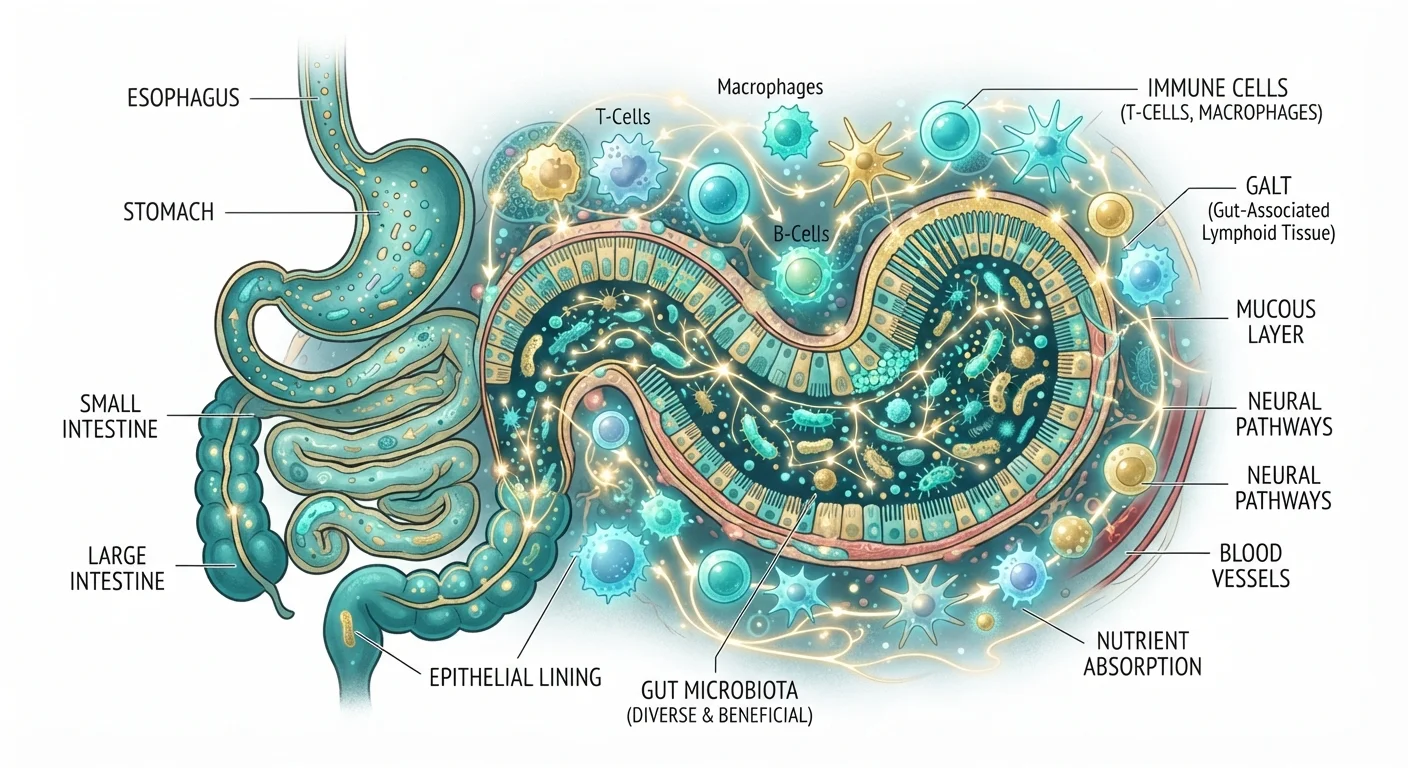
The gut-immune axis is the ongoing, two-way communication network between your digestive tract and your immune system. Your gut houses the majority of the body's immune cells, and the trillions of microorganisms living there — collectively called the microbiome — actively train and regulate immune responses. When this relationship is balanced, the immune system can distinguish genuine threats from harmless substances. When it's disrupted, the risk of immune dysregulation increases.
This axis operates through multiple channels, including microbial metabolites such as short-chain fatty acids (SCFAs), cytokine signaling, and interactions at the gut-associated lymphoid tissue (GALT), which forms the largest immune compartment in the human body.
A Partnership Built Into Your Biology
Your immune system doesn't operate in isolation — it's deeply embedded in your gut. Around 70% of the body's immune cells reside in and around the digestive tract, a structure known as the gut-associated lymphoid tissue, or GALT. This isn't a coincidence. The gut is the largest interface between your body and the external environment, processing everything you eat, drink, and inadvertently inhale. Placing immune surveillance there is a biological necessity.
The gut-immune axis describes the continuous, bidirectional dialogue between your digestive system and your immune system. Neither side is simply reacting to the other — they are in constant negotiation, shaping each other's behavior in real time. For a broader look at how this system is organized, the gut microbiome and immune function beginner's roadmap offers a helpful starting point.
~70%
Of immune cells located in the gut
Widely cited in immunology literature, reflecting the gut-associated lymphoid tissue's role as the body's largest immune compartment.
38 trillion
Estimated microbial cells in the human gut
A 2016 estimate published in Cell suggests the number of microbial cells in the body is roughly equal to — or slightly exceeds — the number of human cells.
1,000+
Bacterial species identified in the human gut
Research from the Human Microbiome Project and related studies has catalogued over a thousand distinct bacterial species across the human gastrointestinal tract.
What the Microbiome Does for Immune Function
The gut microbiome — the vast community of bacteria, fungi, viruses, and other microorganisms living in your digestive tract — is not a passive bystander. These microbes actively train and regulate immune cells from early life onward. They help immune cells distinguish between harmful pathogens and harmless substances like food proteins, a critical process that prevents unnecessary inflammation.
One key mechanism involves short-chain fatty acids (SCFAs), compounds produced when gut bacteria ferment dietary fiber. SCFAs such as butyrate influence the behavior of immune cells, supporting anti-inflammatory responses and reinforcing the integrity of the gut lining. A compromised gut lining — sometimes called increased intestinal permeability — can allow bacterial fragments to enter the bloodstream, potentially triggering immune activation in places it shouldn't occur.
Microbiome disruption, known as dysbiosis, has been associated in research with a range of immune-related conditions, from heightened susceptibility to infections to chronic low-grade inflammation. The relationship is complex and not yet fully understood, but the direction of evidence is consistent: a diverse, stable microbiome tends to support a well-regulated immune system.
Everyday Factors That Shape This Axis
The gut-immune axis isn't fixed — it responds to how you live. Diet is among the most studied influences. Fiber-rich foods feed beneficial gut bacteria, while diets dominated by ultra-processed foods are associated with reduced microbiome diversity. Sleep quality matters too; disrupted sleep has been linked to both microbiome changes and altered immune responses in research settings.
Stress is another significant variable. Chronic psychological stress can alter gut motility, gut barrier function, and the composition of the microbiome, all of which feed back into immune regulation. Physical activity, conversely, has been associated with greater microbial diversity in multiple studies. For a practical look at how these habits intersect, see daily habits that shape the gut-immune relationship.
It's worth noting that the gut also communicates with the nervous system through what researchers call the gut-brain axis — a separate but related network that influences mood and cognition. If you're curious about that dimension, your gut is talking to your brain explores those connections in depth.
Support Your Gut-Immune Axis Through Daily Habits
Prioritizing dietary variety — especially fiber-rich vegetables, legumes, and whole grains — provides fuel for beneficial gut bacteria. Consistent sleep, stress management practices, and regular physical activity each contribute to a more stable gut environment. These habits work cumulatively over time rather than delivering overnight results.
Why This Matters for Your Health Decisions
Understanding the gut-immune axis reframes how we think about immunity. Immune health isn't just about avoiding germs or taking supplements — it's deeply tied to the microbial ecosystem inside your digestive tract and the daily choices that sustain or disrupt it. This is general health information intended to support informed decision-making, not a substitute for individualized medical guidance.
For readers who want to go deeper — from terminology like "mucosal immunity" to the mechanics of immune tolerance — the full reference guide to gut-immune key terms and concepts provides a thorough breakdown. And for foundational context on digestive health broadly, Gut Health From Every Angle is an excellent companion read.
This article is for informational purposes only and is not a substitute for professional medical advice, diagnosis, or treatment. Always consult a qualified healthcare provider with questions about your health.