
The Gut-Immune Connection: What Your Digestive Tract Has to Do With Getting Sick

Key Takeaways
- Roughly 70% of the body's immune cells are located in or around the gut.
- The trillions of microbes in your gut actively train and regulate immune responses.
- Disrupted gut bacteria — called dysbiosis — can weaken immune defenses or trigger overreaction.
- Diet, sleep, stress, and antibiotic use all influence the gut-immune relationship.
- Supporting gut health is a reasonable, evidence-informed strategy for everyday immune resilience.
The Gut-Immune Connection
The gut-immune connection describes the close, two-way relationship between your digestive tract and your immune system. A large portion of the body's immune tissue is located in and around the gut, where it continuously monitors what you eat, the microbes you harbor, and potential threats. The health of your gut — including the balance of bacteria living there — directly shapes how well your immune defenses function.
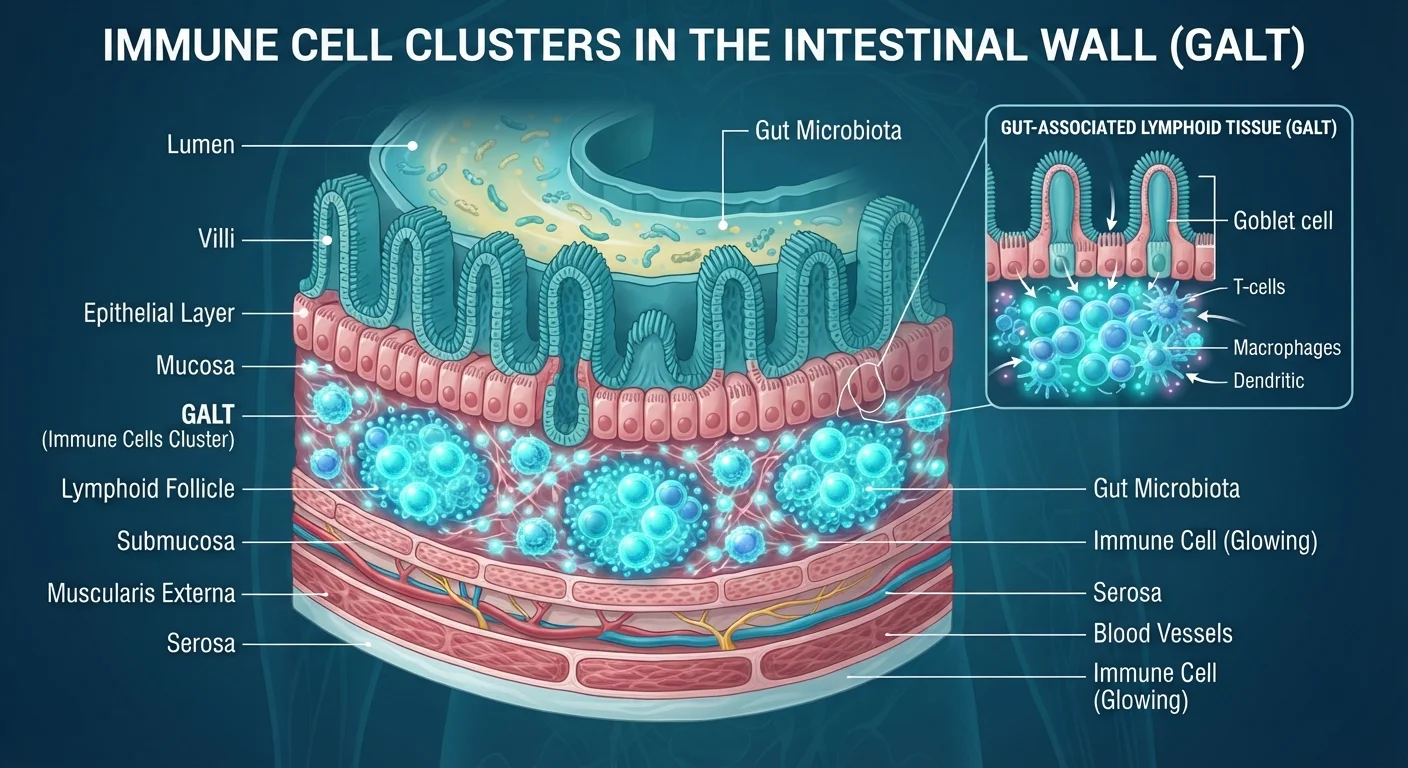
This relationship is often studied through the gut-associated lymphoid tissue (GALT), a network of immune structures lining the intestinal wall, and the gut-immune axis, which coordinates signaling between microbial populations and systemic immune responses.
Why the Gut Is an Immune Organ
Most people think of immunity as the province of white blood cells circulating in the bloodstream, or the lymph nodes that swell during an infection. What surprises many is that the digestive tract itself is one of the body's primary immunological sites. Roughly 70% of the body's immune cells reside in or adjacent to the gastrointestinal tract.
This concentration makes biological sense. Every day, your gut encounters an enormous volume of foreign material — food particles, environmental microbes, potential pathogens — all entering through the same channel your body uses to absorb nutrients. The immune system needs to be present in force to make rapid decisions: tolerate this, attack that.
Lining the intestinal wall is a specialized network called gut-associated lymphoid tissue, or GALT. It includes structures such as Peyer's patches, which sample the gut's contents and relay information to immune cells. This infrastructure allows the immune system to operate continuously and locally, without needing to route every decision through distant organs. Explore the broader framework through our Gut-Immune Connection hub.
How Your Microbiome Trains Your Immune System
The gut microbiome — the community of trillions of bacteria, fungi, and other microorganisms living in your intestines — is not a passive passenger. It plays an active role in shaping how your immune system develops and responds to challenges.
From early life, microbial exposure helps educate immune cells to distinguish between harmless substances and genuine threats. Beneficial bacteria produce short-chain fatty acids (SCFAs) through the fermentation of dietary fiber. SCFAs like butyrate act as signaling molecules that help regulate inflammatory responses and support the integrity of the gut lining — the physical barrier that prevents pathogens from crossing into the bloodstream.
“The microbiome plays a crucial role in the development and function of the immune system. Disruptions in microbial communities have been associated with a wide range of immune-related conditions, from allergies to autoimmune disease.”
— National Institutes of Health, National Human Genome Research Institute, U.S. federal biomedical research agency
When the microbial community loses diversity or balance — a state called dysbiosis — this calibration falters. Research has linked dysbiosis to both underactive immune responses (leaving the body more vulnerable to infections) and overactive ones (contributing to chronic inflammation). Microbial imbalance and chronic inflammation are closely intertwined, and understanding that relationship is central to understanding gut-immune health.
What Disrupts the Gut-Immune Balance
Several everyday factors can shift the gut microbiome in ways that ripple outward to immune function. Understanding these helps put practical choices in context.
~70%
Of immune cells located in or near the gut
This widely cited estimate reflects the proportion of the body's immune tissue found within the gastrointestinal tract, particularly in gut-associated lymphoid tissue (GALT).
38 trillion
Estimated microbial cells in the human gut
Research published in Cell estimates the human body contains roughly as many microbial cells as human cells, with the vast majority residing in the gastrointestinal tract.
25–38g
Daily fiber intake associated with microbiome diversity
Dietary guidelines and microbiome research consistently associate higher fiber consumption with greater gut microbial diversity, a key marker of microbiome health.
- Diet: Low fiber intake and highly processed foods reduce microbial diversity. A varied, plant-rich diet consistently supports a more resilient microbiome in research settings.
- Antibiotics: While essential when medically necessary, antibiotics can significantly reduce microbial diversity. Recovery of the microbiome varies by individual and treatment course.
- Chronic stress: The gut and brain communicate through a bidirectional pathway. Sustained psychological stress alters gut motility and microbial composition. The gut-brain connection is a well-established area of ongoing research.
- Sleep disruption: Poor or inconsistent sleep is associated with both immune suppression and shifts in gut bacterial populations.
None of these factors acts in isolation, and the relationships are complex. The gut-immune axis is not a simple dial that can be turned up or down with a single intervention. For a grounded look at what the evidence does and does not support, see our article on common gut-immune myths.
Practical Takeaways for Everyday Immune Support
While the science of the gut-immune connection continues to develop, several evidence-informed habits emerge consistently from the research literature as supportive of both gut and immune health.
Simple Habits That Support Gut-Immune Health
Aim for a wide variety of plant foods each week — research suggests that eating 30 or more different plant types weekly is associated with greater microbiome diversity. Fermented foods such as yogurt, kefir, and kimchi may also contribute beneficial microbes. These are general wellness habits, not treatments for any condition.
Prioritizing dietary diversity — particularly vegetables, legumes, whole grains, and fermented foods — feeds the beneficial microbes that underpin immune regulation. Consistent sleep, stress reduction practices, and judicious antibiotic use (only when prescribed and necessary) also appear in the literature as meaningful contributors to microbiome resilience.
It's worth noting that the gut-immune axis involves complex feedback loops that researchers are still mapping. Healthy skepticism toward any product or protocol claiming to "fix" your immune system through gut health is warranted. The goal is steady, sustainable support — not quick fixes.
This article is for general informational purposes only and does not constitute medical advice. If you have concerns about your digestive or immune health, consult a qualified healthcare professional.