

Key Takeaways
- Roughly 70% of immune cells reside in the gut, but 'boosting' immunity is not a meaningful or safe goal.
- No cleanse or detox product has been shown to meaningfully reset or repair the gut microbiome.
- Probiotics are strain-specific and context-dependent — they don't universally improve gut or immune health.
- A diverse, fiber-rich diet consistently supports microbiome health better than any single supplement.
- Intestinal permeability (often called 'leaky gut') is a real phenomenon, but its clinical significance is frequently overstated online.
Why Gut-Immune Myths Are So Persistent
The gut-immune axis is one of the most active areas in biomedical research, which makes it a prime target for oversimplification. Legitimate findings — like the fact that a large portion of immune tissue is housed in the gastrointestinal tract — get compressed into catchy headlines, and nuance disappears fast. Combine that with a wellness industry eager to sell solutions, and myths entrench themselves quickly.
Understanding what the science actually says matters, because decisions based on inaccurate information can lead people to spend money on ineffective products, ignore genuinely useful habits, or delay care they actually need. For a grounding in the real biology, see our explainer on how gut bacteria and inflammation interact.
Myth
A gut cleanse or detox can reset your microbiome and supercharge your immune system.
Fact
No clinical evidence supports the idea that commercial cleanses meaningfully reset or repair the gut microbiome.
The body has well-developed detoxification systems — primarily the liver and kidneys — that operate continuously. Juice cleanses, herbal detox kits, and colon flushes have not been shown in rigorous trials to alter microbial composition in lasting, beneficial ways. In some cases, aggressive interventions can temporarily disrupt microbial balance rather than improve it. For a broader look at how detox myths overlap with longevity claims, see common longevity myths science has moved past.
Myth
Taking any probiotic supplement will improve your gut health and strengthen your immune system.
Fact
Probiotic benefits are highly strain-specific, dose-dependent, and vary significantly by individual and health context.
Probiotics are live microorganisms, but the research supporting their use is fragmented across specific strains for specific conditions. A Lactobacillus rhamnosus strain studied for antibiotic-associated diarrhea does not automatically confer immune benefits in a healthy adult. The gut microbiome is also highly individualized, meaning the same supplement can have different effects in different people. Decoding the terminology on product labels is a useful first step — our guide to common gut health label terms can help.
Myth
Leaky gut is a well-defined disease that explains most chronic health problems.
Fact
Intestinal permeability is a real and measurable phenomenon, but 'leaky gut' as a catch-all disease diagnosis is not recognized in standard clinical medicine.
The intestinal lining does regulate what passes into the bloodstream, and disruptions to that barrier are associated with certain inflammatory and autoimmune conditions. However, the leap from "increased permeability exists" to "it causes a wide range of chronic illnesses and can be cured by supplements" is not supported by current evidence. The topic is actively researched, but claims in popular media often run well ahead of the science. For a careful look at where the evidence stands, see leaky gut and the immune system.
Myth
You can 'boost' your immune system through specific foods or supplements.
Fact
The immune system is a tightly regulated network — artificially amplifying it would cause harm, not benefit.
"Immune boosting" is a marketing phrase, not a physiological goal. A hyperactive immune system underlies conditions like allergies and autoimmune diseases. What research does support is that certain nutritional deficiencies (notably vitamin D, zinc, and vitamin C) can impair immune function, and correcting them in deficient individuals may restore normal responses. But supplementing above adequate levels in people who are not deficient does not provide added protection. This myth is examined further in our article on immune health claims that don't hold up to scrutiny.
Myth
An unhealthy gut always produces obvious digestive symptoms.
Fact
Gut microbiome imbalances can influence immune and metabolic function with few or no gastrointestinal symptoms.
The gut-immune axis operates largely below conscious awareness. Research has linked microbiome composition to systemic inflammation, mood regulation, and immune tolerance — none of which necessarily manifest as bloating or indigestion. This means the absence of digestive complaints is not a reliable signal that gut health is optimal. It also means that chasing symptoms alone, rather than addressing foundational diet and lifestyle habits, may leave underlying imbalances unaddressed.
What the Evidence Actually Supports
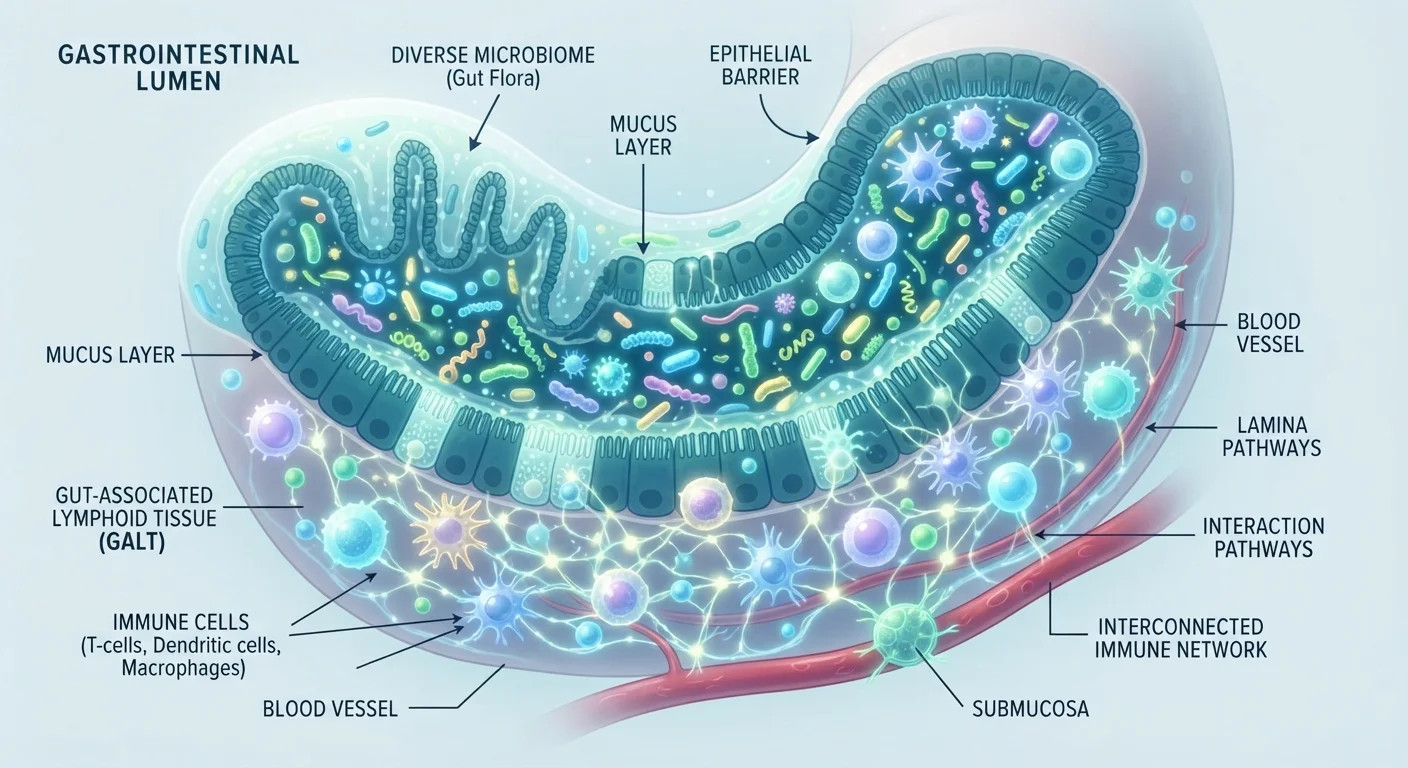
Cutting through the myths reveals a more practical and actionable picture. The gut microbiome — the vast community of bacteria, fungi, and other microorganisms living in the digestive tract — does play a meaningful role in calibrating immune responses. But that relationship is bidirectional, slow-moving, and shaped by accumulated habits rather than quick fixes.
~70%
Of immune cells located in gut tissue
Research estimates that roughly 70% of the body's immune cells are found in the gastrointestinal tract, underscoring the gut's central role in immune regulation.
1,000+
Bacterial species in the human gut microbiome
The human gut microbiome contains over 1,000 identified bacterial species, with composition varying significantly between individuals based on diet, genetics, and environment.
38 trillion
Estimated microbial cells in the human body
A widely cited estimate suggests the human body contains roughly 38 trillion microbial cells, approximately matching the number of human cells.
Dietary fiber remains the single most well-supported lever for microbiome diversity. Fermented foods show genuine promise as well, though the evidence is still evolving — our team's deep dive into what fermented food research actually shows separates the signal from the noise. Similarly, understanding the difference between probiotics and prebiotics matters before reaching for either — see our breakdown of what each one actually does for immune health.
Supplements Don't Replace Medical Evaluation
If you are experiencing persistent digestive symptoms, unexplained fatigue, or recurrent infections, these warrant professional evaluation — not a supplement regimen. Self-diagnosing gut-immune conditions based on online content and treating them with over-the-counter products can delay appropriate care. Always work with a qualified healthcare provider for symptoms that concern you.
The broader takeaway is that no single food, supplement, or protocol overrides the fundamentals. Sleep, physical activity, stress management, and a varied whole-food diet each contribute to a gut environment where immune function can operate well. If you're navigating specific symptoms or conditions, consult a qualified healthcare provider before making significant changes to your diet or supplement routine.
This article is for general informational purposes only and does not constitute medical advice. Always consult a qualified healthcare professional for guidance on your individual health situation.