
Your Gut Is Home to 70% of Your Immune System — Here's What That Actually Means

Key Takeaways
- About 70% of the body's immune cells are located in and around the gastrointestinal tract.
- The gut lining is the body's largest barrier between the outside world and the bloodstream.
- Trillions of gut microbes actively train and regulate immune responses throughout life.
- A disrupted gut microbiome is associated with increased vulnerability to infections and inflammation.
- Supporting gut health through diet and lifestyle is one meaningful way to support broader immune function.
Gut-Associated Lymphoid Tissue (GALT)
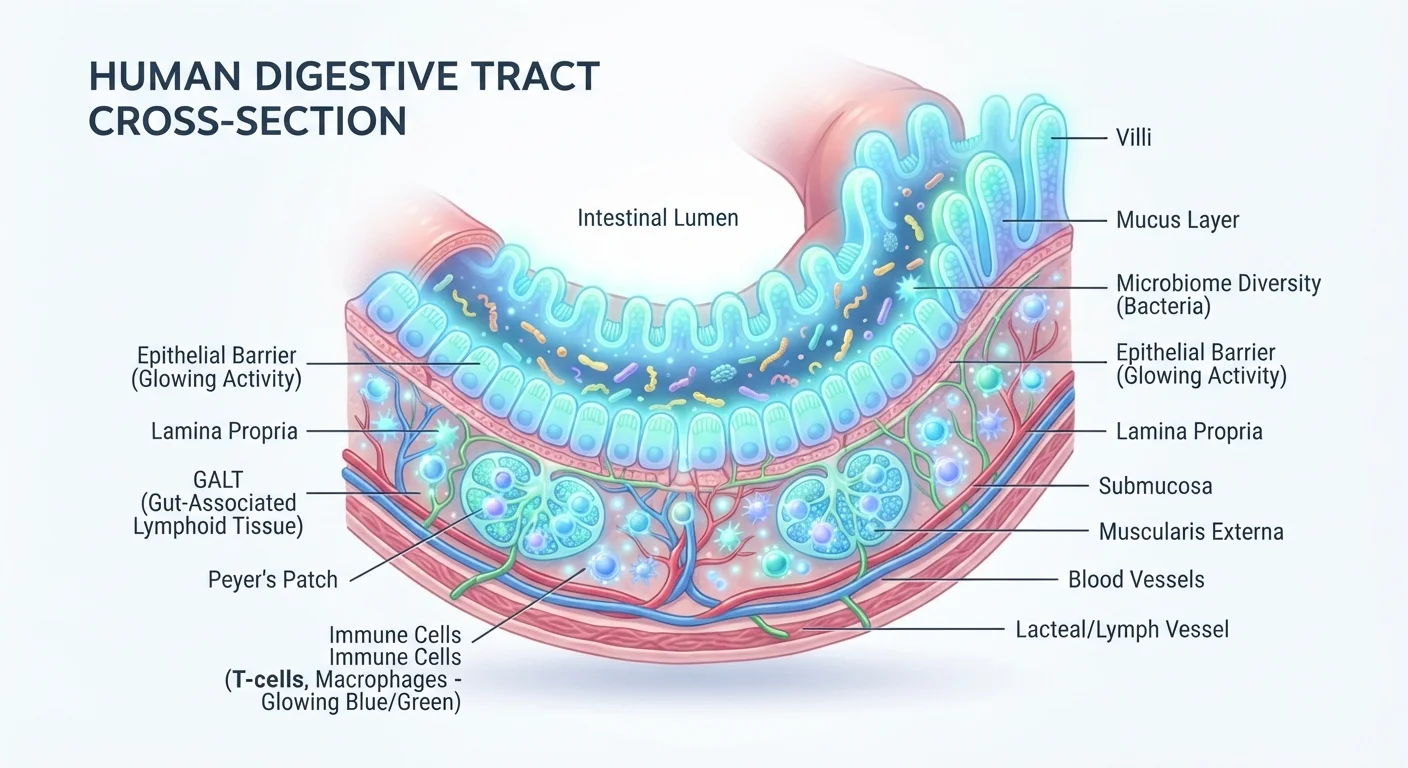
Gut-associated lymphoid tissue, or GALT, is the vast network of immune cells, tissues, and structures embedded throughout your digestive tract. It acts as the immune system's largest single outpost, constantly monitoring everything you eat, drink, and absorb. When researchers say 70% of your immune system lives in your gut, they are largely referring to this network.
GALT includes structures such as Peyer's patches in the small intestine, mesenteric lymph nodes, and the lamina propria — all of which coordinate both local and systemic immune responses.
Where Does the "70%" Figure Actually Come From?
You've probably seen the claim: 70% of your immune system lives in your gut. It shows up in wellness articles, supplement marketing, and nutrition podcasts alike. But the number is rarely explained — and without context, it's easy to misread as a metaphor rather than a measurable biological fact.
The figure refers to the proportion of the body's immune cells that reside in or near the gastrointestinal tract. Researchers estimate that gut-associated lymphoid tissue (GALT) houses more immune cells than any other organ system in the body. This includes specialized immune cells called T cells, B cells, macrophages, and dendritic cells, all stationed in the gut lining and surrounding lymph tissue.
The precise percentage varies across studies — some cite 60%, others up to 80% — but the underlying point is consistent: the digestive tract is, by a wide margin, the immune system's most active territory. For a deeper look at the full gut-immune relationship, see our companion piece on the gut-immune axis.
Why the Gut Is an Immune Hotspot
The digestive tract is the body's most porous interface with the outside world. Every day, it processes pounds of food, billions of microbes, environmental contaminants, and potential pathogens. The gut lining — just one cell layer thick in many places — must allow nutrients through while blocking harmful invaders. That demands constant, sophisticated immune surveillance.
Think of the gut wall as a heavily staffed border checkpoint rather than a simple physical wall. Immune cells embedded in the lining continuously sample what's passing through, making split-second decisions: absorb this, tolerate that, attack the other. Structures called Peyer's patches, clustered mainly in the small intestine, act as immune training grounds where these cells learn to recognize friend from foe.
~70%
Of immune cells located in the gut
Estimates from immunology research consistently place the majority of the body's immune cell population within gut-associated lymphoid tissue (GALT).
38 trillion
Estimated microbial cells in the human gut
A widely cited 2016 analysis by Sender et al. in Cell estimated the human gut harbors roughly 38 trillion bacterial cells — roughly equal to the number of human cells in the body.
1 cell thick
Gut lining barrier in many regions
The intestinal epithelium is just a single cell layer thick in much of the gut, making robust immune surveillance at this interface critically important.
This is also where the gut microbiome — the trillions of bacteria, viruses, and fungi living in your digestive tract — plays a central role. To understand who these microbial inhabitants are and what they do, our guide Your Gut Microbiome, Explained covers the fundamentals.
How Your Microbiome Trains Your Immune System
The relationship between gut microbes and immune cells isn't passive coexistence — it's an active, ongoing dialogue that begins at birth and continues throughout life. Newborns delivered vaginally are immediately colonized by maternal bacteria, which research suggests plays a key role in early immune programming. Throughout childhood and into adulthood, the microbiome continues to calibrate immune responses.
Beneficial gut bacteria help immune cells distinguish between genuinely dangerous pathogens and harmless substances (like most foods). When this calibration breaks down — a condition researchers call dysbiosis — the immune system can become either underactive (missing real threats) or overactive (reacting to things it shouldn't). Chronic overactivation is associated with inflammatory conditions including certain autoimmune diseases.
Gut microbes also produce compounds called short-chain fatty acids (SCFAs), generated when they ferment dietary fiber. SCFAs help reinforce the gut lining and suppress excessive inflammation. This is one reason that fiber-rich diets are consistently associated with lower markers of systemic inflammation in large population studies.
Simple Steps That Support Gut Microbial Diversity
Eating a wide variety of plant foods — including vegetables, legumes, whole grains, and fruits — is one of the most consistently evidence-backed ways to support a diverse gut microbiome. Research suggests aiming for variety across food types over time, rather than fixating on any single superfood. Managing chronic stress and protecting sleep quality also matter, as both are known to affect microbial composition. Always discuss significant dietary changes with a healthcare provider if you have an underlying digestive condition.
For a fuller picture of how microbes and immune cells interact, our Gut Microbiome and Immune Function beginner's roadmap walks through the key players step by step.
What This Means for Your Everyday Health
Understanding the gut-immune connection reframes some familiar health advice. Eating plenty of vegetables, legumes, and whole grains isn't just good for digestion — it feeds the microbial communities that actively support immune regulation. Chronic stress, poor sleep, and frequent antibiotic use all affect gut microbial diversity, with downstream effects on immune function.
It also puts popular wellness claims in perspective. A disrupted gut barrier — sometimes called "leaky gut" in consumer media — is a real area of active scientific research, though the evidence is more nuanced than marketing often suggests. Our article Leaky Gut and the Immune System separates what's established from what's overstated.
The bottom line: the "70%" statistic is a genuine reflection of where immune activity is concentrated in the body. It doesn't mean your gut is the only site of immunity, nor that any single dietary change will overhaul your defenses. But it does underscore that caring for your digestive health is, in a very real sense, caring for your immune health.
This article is for general informational purposes only and does not constitute medical advice. Consult a qualified healthcare professional for guidance on your individual health needs.