

Key Takeaways
- Chronic stress triggers sustained cortisol release, which gradually weakens immune defenses.
- Short-term stress can temporarily boost immunity; long-term stress does the opposite.
- Cortisol suppresses key immune cells including T-cells, NK cells, and antibody-producing B-cells.
- Gut health plays a direct role in how the immune system responds to chronic stress.
- Evidence-based stress management techniques measurably improve immune markers.
- Anyone with ongoing stress-related health concerns should consult a qualified healthcare provider.
Cortisol-Immune Suppression
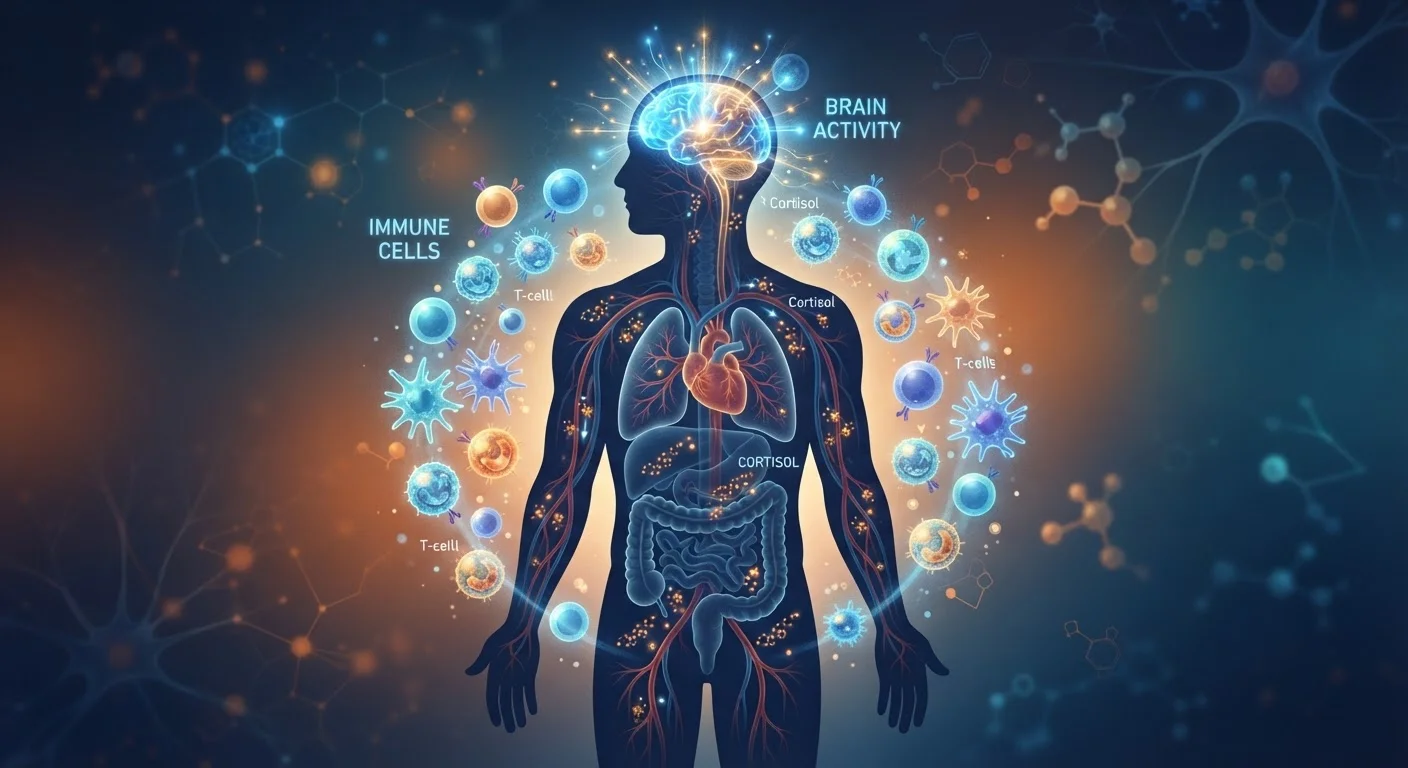
When the body experiences prolonged stress, it releases sustained levels of cortisol — the primary stress hormone. Over time, elevated cortisol dampens the activity of immune cells, reduces the production of protective antibodies, and increases systemic inflammation. This is known as cortisol-mediated immune suppression, and it's a key reason why chronically stressed individuals tend to get sick more often and recover more slowly.
Cortisol binds to glucocorticoid receptors on lymphocytes and macrophages, downregulating cytokine production and shifting immune responses away from cellular defenses — a mechanism well-documented in psychoneuroimmunology research.
How Stress Became a Biological Signal
The stress response evolved as a survival tool. When your brain perceives a threat — whether a predator or a work deadline — the hypothalamus triggers a hormonal chain reaction, ultimately prompting the adrenal glands to release cortisol and adrenaline. This mobilizes energy, sharpens focus, and temporarily reconfigures immune priorities. In short bursts, this is adaptive.
The problem arises when the perceived threat never goes away. Modern stressors — financial pressure, relationship conflict, chronic overwork — don't resolve in seconds the way a physical danger might. The body stays in a low-grade state of alarm, and cortisol levels remain persistently elevated. That sustained hormonal environment begins to work against the very systems stress was meant to protect.
Acute vs. Chronic Stress: An Important Distinction
Not all stress is harmful to immunity. Short-term (acute) stress — like the burst of adrenaline before a presentation — can temporarily mobilize immune cells and enhance certain defenses. It's the sustained, unresolved stress that lasts weeks or months that triggers the suppressive effects described in this article. The body is well-designed for short challenges; it's continuous ones that wear the system down.
What Cortisol Does to Immune Cells
Cortisol is sometimes called an immunosuppressive hormone — with good reason. It binds directly to glucocorticoid receptors found on most immune cells, including T-lymphocytes (which coordinate immune attacks on infected or abnormal cells), natural killer (NK) cells (which destroy viral and tumor cells), and B-cells (which produce antibodies). Under chronic cortisol exposure, these cells become less responsive and less numerous.
Research also shows that prolonged stress shifts the immune system's balance. Instead of well-targeted cellular defenses, the body moves toward a pattern of low-grade, diffuse inflammation — associated over time with a higher risk of autoimmune conditions, cardiovascular disease, and metabolic disorders. For more on how this inflammation affects other systems, see how chronic stress influences cellular aging.
~70%
Of immune tissue located in the gut
Estimates from gastrointestinal immunology research consistently place the majority of the body's immune cells within gut-associated lymphoid tissue.
3×
Higher cold susceptibility under chronic stress
Landmark research by Sheldon Cohen and colleagues found that individuals with higher perceived stress were significantly more likely to develop respiratory infections after viral exposure.
40%
Reduction in NK cell activity with chronic stress
Multiple psychoneuroimmunology studies have documented substantial declines in natural killer cell activity among individuals experiencing sustained psychological stress.
The Gut-Stress-Immunity Triangle
There's a third party in this relationship that often goes unmentioned: the gut. Approximately 70% of the body's immune tissue resides in the gastrointestinal tract, and the gut microbiome — the vast community of bacteria living there — plays a central role in training and regulating immune responses. Chronic stress disrupts that community. It alters the gut's microbial balance, increases intestinal permeability, and reduces the production of short-chain fatty acids that nourish immune-regulating cells.
This creates a feedback loop: stress impairs the gut, an impaired gut undermines immune function, and a poorly regulated immune system can amplify the body's stress response. Understanding this dynamic is one reason the gut-immune connection has become a central focus of immune health research.
What Stress Management Actually Does Biologically
Saying "just reduce your stress" is easier said than done — but the biological case for doing so is concrete. Studies on mindfulness-based stress reduction (MBSR) have found measurable improvements in NK cell activity and reduced inflammatory markers. Regular moderate-intensity exercise — not excessive training, which itself raises cortisol — has been associated with improved immune surveillance. Social connection, sleep quality, and even diaphragmatic breathing have each shown downstream effects on cortisol regulation.
These aren't minor lifestyle perks. They represent the body's own regulatory systems being given the conditions to function. For a structured look at practical approaches, evidence-based stress management techniques offer a solid starting point.
It's also worth noting that quality sleep is essential — cortisol naturally peaks in the morning and tapers at night, but chronic stress can invert that rhythm, blunting recovery. This is explored in depth in our piece on why rest sometimes isn't restful despite adequate hours.
Small Habits, Real Immune Benefits
You don't need to eliminate all stress to support immune health — that's neither realistic nor the standard the research sets. Consistent moderate exercise, seven to nine hours of sleep, and even brief daily mindfulness practices have each shown measurable effects on immune markers in clinical studies. Start with one habit and build gradually rather than attempting a complete lifestyle overhaul.
This article is for general informational purposes only and does not constitute medical advice. Always consult a qualified healthcare provider for guidance on your specific health situation.