

Key Takeaways
- Portion awareness focuses on perception and habits, not precise measurement or calorie restriction.
- Environmental cues like plate size and serving containers significantly influence how much you eat.
- Eating speed and distraction are among the most overlooked factors in portion-related overeating.
- Developing portion awareness is a gradual skill, not an overnight behavior change.
- You don't need special tools — visual reference points and mindful habits are practical starting points.
Portion Awareness
Portion awareness is the practice of paying conscious attention to how much food you're eating — not by obsessively measuring every gram, but by tuning into the visual, contextual, and psychological cues that influence serving size. It's less about restriction and more about understanding the gap between what you're actually eating and what your body needs. Over time, this awareness becomes a natural part of how you relate to food.
Portion awareness is distinct from calorie counting; it draws on concepts from behavioral nutrition, including the study of how environmental cues (plate size, packaging, social settings) systematically skew intake estimates.
Why Perception, Not Just Quantity, Determines How Much You Eat
Most of us don't eat based purely on hunger. We eat until the plate is empty, until the show ends, or until the bag runs out. This is the central insight behind portion awareness: your environment and perception routinely override your body's internal signals.
Researchers have demonstrated repeatedly that people consistently underestimate how much they've eaten — sometimes by 20 to 50 percent — particularly when eating from large containers or during social meals. The problem isn't willpower; it's that our brains use visual and contextual shortcuts to judge quantity, and those shortcuts are easily fooled.
Understanding this is the first step. Once you recognize that external cues shape your intake, you can begin to adjust those cues rather than fighting your appetite directly.
92%
Of food served is typically eaten
Research published in behavioral nutrition literature suggests people eat roughly 92% of whatever food they serve themselves, regardless of hunger level.
~30%
Typical underestimate of calories consumed
Studies have found that people often underestimate their caloric intake by roughly 20–40%, with estimates commonly landing around 30% below actual consumption.
2x
More food poured from larger containers
Behavioral research has shown that people pour significantly more — sometimes twice as much — from larger serving vessels compared to smaller ones.
The Environmental Factors That Shape Every Meal
Several well-studied environmental factors influence portion size in everyday settings:
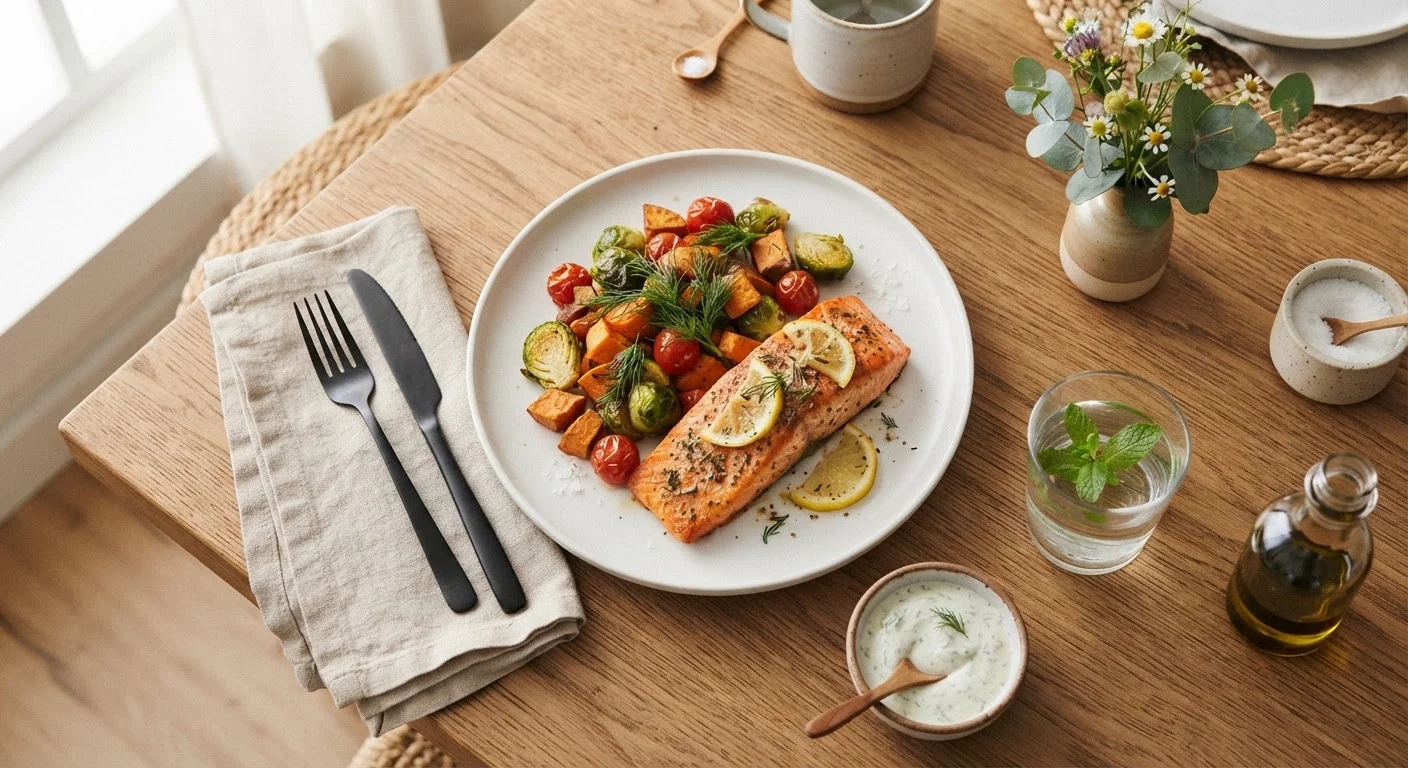
- Plate and bowl size: A standard American dinner plate has grown considerably over the past few decades. Serving the same amount of food on a smaller plate makes the portion appear larger, which can signal greater fullness before eating begins.
- Serving vessel size: People tend to pour more liquid or scoop more food when using wider glasses or deeper bowls, simply because the same volume looks smaller in a bigger container.
- Packaging cues: Eating directly from a large bag or container removes visual boundaries, making it harder to gauge how much you've consumed.
- Lighting and distraction: Dim environments and screens reduce attention to eating, which can delay the recognition of fullness.
These factors don't require extraordinary discipline to address. Small, deliberate shifts — using a moderately sized plate, portioning snacks into a bowl, turning off the TV during meals — can meaningfully recalibrate how much you consume without requiring you to count a single calorie.
Start With One Meal, Not Every Meal
Trying to overhaul every eating occasion at once is a reliable path to burnout. Instead, choose one meal — lunch or dinner — to practice portion awareness for a week. Notice what a standard serving looks like, how quickly you eat, and when you first feel satisfied. Small, consistent observations build lasting habits far more effectively than sweeping changes.
Building Portion Awareness as a Long-Term Habit
Portion awareness isn't a one-week fix. It's a skill that develops through repeated, low-pressure attention to eating patterns. Here are practical ways to build it over time:
- Use visual reference points. Common comparisons — a serving of protein roughly the size of a deck of cards, a cup of cooked grains about the size of a tennis ball — help calibrate expectations without a scale.
- Pause mid-meal. Putting down your fork briefly and checking in with your hunger level gives satiety signals time to register. Fullness often lags about 15–20 minutes behind actual food intake.
- Serve food before sitting down. Placing serving dishes on the table makes second helpings more automatic. Portioning food in the kitchen first adds a small but effective friction point.
- Notice patterns, not perfection. The goal is awareness, not anxiety. Tracking what a typical meal looks like — even mentally — builds the reference library your brain needs to make better intuitive judgments over time.
For a broader look at how these habits fit into an overall healthy eating pattern, see our guide to building a balanced plate — it covers everyday eating patterns that support long-term well-being without rigid rules.
This article is for general informational and educational purposes only and is not a substitute for professional medical or dietary advice. Consult a qualified healthcare provider or registered dietitian for guidance specific to your health needs.