
Building a Balanced Plate: Everyday Eating Patterns That Support Long-Term Health

Key Takeaways
- Dietary patterns matter more than any single food or nutrient for long-term health.
- Most evidence-backed eating styles share core traits: abundant vegetables, whole grains, legumes, and limited ultra-processed foods.
- Small, consistent shifts in food choices tend to produce more durable results than strict diets.
- Hydration, meal timing, and food environment all shape eating quality beyond what's on your plate.
- No eating pattern needs to be perfect — flexibility and overall consistency are what count.
Start here
What 'Balanced Eating' Really Means
Next
The Building Blocks of a Health-Supporting Plate
Then
Eating Patterns Backed by Evidence
Apply it
Practical Habits That Make It Stick
Watch out
Common Pitfalls to Avoid
What 'Balanced Eating' Really Means
Balanced eating is frequently misunderstood as a synonym for dieting, restriction, or hitting precise nutritional targets. In practice, it describes something less rigid and more sustainable: an overall pattern of food choices that, taken together over time, supports health and reduces the risk of chronic disease.
No single meal or food defines a balanced diet. A slice of birthday cake doesn't undo a week of nourishing choices, and a salad doesn't compensate for a consistently poor overall pattern. What nutrition science consistently highlights is the cumulative effect of everyday habits — not individual exceptions. For a deeper look at what this concept actually involves, see what balanced eating actually means.
Dietary pattern
The overall combination of foods and beverages a person regularly consumes, evaluated as a whole rather than food by food.
Whole grains
Grains that retain their bran, germ, and endosperm — such as oats, brown rice, and whole wheat — providing more fiber and nutrients than refined versions.
Phytonutrients
Naturally occurring compounds found in plants — often responsible for their color — that may support health by reducing inflammation and cellular damage.
Ultra-processed foods
Industrially manufactured products with multiple additives, preservatives, and refined ingredients that go well beyond basic cooking or processing.
Unsaturated fats
A category of dietary fat found in foods like olive oil, nuts, and fish that is associated with heart health when it replaces saturated fat in the diet.
Legumes
A food family including beans, lentils, chickpeas, and peas — valued for their high fiber, plant protein, and mineral content.
The Building Blocks of a Health-Supporting Plate
Across the major evidence-based dietary frameworks endorsed by organizations like the American Heart Association and the 2020–2025 Dietary Guidelines for Americans, a core set of food groups consistently appears. Understanding these categories helps you build variety into everyday meals without needing a rulebook.
- Vegetables and fruits: Prioritize variety and color. Different pigments signal different phytonutrients — compounds associated with reduced inflammation and disease risk.
- Whole grains: Oats, brown rice, whole-wheat bread, and similar options provide fiber, B vitamins, and sustained energy. Refined grains, by contrast, are stripped of much of this nutritional value.
- Legumes: Beans, lentils, and peas are among the most nutrient-dense foods available — rich in fiber, plant protein, and minerals at low cost.
- Lean proteins: Fish, poultry, eggs, nuts, and seeds all serve this role. Fatty fish in particular contributes omega-3 fatty acids tied to cardiovascular and brain health.
- Healthy fats: Olive oil, avocados, and nuts provide unsaturated fats that support heart health. Replacing saturated fats with these sources is a strategy consistently endorsed by cardiologists.
Dairy or fortified alternatives contribute calcium and vitamin D. For a comprehensive overview of micronutrients found in these food groups, see the essential vitamins and minerals every adult needs.
Eating Patterns Backed by Evidence
Rather than focusing on individual superfoods, researchers study overall dietary patterns — and the findings are remarkably consistent. Several distinct frameworks have strong evidence behind them, yet they share more similarities than differences.
The Mediterranean pattern emphasizes vegetables, legumes, whole grains, olive oil, and fish, with modest amounts of dairy and limited red meat. The DASH diet (Dietary Approaches to Stop Hypertension) layers on an explicit goal of reducing sodium, making it particularly relevant for cardiovascular health. Plant-forward eating doesn't require full vegetarianism — it simply shifts the center of gravity toward plant foods while reducing but not necessarily eliminating animal products.
For a side-by-side look at how these patterns compare in structure and evidence, longevity eating patterns compared offers a detailed breakdown. What they all discourage is equally instructive: ultra-processed foods, excess added sugar, and high-sodium packaged products.
Use the Half-Plate Rule as a Starting Point
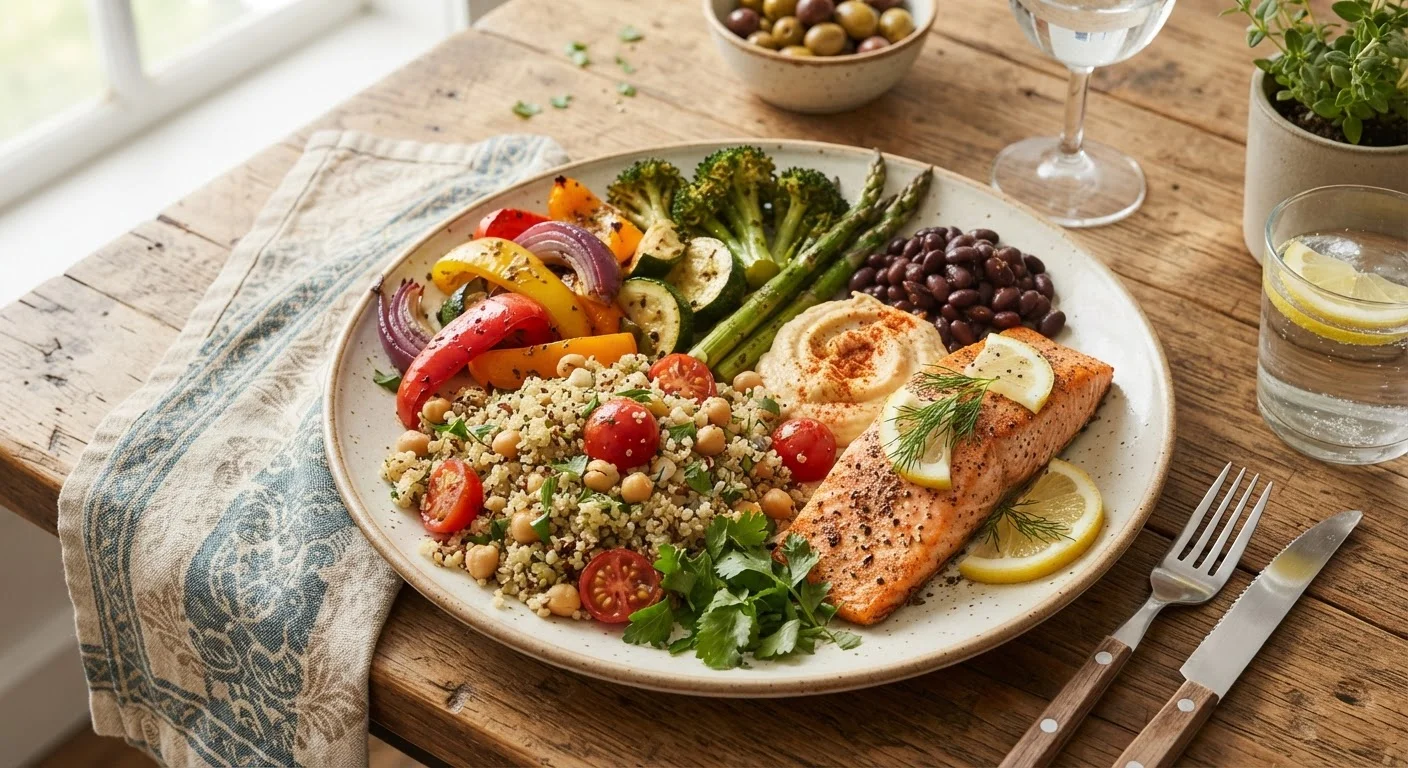
A simple visual habit: aim to fill at least half your plate with vegetables and fruit at main meals. This naturally crowds out less nutritious options without requiring any counting or tracking. It's a flexible anchor, not a rigid prescription — adjust based on your meal type and what's available to you.
Practical Habits That Make It Stick
Knowing what to eat is only part of the challenge. Building reliable habits around food choices is where most people need the most support. A few evidence-informed strategies make a meaningful difference:
- Shape your food environment. Research in behavioral nutrition shows that what's visible and accessible drives eating decisions more than conscious intention. Stocking a kitchen that makes healthy choices easy is one of the highest-leverage moves you can make.
- Establish a meal rhythm. Eating at reasonably consistent times supports hunger regulation and reduces impulsive food choices. See building a meal rhythm that works around your real schedule for practical guidance.
- Practice portion awareness. You don't need to weigh food to eat appropriate amounts. Visual cues and mindful eating practices can serve the same purpose. Portion awareness in long-term eating habits explains the psychology behind this.
- Stay hydrated. Thirst is sometimes mistaken for hunger. Consistent fluid intake throughout the day supports energy and satiety. A practical hydration framework can help you build this habit.
For strategies on sustaining any health habit through life's disruptions, approaches that sustain healthy habits over time draws on behavioral science to show what actually holds up.
Common Pitfalls to Avoid
Even well-intentioned eaters run into predictable traps. Being aware of them helps you navigate them without self-criticism.
- All-or-nothing thinking: Treating one off-plan meal as a failure leads to abandonment. No evidence supports perfectionism as a health strategy — consistency across most meals is what matters.
- Over-relying on health claims: Packaged foods labeled "natural," "organic," or "high-protein" are not automatically nutritious. Looking at the overall ingredient list and food group context gives a more accurate picture.
- Ignoring drinking habits: Sugary beverages — sodas, sweetened coffees, fruit drinks — contribute substantial added sugar to the average American diet without providing meaningful nutritional value. Treating beverages as part of the dietary pattern is essential.
- Copying extreme approaches: Viral diets that eliminate entire food groups or promise rapid transformation rarely align with the evidence on long-term health. Sustainable eating patterns are moderate and flexible by design.
Eating well is one component of a broader longevity-supporting lifestyle. Building a longevity-friendly routine from scratch puts nutrition in context alongside sleep, movement, and other foundational habits.
This article is for informational purposes only and is not a substitute for personalized medical or dietary advice. Consult a qualified healthcare professional or registered dietitian for guidance tailored to your individual health needs.