

Key Takeaways
- Processing exists on a spectrum — canned beans and packaged cookies are not nutritionally equivalent.
- Many minimally processed foods like frozen vegetables and plain yogurt retain strong nutritional value.
- Ultra-processed foods tend to be higher in added sugars, sodium, and refined fats, with less fiber.
- Whole foods don't automatically offer perfect nutrition — preparation methods and variety still matter.
- Reading ingredient lists is more informative than relying on front-of-package health claims.
- A balanced, realistic approach includes both whole foods and some processed options without rigid rules.
Option A
Whole Foods
Foods in or close to their natural, unaltered state.
Best for: Building a nutrient-dense dietary foundation with fiber, vitamins, and minerals largely intact.
Option B
Processed Foods
Foods altered from their original form through manufacturing or preparation.
Best for: Convenient, shelf-stable options that range widely in nutritional quality — from minimally processed staples to heavily reformulated products.
If you want to maximize nutrient density across your daily meals
Whole Foods
Whole foods generally deliver more fiber, vitamins, and minerals per calorie and tend to have simpler ingredient profiles that support overall dietary quality.
If you need convenient, affordable, shelf-stable staples
Processed Foods
Minimally processed items like canned legumes, frozen vegetables, and plain oats offer real nutritional value with practical advantages for busy households.
If you're trying to reduce added sugars and excess sodium
Whole Foods
Choosing whole or minimally processed foods naturally limits added sugars and sodium, which tend to accumulate quickly in ultra-processed products.
If you're building a sustainable, flexible eating pattern
Processed Foods
Selectively incorporating minimally processed foods helps maintain dietary variety and long-term adherence without the rigidity of eliminating entire product categories.
What 'Whole' and 'Processed' Actually Mean
The terms whole food and processed food get used as though they represent a clean divide, but in practice they describe a continuum. A whole food is generally one that hasn't been significantly altered from its natural state — think an apple, a raw walnut, or a dried lentil. A processed food is any item that has undergone some degree of mechanical, chemical, or thermal change before reaching you.
That definition includes a lot of territory. Rolled oats are processed. So is pasteurized milk, bagged salad, and frozen broccoli. Grouping these in the same category as packaged snack cakes distorts the picture considerably. The NOVA food classification system, developed by researchers at the University of São Paulo, offers a more useful framework by dividing foods into four groups based on the degree and purpose of processing — from unprocessed or minimally processed foods all the way to ultra-processed formulations designed primarily for palatability and shelf life.
Understanding this spectrum helps you make more informed choices rather than applying blanket rules. As our guide on nutrition claims that lack scientific grounding explains, oversimplified food categories are often more marketing than science.
Where the Nutritional Differences Actually Show Up
The meaningful nutritional gap isn't between whole foods and all processed foods — it's between minimally processed options and ultra-processed products. Ultra-processed foods (think sugary cereals, packaged pastries, many flavored chips) are typically engineered to override fullness cues and tend to be high in added sugars, refined starches, sodium, and industrially modified fats, while delivering less fiber and fewer micronutrients per calorie.
| Criterion | Whole / Minimally Processed Foods | Ultra-Processed Foods |
|---|---|---|
| Fiber content | Generally higher | Often low or absent |
| Added sugars | Typically none | Frequently high |
| Sodium levels | Naturally low | Often elevated |
| Ingredient list length | Short, recognizable | Long, includes additives |
| Micronutrient retention | Higher, less degraded | Often reduced or added back artificially |
| Convenience | Variable; some prep required | High; ready to eat |
| Cost | Varies widely by item | Often lower per serving |
Research published in peer-reviewed nutrition journals has associated diets heavy in ultra-processed foods with higher rates of obesity, type 2 diabetes, and cardiovascular disease — though it's worth noting these are observational associations and that diet quality overall matters more than any single food category.
Whole foods, by contrast, tend to preserve fiber and phytonutrients (plant compounds with potential health benefits) that are often lost or diluted during intensive processing. Fiber in particular plays a well-established role in digestive health, blood sugar regulation, and satiety. That said, cooking method matters too — heavily frying a whole food or adding significant amounts of salt and sugar during home preparation changes its nutritional profile meaningfully.
57%
Share of U.S. calories from ultra-processed foods
A study published in BMJ Open estimated that ultra-processed foods accounted for roughly 57% of total energy intake in the American diet.
~28g
Daily fiber recommended for most adults
The USDA Dietary Guidelines for Americans recommend approximately 28 grams of dietary fiber per day for a 2,000-calorie diet, a target most Americans fall short of.
4+
NOVA classification levels for processing
The NOVA system classifies foods into four groups based on processing degree, helping researchers and consumers distinguish minimally processed staples from ultra-processed formulations.
What Labels Don't Capture
Front-of-package claims like "natural," "wholesome," or "made with real ingredients" are largely unregulated marketing language. The FDA does not have a formal definition for "natural," meaning the word appears on products ranging from sparkling water to heavily sweetened snack bars. A product labeled "whole grain" may contain whole grain flour as one of several ingredients while still being high in added sugar.
The most reliable information on a packaged food isn't the front panel — it's the ingredient list and the Nutrition Facts panel on the back or side. Ingredients are listed in descending order by weight, so the first few ingredients tell you what the product is primarily made of. A long ingredient list isn't inherently a red flag (some minimally processed foods have complex ingredient decks), but seeing multiple forms of added sugar or unfamiliar emulsifiers near the top warrants a closer look.
Our practical guide to reading nutrition labels walks through how to use each section of the Nutrition Facts panel more effectively. And if front-of-package health claims have ever given you pause, foods with healthy reputations that don't always hold up is worth a read.
Practical Strategies for Everyday Food Choices
The goal isn't to eliminate processed foods — it's to shift the balance toward less intensive processing where it's realistic and meaningful. Here are some grounded approaches:
- Anchor meals in minimally processed staples. Whole grains, legumes, eggs, plain dairy, and fresh or frozen produce form a reliable nutritional foundation without requiring a complete overhaul of how you shop.
- Compare processed options within categories. Not all canned soups or frozen meals are alike. Comparing sodium levels and ingredient lists between two similar products takes seconds and often reveals a meaningfully better option.
- Don't conflate restriction with improvement. Cutting out entire food groups or labeling foods as forbidden tends to backfire. Why eliminating whole food categories often creates problems explains the pattern in more detail.
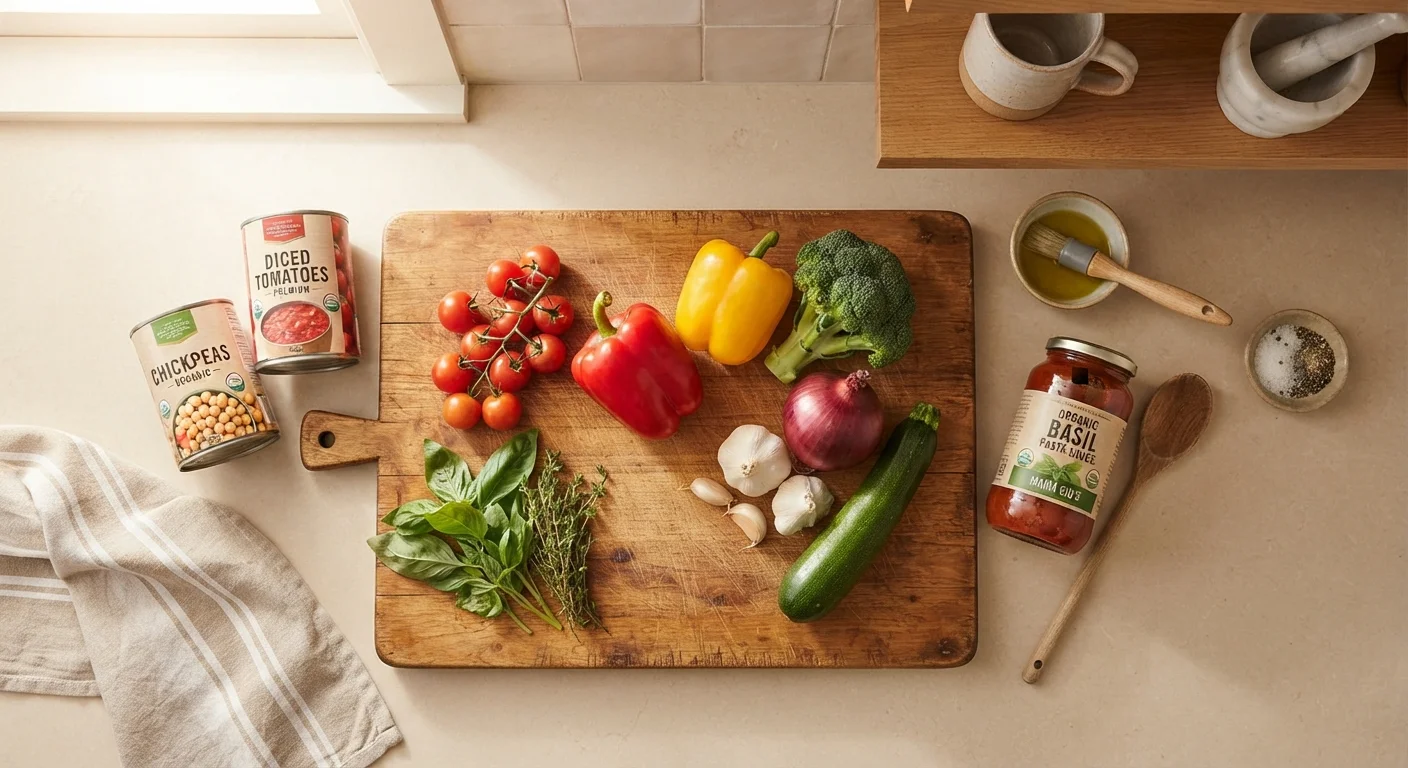
- Use processing to your advantage. Canned beans, frozen vegetables, and pre-cooked whole grains are processed — and they're also genuinely convenient sources of fiber, protein, and micronutrients that support a varied diet.
For a broader framework on how all of this fits together, what balanced eating actually means offers a grounded, non-restrictive perspective.
This article is for general informational and educational purposes only and is not a substitute for professional medical or dietary advice. If you have specific health concerns or dietary needs, consult a qualified healthcare provider or registered dietitian.