

Key Takeaways
- Vitamin B12 is found almost exclusively in animal-derived foods, making supplementation critical for vegans.
- Vegetarians who consume dairy and eggs may still fall short of adequate B12 intake over time.
- Deficiency develops slowly but can cause irreversible nerve damage if left unaddressed.
- Fortified foods and supplements are the most reliable B12 sources for plant-based eaters.
- Regular blood testing helps confirm whether your B12 strategy is actually working.
What you will need
Why B12 Demands Special Attention on a Plant-Based Diet
Of all the nutrients that plant-based eaters are encouraged to monitor, vitamin B12 stands apart because there is essentially no unfortified plant food that supplies it in a usable form. This isn't a minor gap—it's a near-total absence. The consequences of prolonged deficiency range from reversible anemia to potentially permanent neurological damage, which is why health authorities consistently identify B12 as the single highest-priority supplement for vegans and a significant concern for vegetarians.
The good news is that the solution is straightforward once you understand the landscape. Reliable supplementation—guided by periodic blood testing—is enough for the vast majority of plant-based eaters to maintain healthy B12 status throughout life. The steps below walk you through how to assess your current situation and build a consistent, evidence-informed approach.
What you will need
What to Know Before You Start
Getting B12 right on a plant-based diet is less about dramatic dietary overhauls and more about understanding how absorption works, which sources are genuinely reliable, and how to confirm that your strategy is actually working. The tools and steps outlined here are practical for most adults. However, certain groups—including pregnant individuals, older adults, and those with gastrointestinal conditions that affect nutrient absorption—face additional complexity and should work closely with a qualified healthcare provider rather than relying on general guidance alone.
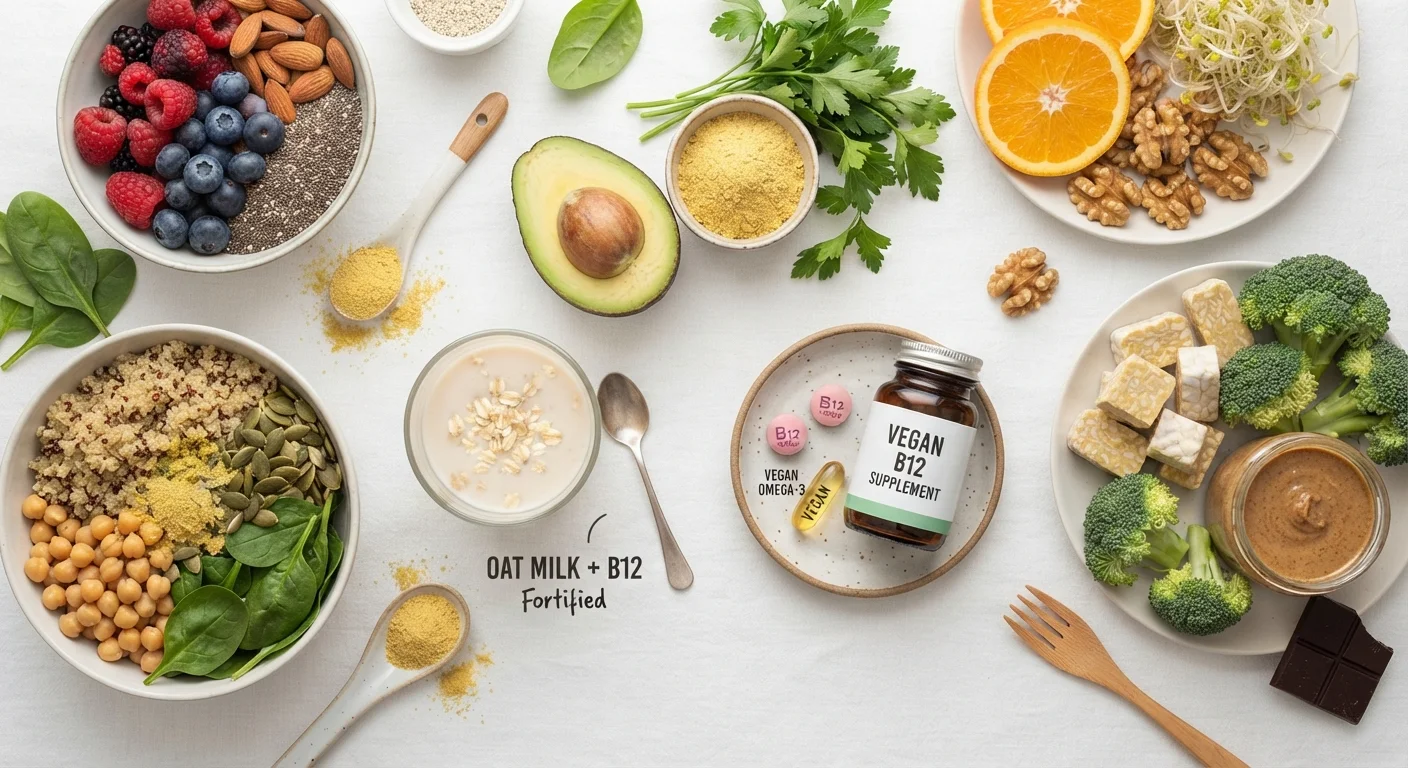
Vitamin B12 Supplement
Provides a reliable, measurable dose of bioavailable B12 in cyanocobalamin or methylcobalamin form.
Fortified Plant-Based Foods
Fortified non-dairy milks, breakfast cereals, and nutritional yeast can contribute to daily B12 intake.
Blood Test (Serum B12 and/or MMA)
Ordered by a healthcare provider to confirm your current B12 status and track the effectiveness of your approach.
If you're newer to thinking about B vitamin nutrition more broadly, our B vitamins overview is a useful starting reference. And if you're also managing protein intake on a plant-based diet, our article on complete vs. incomplete proteins addresses that related challenge.
B12 Deficiency Can Cause Permanent Nerve Damage
Unlike many nutritional shortfalls that resolve quickly with dietary changes, B12 deficiency can cause neurological damage that is not fully reversible even after levels are restored. Symptoms—including numbness, tingling, and cognitive changes—may not appear until the deficiency is severe. Do not rely on symptoms alone as a warning sign. If you follow a plant-based diet, speak with a healthcare provider about testing and supplementation strategies.
Step-by-Step: Building a Reliable B12 Strategy
Understand Why Plant-Based Diets Create B12 Risk
Vitamin B12 (cobalamin) is produced by microorganisms and accumulates in animal tissues—meat, poultry, fish, dairy, and eggs. No whole plant food reliably provides active B12 in amounts the human body can absorb. Vegans who take no action are virtually guaranteed to develop a deficiency over time. Lacto-ovo vegetarians face lower but still meaningful risk, since B12 absorption from dairy and eggs is modest and varies between individuals.
B12 is essential for red blood cell formation, DNA synthesis, and maintaining the protective myelin sheath around nerve fibers. Low levels first show up in lab work, then progress to fatigue, cognitive fog, and eventually neurological symptoms.
Get Your Baseline B12 Status Tested
Before adjusting your diet or starting a supplement, ask a healthcare provider to order a B12 blood panel. Serum B12 is the standard starting point, but levels in the low-normal range can still be functionally inadequate. Methylmalonic acid (MMA) and holotranscobalamin tests provide a more sensitive picture of how much B12 is actually reaching your cells. Knowing your baseline helps you and your provider choose an appropriate supplement dose and follow-up schedule.
Choose a Supplement Form That Works for You
Two forms dominate the supplement market: cyanocobalamin and methylcobalamin. Cyanocobalamin is the most studied form and is highly stable; the body converts it to active B12 efficiently in most people. Methylcobalamin is already in active form and is preferred by some practitioners for individuals with certain genetic variants. Both are considered effective by mainstream nutritional science. Supplements come as standard tablets, sublingual (under-the-tongue) tablets, and—for those with severe absorption issues—prescription injections administered by a clinician.
[warning_callout]Identify and Use Fortified Foods Strategically
Many plant-based staples are fortified with B12: non-dairy milks (soy, oat, almond), some breakfast cereals, and certain brands of nutritional yeast. Check the Nutrition Facts label for B12 content listed as a percentage of the Daily Value (%DV). Fortified foods can meaningfully contribute to daily intake when consumed consistently, but they typically should not replace a supplement for strict vegans—serving sizes are small and absorption per serving is variable.
Establish a Consistent Supplementation Routine
Consistency matters more than perfection. Decide on a schedule—daily with a meal, or a higher-dose supplement taken a few times per week—and stick with it. B12 absorption is dose-dependent: a small amount is absorbed through active transport (roughly 1–2 mcg at a time), while larger doses rely on passive diffusion at a much lower rate. Higher-dose, less-frequent supplements can compensate for this, but the right approach depends on your individual status. Follow your provider's recommendation rather than a generic label suggestion.
Schedule Follow-Up Testing to Confirm Adequacy
After beginning or adjusting supplementation, retest B12 levels in three to six months as directed by your healthcare provider. This confirms that your approach is raising levels into a healthy range and allows for dosage adjustments if needed. Make routine B12 monitoring a permanent part of your health maintenance—annual or biannual testing is a reasonable ongoing practice for most plant-based eaters.
Pair B12 Knowledge With Broader Nutrition Awareness
B12 is just one of eight B vitamins that plant-based eaters should monitor. Our overview of all B vitamins covers daily needs and food sources across the entire group. If you're also navigating protein intake, see our guide on complete vs. incomplete proteins for practical plant-based strategies.
This article is for informational purposes only and is not a substitute for personalized medical advice. Consult a qualified healthcare provider before starting any supplement regimen or making significant changes to your diet, especially if you are pregnant, nursing, elderly, or managing a chronic health condition.