

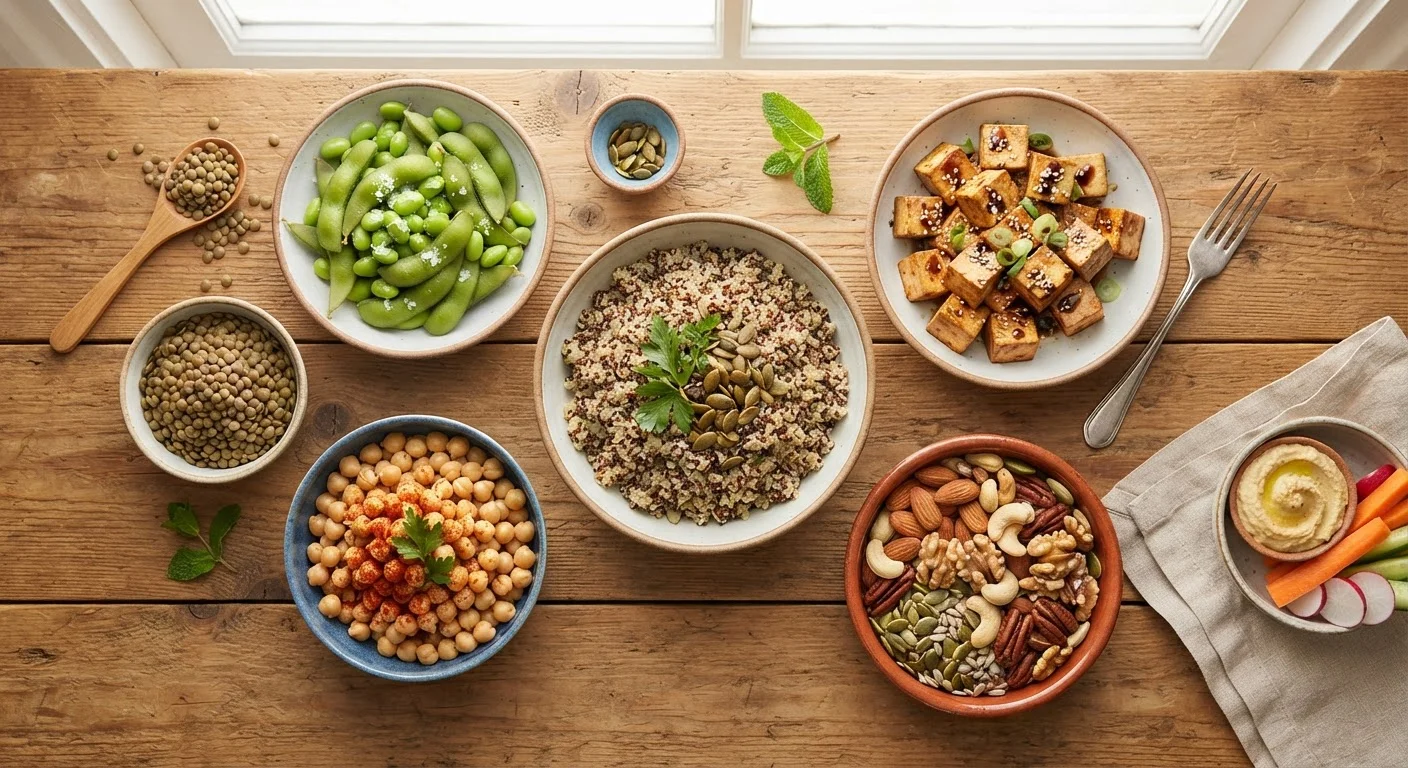
Key Takeaways
- Complete proteins supply all nine essential amino acids; incomplete proteins are missing or low in at least one.
- Most animal-based foods are complete proteins; most plant foods are incomplete, with a few notable exceptions.
- Plant-based eaters can meet all essential amino acid needs by eating a varied diet throughout the day.
- Protein quality matters, but total daily intake and dietary variety are equally important factors.
- Quinoa, soy, and buckwheat are plant-based foods that qualify as complete proteins.
- Consult a registered dietitian for personalized protein guidance, especially during pregnancy or periods of increased need.
Option A
Complete Proteins
The all-in-one amino acid package.
Best for: Anyone seeking a single food source that delivers all nine essential amino acids in sufficient amounts.
Option B
Incomplete Proteins
The building blocks that work best in combination.
Best for: Plant-based eaters who understand how to pair or vary foods across the day to cover all essential amino acids.
If you follow an omnivorous diet and want straightforward protein sourcing
Complete Proteins
Animal foods like eggs, fish, poultry, and dairy provide all essential amino acids in a single serving, simplifying meal planning.
If you follow a vegan or vegetarian eating pattern
Incomplete Proteins
A well-varied plant-based diet combining legumes, grains, vegetables, and seeds can meet all amino acid needs without animal products.
If you want plant-based foods with complete amino acid profiles
Complete Proteins
Foods like quinoa, edamame, and tofu offer complete amino acid profiles and fit seamlessly into plant-forward eating patterns.
If you prioritize sustainable or ethical eating while maintaining nutrition
Incomplete Proteins
Combining diverse plant foods — such as rice and beans or hummus and whole-grain bread — delivers full amino acid coverage with a lower environmental footprint.
What Makes a Protein 'Complete' or 'Incomplete'?
Protein is made up of smaller units called amino acids. Of the roughly 20 amino acids the human body uses, nine are considered essential — meaning the body cannot manufacture them on its own and must obtain them through food. For a deeper look at how these building blocks work, see our guide to amino acids.
A complete protein is any food that contains all nine essential amino acids in amounts adequate to support the body's functions. A protein is considered incomplete when it is missing or significantly low in one or more of those nine amino acids.
This distinction matters because each essential amino acid plays distinct roles — in muscle repair, immune function, enzyme production, and more. If the body runs short of even one essential amino acid, it can limit the use of the others, reducing the overall effectiveness of the protein consumed.
| Criterion | Complete Proteins | Incomplete Proteins |
|---|---|---|
| Essential amino acids | All nine present in adequate amounts | Missing or low in one or more |
| Primary food sources | Meat, fish, eggs, dairy, soy, quinoa | Most beans, grains, nuts, and seeds |
| Common in plant-based diets? | Less common, but options exist | Majority of plant protein foods |
| Meal planning complexity | Lower — single food covers all amino acids | Requires variety across the day |
| Can meet daily amino acid needs? | Yes, in adequate portions | Yes, with a varied daily diet |
| Notable plant examples | Quinoa, tofu, tempeh, edamame | Lentils, rice, almonds, oats |
Where Each Type Is Commonly Found
Most animal-derived foods — including meat, poultry, fish, eggs, and dairy — are complete proteins. This is why animal foods have traditionally been viewed as nutritionally straightforward protein sources.
The majority of plant foods are incomplete proteins. Legumes (beans, lentils, peas) tend to be low in methionine, while grains are often low in lysine. Nuts and seeds vary but commonly fall short in lysine as well.
However, several plant foods are exceptions and qualify as complete proteins:
- Quinoa — a seed used like a grain, widely recognized for its complete amino acid profile
- Soy foods — including tofu, tempeh, and edamame
- Buckwheat — a gluten-free grain alternative with a complete profile
- Hemp seeds — contain all nine essential amino acids, though lysine levels are modest
Knowing which plant foods are complete helps plant-based eaters build meals more intentionally.
~0.8g
Recommended daily protein per kg of body weight for adults
This is the general Recommended Dietary Allowance (RDA) set by the National Academies of Medicine for sedentary adults; needs increase with activity level and age.
3–4%
Share of U.S. adults identifying as vegan or vegetarian
Gallup polling has consistently found this range among American adults, highlighting the relevance of plant-based protein planning.
9
Number of essential amino acids humans must obtain from food
According to established nutritional biochemistry, these nine amino acids — including leucine, lysine, and tryptophan — cannot be synthesized by the human body.
The Complementary Protein Myth — and the More Useful Truth
For decades, nutrition guidance told plant-based eaters they had to combine complementary proteins — foods that compensate for each other's missing amino acids — at every meal. Classic pairings like rice and beans or peanut butter on whole-grain bread were promoted as dietary necessities.
Current nutrition science has refined this picture. Research and guidance from organizations like the Academy of Nutrition and Dietetics indicate that the body can pool amino acids across meals throughout the day — you do not need to engineer perfect combinations at every sitting. What matters is that your overall daily diet provides adequate amounts of all nine essential amino acids.
This means a plant-based eater who has oatmeal with hemp seeds at breakfast, a lentil soup at lunch, and a tofu stir-fry with brown rice at dinner is very likely meeting their amino acid needs — even if no single meal is a textbook complete-protein pairing.
That said, variety remains the practical cornerstone. A diet leaning heavily on a single plant food (e.g., mostly bread or mostly rice) may fall short over time. Rotating legumes, grains, vegetables, nuts, and seeds is both the simplest and most effective strategy.
Plant-based eaters should also be aware of other nutritional considerations. For example, vitamin B12 is found almost exclusively in animal foods and typically requires supplementation for vegans.
Practical Guidance for Plant-Based Protein Planning
Meeting protein needs on a plant-based diet is achievable with some intentional planning. Here are evidence-grounded strategies:
- Anchor meals with legumes or soy. Lentils, chickpeas, black beans, tofu, and tempeh are calorie-efficient, high-protein staples that anchor amino acid intake.
- Include a variety of grains. Whole grains like quinoa, farro, and brown rice contribute amino acids that legumes may lack.
- Don't overlook nuts and seeds. Hemp seeds, pumpkin seeds, and chia seeds add both protein and micronutrients.
- Think across the day, not just per meal. Diversity over the course of a day matters more than perfection at any single meal.
It's also worth considering overall food quality. Whole foods vs. processed foods — understanding how processing affects nutrient content can help you choose plant protein sources that deliver the most nutritional value.
Protein requirements vary by age, body size, activity level, and health status. Individuals with specific health conditions, athletes, older adults, or those who are pregnant should work with a registered dietitian to fine-tune their protein intake.
This article is for general informational and educational purposes only and is not a substitute for professional medical or dietary advice. Always consult a qualified healthcare provider or registered dietitian for guidance tailored to your individual health needs.