

Key Takeaways
- A consistent sleep and wake schedule is one of the strongest anchors for healthy circadian function.
- Room temperature, light exposure, and noise all measurably affect sleep quality and should be actively managed.
- Caffeine and alcohol both disrupt sleep architecture even when they don't prevent you from falling asleep.
- A brief wind-down routine signals the brain to shift toward sleep and can reduce sleep-onset time.
- Persistent sleep difficulties despite good habits warrant evaluation by a healthcare provider.
Why Sleep Hygiene Matters
Sleep hygiene refers to the set of behavioral and environmental practices that support consistent, restorative sleep. The term may sound clinical, but it describes something deeply practical: the everyday choices that either work with or against your body's natural sleep systems.
The CDC estimates that roughly one in three American adults regularly gets less than the recommended seven hours of sleep per night. Chronic short sleep is associated with increased risk for cardiovascular disease, type 2 diabetes, obesity, impaired immune function, and mental health challenges — a body of evidence robust enough to inform clinical guidelines from major US health authorities.
Sleep hygiene is not a cure-all, and it works best as prevention and optimization rather than treatment for diagnosable sleep disorders. For a broader look at how the evidence stacks up, see the full picture on sleep hygiene. This guide focuses on the foundational habits most supported by research — ones realistic enough to sustain over time.
1 in 3
U.S. adults sleeping less than 7 hours nightly
According to CDC surveillance data, approximately one in three American adults regularly gets insufficient sleep.
7–9 hrs
Recommended nightly sleep for most adults
The American Academy of Sleep Medicine and Sleep Research Society jointly recommend seven to nine hours for adults aged 18–60.
5–7 hrs
Caffeine half-life in most adults
Pharmacokinetic studies indicate caffeine's half-life typically ranges from five to seven hours, meaning afternoon intake still affects evening alertness.
Your Sleep Environment: The Physical Foundation
Your bedroom sends continuous signals to your nervous system. Three environmental variables have the clearest research support: light, temperature, and noise.
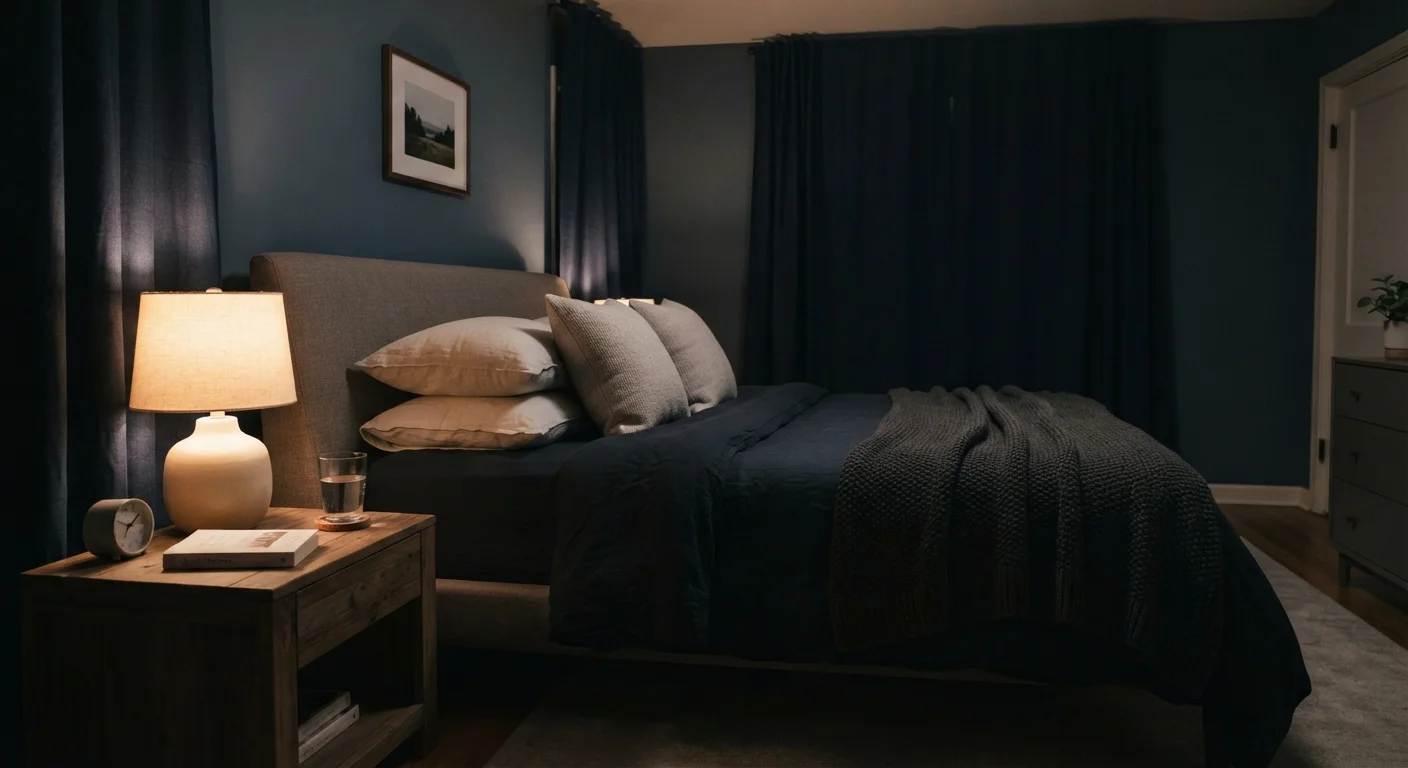
- Light: Light is the primary regulator of melatonin secretion. Bright or blue-spectrum light in the evening suppresses melatonin and delays sleep onset. Blackout curtains or a sleep mask can reduce early-morning light disruption, while dimming overhead lights an hour before bed supports the natural hormonal transition toward sleep.
- Temperature: Core body temperature drops slightly during sleep onset. Research consistently associates a cool sleeping environment — roughly 65–68°F (18–20°C) for most adults — with faster sleep onset and more stable slow-wave sleep. Individual comfort varies; the principle is cooler rather than warmer.
- Noise: Intermittent noise (traffic, a partner's snoring) disrupts sleep architecture even without causing full waking. Consistent background sound — white noise, a fan, or earplugs — can mask these fluctuations effectively.
Reserving the bed primarily for sleep also reinforces a psychological association between the bedroom and sleepiness — a concept called stimulus control, which forms one pillar of cognitive behavioral therapy for insomnia (CBT-I).
Consistent Timing: The Power of Circadian Rhythm
Your circadian clock is a roughly 24-hour internal timing system that coordinates when you feel alert, when you feel sleepy, and when dozens of physiological processes peak. It is calibrated primarily by light exposure and, critically, by behavioral consistency.
Going to bed and waking at the same time every day — including weekends — is among the most evidence-supported sleep hygiene recommendations. Irregular schedules create a form of social jet lag, shifting your internal clock in ways that impair sleep quality, daytime alertness, and metabolic function even when total sleep time is adequate.
Anchor your alarm time first and let bedtime follow. Fixing your wake time — even on weekends — is the single fastest way to stabilize your circadian rhythm when your schedule has drifted.
Sleep pressure builds during wakefulness; a consistent wake time ensures that pressure reliably peaks at the right biological hour, making falling asleep easier the following night.
If you can't fall asleep within about 20 minutes, get out of bed and do something calm in dim light until sleepiness returns. Lying awake in bed trains the brain to associate the bed with wakefulness — the opposite of what you want.
This stimulus-control technique is a core component of CBT-I and is supported by strong clinical evidence for reducing chronic insomnia severity.
Wake time is generally considered the more powerful anchor. Keeping wake time fixed, even after a poor night, helps consolidate the sleep drive for the following night rather than fragmenting it across a later schedule. For context on why this can be harder in practice than it sounds, see sleep hygiene habits that are harder to keep than they look.
Pre-Sleep Routines That Actually Help
A wind-down period — typically 30 to 60 minutes before your target bedtime — serves a genuine physiological purpose. It allows the arousal systems that kept you alert during the day to deactivate gradually. The specific activities matter less than their consistency and their effect on reducing mental and physical activation.
Evidence-informed options include:
- Dim light exposure: As noted above, reducing light intensity signals the brain that sleep is approaching.
- Limiting screens: Beyond blue light, interactive screens (social media, news, email) sustain cognitive arousal. If screens are unavoidable, reducing brightness and avoiding emotionally activating content is a reasonable step.
- Relaxation techniques: Slow diaphragmatic breathing, progressive muscle relaxation, and mindfulness-based practices each have research support for reducing pre-sleep physiological arousal.
- A warm bath or shower: Paradoxically, this works by accelerating the drop in core body temperature afterward, which aligns with the cooling associated with sleep onset.
Stable evening routines also complement broader mood regulation. Small, consistent behaviors have measurable downstream effects — an idea explored more fully in daily habits that support a more stable emotional baseline.
Daytime Habits With Nighttime Consequences
Sleep quality is shaped over the entire 24-hour cycle, not just the hour before bed.
Caffeine: Caffeine blocks adenosine receptors — adenosine is the chemical that accumulates during wakefulness and drives the feeling of sleepiness. With a half-life of roughly five to seven hours in most adults, a 3 p.m. coffee still has a meaningful pharmacological effect at 10 p.m. Most sleep researchers recommend cutting off caffeine intake by early afternoon, though individual metabolism varies.
Alcohol: Alcohol is widely misunderstood as a sleep aid. While it can reduce sleep-onset time, it significantly fragments sleep in the second half of the night by suppressing REM sleep and causing rebound arousal as it metabolizes. Regular alcohol use before bed consistently impairs sleep architecture. For more on this and other common misconceptions, see common sleep myths that keep Americans up at night.
Physical activity: Regular aerobic exercise is associated with improved sleep quality and reduced insomnia symptoms in multiple meta-analyses. Morning and afternoon exercise appear to carry the most consistent benefit; vigorous exercise very close to bedtime may delay sleep onset in some individuals, though individual responses vary.
Light exposure during the day: Daytime light — ideally natural morning light — helps anchor the circadian clock. This makes the evening light-reduction strategies described above more effective by creating a clearer contrast signal.
When Good Habits Aren't Enough
Sleep hygiene practices are most effective as a foundation, not a standalone treatment for all sleep problems. If you have consistently applied these habits for several weeks and still experience significant difficulty falling asleep, staying asleep, or feeling rested, that warrants professional evaluation.
Conditions such as obstructive sleep apnea, restless legs syndrome, circadian rhythm disorders, and clinical insomnia disorder require assessment and management beyond lifestyle modification. Cognitive behavioral therapy for insomnia (CBT-I) is the first-line treatment recommended by multiple professional bodies for chronic insomnia — it addresses thought patterns and behaviors that perpetuate sleeplessness, and its effects are generally more durable than medication.
To understand the range of conditions that can underlie persistent sleep difficulty, the Sleep Disorders hub provides a structured overview of common diagnoses and when to seek care. If your schedule is non-traditional, standard advice may also need adaptation — see sleep hygiene for shift workers for evidence-informed strategies tailored to irregular schedules.
Sleep hygiene is an investment in long-term health, not a quick fix. The habits described here are most powerful when they become unremarkable parts of daily life — the default rather than the exception. Your Sleep Hygiene hub offers additional resources for building and sustaining these routines over time.
This article is for general informational and educational purposes only and does not constitute medical advice. If you have concerns about your sleep or health, please consult a qualified healthcare professional.