
Sleep Hygiene for Shift Workers: Adapting Habits to Non-Traditional Schedules

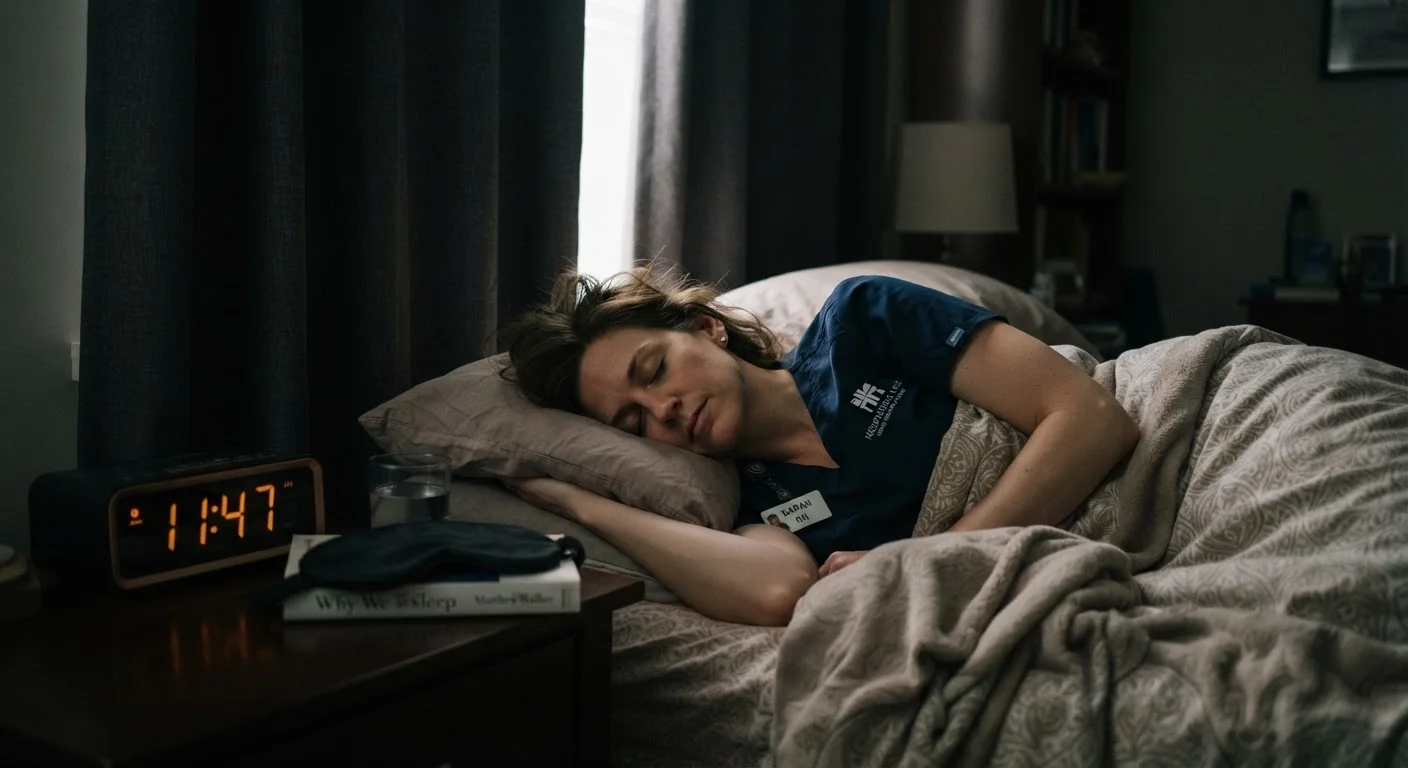
Key Takeaways
- Shift workers face circadian misalignment that standard sleep advice doesn't account for.
- Anchoring a consistent sleep window — even an imperfect one — reduces cumulative sleep debt.
- Controlling light exposure before and after sleep is one of the most effective tools available.
- Strategic napping can supplement, but not replace, adequate main sleep periods.
- Persistent fatigue or insomnia in shift workers warrants evaluation by a healthcare professional.
Start here
Why Standard Sleep Advice Falls Short for Shift Workers
Build the foundation
Understanding Your Circadian Rhythm Under Shift Work
Apply it
Core Sleep Hygiene Adaptations for Non-Traditional Schedules
Optimize your space
Managing Light, Noise, and Your Sleep Environment
Know your limits
When to Seek Professional Guidance
Why Standard Sleep Advice Falls Short for Shift Workers
Most sleep guidance is built around a single assumption: you sleep at night and are awake during the day. For the roughly 15–20% of U.S. workers on non-traditional schedules — including evening, night, and rotating shifts — that assumption is simply wrong.
Advice like "go to bed at the same time every night" or "get morning sunlight to set your rhythm" can be genuinely counterproductive when your shift changes weekly or your workday starts at midnight. Before applying any sleep hygiene strategy, it helps to understand what makes shift work sleep challenges structurally different. Our primer on what sleep hygiene actually means provides useful background on how habits shape rest in general, and this look at why common tips fail explores adaptation strategies that go beyond standard advice.
Circadian rhythm
Your body's internal 24-hour clock that regulates sleep, wakefulness, and many other biological functions based largely on light and darkness cues.
Circadian misalignment
A state where your sleep and activity schedule conflicts with your body's internal clock, commonly experienced by shift workers whose schedules don't match daylight hours.
Sleep debt
The cumulative deficit that builds when you consistently get less sleep than your body needs, which can impair alertness, mood, and physical health over time.
Shift work sleep disorder
A recognized clinical condition where working non-traditional hours causes persistent insomnia or excessive sleepiness that significantly disrupts daily functioning.
Sleep hygiene
A set of behavioral and environmental habits that support consistent, restorative sleep — adapted here for people whose schedules fall outside the conventional nighttime window.
Understanding Your Circadian Rhythm Under Shift Work
Your circadian rhythm is a roughly 24-hour internal clock regulated largely by light exposure. It governs not just sleepiness and alertness, but also body temperature, hormone release, digestion, and metabolism. When your work schedule conflicts with this clock — a state researchers call circadian misalignment — sleep quality and overall health can suffer.
Night shift workers essentially ask their bodies to sleep when the clock signals wakefulness and to work when it signals rest. The body resists this. Even workers on fixed night schedules rarely achieve full circadian adaptation, partly because social and family obligations pull them back toward daytime activity on days off.
Rotating shift workers face an additional challenge: the schedule changes before the body can adjust. Research in sleep medicine consistently links shift work to elevated risk for insomnia, excessive sleepiness, and, over years, broader health concerns. Understanding this context is important — not to create alarm, but to frame realistic expectations for what sleep hygiene adaptations can achieve.
Fixed night shifts offer more room to adapt
If you have any influence over your schedule, a fixed night shift is generally easier on the circadian system than a rotating one. Consistency, even at an unusual hour, allows the body to establish a more stable rhythm over several weeks. Rotating shifts, by contrast, prevent meaningful adaptation regardless of how disciplined your habits are.
Core Sleep Hygiene Adaptations for Non-Traditional Schedules
The goal for shift workers is not perfect circadian alignment — that may not be possible — but rather consistency within your actual schedule and reduction of cumulative sleep debt.
- Anchor your sleep window. Even if the timing shifts between work weeks, protect a consistent sleep block on workdays. Predictability, even partial, helps the body prepare for rest.
- Guard sleep time socially. Communicate your sleep schedule to household members and set boundaries around daytime sleep. Treat this window as non-negotiable as a nighttime sleep period would be.
- Use strategic napping. A 10–20 minute nap before a night shift can blunt fatigue without leaving you groggy. Avoid napping less than 2 hours before your planned main sleep period.
- Limit caffeine timing. Caffeine's half-life is roughly 5–6 hours. Plan your last intake accordingly so it does not compete with your sleep window, whatever time that falls.
- Wind down deliberately. A short pre-sleep routine signals the brain that rest is coming, regardless of the clock on the wall. Dim lights, limit screens, and move away from stimulating tasks 30–45 minutes before sleep.
For a deeper look at the science behind these habits, see our full review of sleep hygiene evidence.
Managing Light, Noise, and Your Sleep Environment
Environmental control is arguably the highest-leverage intervention available to shift workers. Light is the dominant cue that resets the circadian clock, so managing it strategically makes a meaningful difference.
- Block outdoor light completely. Blackout curtains or a sleep mask are essential for daytime sleep. Even modest light exposure during sleep can fragment rest and shift your clock in the wrong direction.
- Use light exposure intentionally. Bright light during your working hours supports alertness. If you work nights and need to stay shifted, avoid bright morning light on your commute home by wearing dark glasses.
- Reduce noise intrusion. Daytime is louder than night. Earplugs, white noise machines, or fans can mask household and neighborhood sounds. Alert household members or use a do-not-disturb sign.
- Maintain a cool temperature. The body naturally drops core temperature during sleep. A cooler room — typically between 65–68°F for most people — can support this process.
On days off, avoid dramatic schedule reversals
Many shift workers revert to a conventional daytime schedule on days off, which can reset any circadian adjustment they've built and worsen the transition back to night work. A partial shift — rather than a full reversal — may reduce this 'social jet lag' effect. The right balance between adaptation and social participation is individual and may be worth discussing with a healthcare provider.
Sleep environment needs can also change with age and life stage. This article on sleep hygiene across life stages examines how physical and environmental needs evolve over time.
When to Seek Professional Guidance
Shift work sleep challenges exist on a spectrum. Fatigue, difficulty falling asleep during the day, and mild sleep disruption are common and often manageable with the strategies above. But some shift workers develop a recognized clinical pattern called shift work sleep disorder — characterized by insomnia, excessive sleepiness, and significant functional impairment that persists beyond what adaptation efforts can address.
If you experience any of the following, consider speaking with a qualified healthcare professional:
- Chronic inability to sleep during your designated sleep window
- Sleepiness severe enough to affect safety — especially during driving or operating equipment
- Mood changes, persistent irritability, or cognitive difficulties that interfere with daily life
- Symptoms that worsen over time rather than stabilize
A clinician familiar with occupational sleep medicine can evaluate whether behavioral strategies, schedule modifications, or other clinical approaches are appropriate for your situation. For context on common sleep conditions and when professional evaluation is warranted, see our overview of sleep disorders.
This article is for general informational purposes only and does not constitute medical advice. Always consult a qualified healthcare professional for concerns about your personal health, sleep, or medical conditions.