
Sleep Hygiene Across Life Stages: How Needs and Habits Shift from Young Adults to Older Age

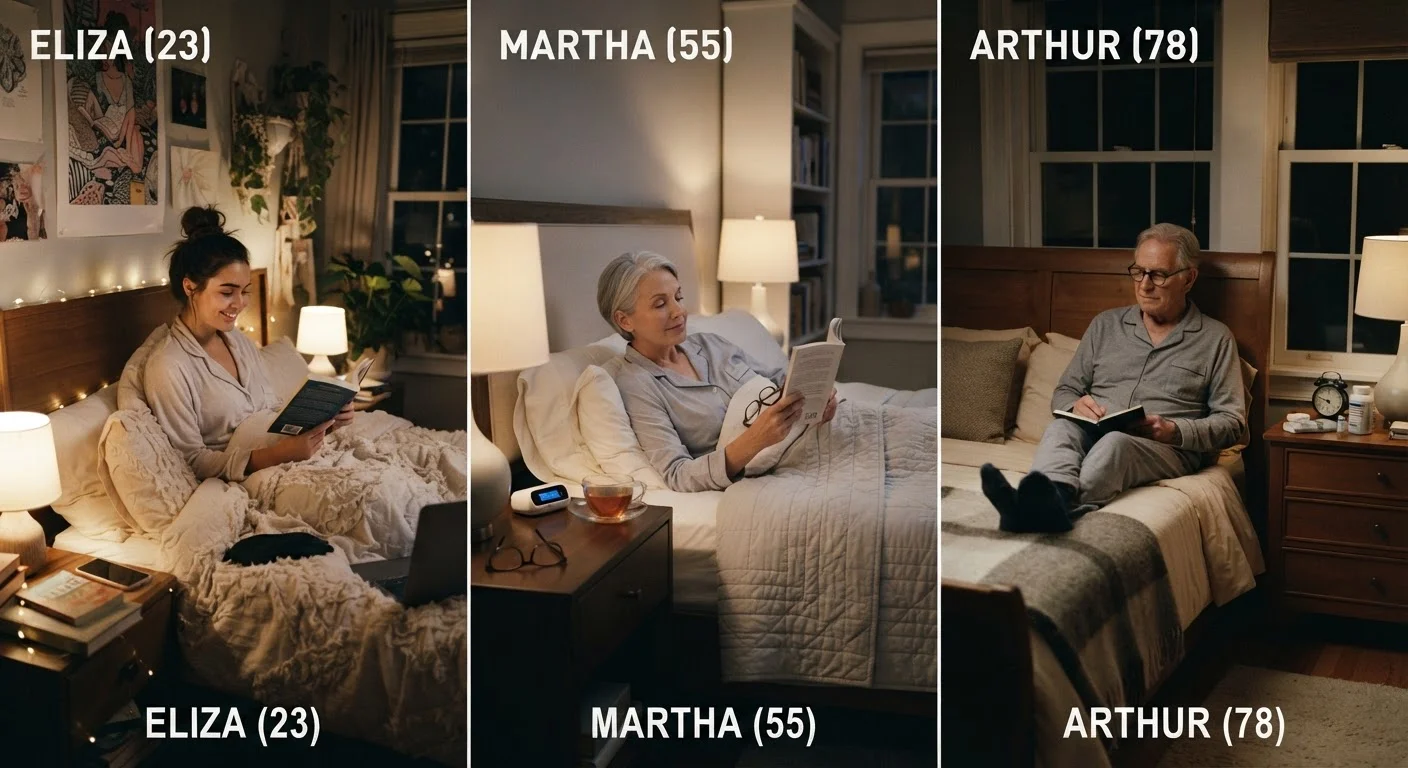
Key Takeaways
- Most adults need 7–9 hours of sleep per night, but how easily they achieve it changes with age.
- Young adults often struggle with delayed sleep timing; middle-aged adults face fragmentation from stress and life demands.
- Older adults experience earlier sleep timing, lighter sleep architecture, and more nighttime awakenings as normal aging changes.
- Core sleep hygiene principles apply across all stages, but the specific strategies worth emphasizing differ by life phase.
- Persistent sleep difficulties at any age warrant a conversation with a qualified healthcare provider.
Our Verdict
Sleep hygiene is not one-size-fits-all. While the foundational habits — consistent timing, a dark and cool sleep environment, limiting stimulants before bed — hold across adult life, each stage brings distinct biological and lifestyle pressures that call for tailored emphasis. Understanding where your challenges most likely originate is the starting point for building habits that actually stick.
| Best for | Recommended |
|---|---|
| Young adults managing irregular schedules and delayed sleep timing | Anchor wake time and reduce evening light exposure |
| Middle-aged adults dealing with stress-driven sleep fragmentation | Wind-down routines and cognitive offloading before bed |
| Older adults navigating earlier sleep timing and lighter sleep | Consistent schedule, daytime light exposure, and medical review of awakenings |
Why Sleep Hygiene Looks Different at Every Stage
The term sleep hygiene refers to the behavioral and environmental habits that support consistent, restorative rest. For a full grounding in what the term covers, see our overview of what sleep hygiene actually means. The challenge is that this advice is usually presented as universal — go to bed at the same time, limit screens, keep your room cool — without acknowledging that the obstacles and biology underlying poor sleep shift substantially as we age.
Researchers distinguish between sleep architecture (the internal structure of a night's sleep, including how much time is spent in light, deep, and REM stages) and sleep timing (when the body is primed to fall asleep and wake). Both change across adulthood, and both influence which hygiene strategies are most relevant at a given life phase.
The One Habit That Spans All Stages
A consistent wake time — even on weekends — is the single most transferable sleep hygiene practice across all adult life phases. It anchors the circadian clock regardless of when sleep onset occurs, making it a reliable foundation whether you're 22 or 72. Start there before adding other strategies.
Young Adults (Roughly Ages 18–35): Battling Delayed Timing and Irregular Schedules
Young adults are biologically predisposed to a later circadian phase — meaning the internal clock tends to push sleep onset toward midnight or beyond. This isn't a character flaw; it reflects a well-documented shift in circadian timing that gradually corrects through the mid-thirties. Social and occupational demands frequently compound the issue, leading to significant variability in sleep and wake times across weekdays versus weekends (sometimes called social jet lag).
Key hygiene priorities for this stage include anchoring a consistent wake time even on weekends, which is more powerful than trying to enforce a fixed bedtime. Reducing bright and blue-spectrum light in the two hours before bed can support natural melatonin onset. Caffeine half-life averages around five hours, so afternoon and evening consumption can meaningfully delay sleep even when it no longer feels stimulating.
Irregular schedules — academic, professional, or social — are a persistent barrier. Our related piece on why common sleep habits are harder to maintain than they appear addresses why consistency breaks down and how to adapt.
| Young Adults (18–35) | Middle Age (36–60) | Older Adults (60+) | |
|---|---|---|---|
| Typical sleep challenge | Delayed timing, irregular schedules | Fragmentation, stress-driven arousal | Early waking, lighter sleep stages |
| Circadian tendency | Later (night-owl bias) | Gradual normalization | Earlier (advanced phase) |
| Slow-wave sleep | Generally preserved | Gradual decline begins | Significantly reduced |
| Top hygiene priority | Consistent wake time | Pre-sleep wind-down routine | Morning light exposure |
| Key risk factor | Social jet lag, caffeine timing | Alcohol use, rumination | Medical conditions, medications |
| When to seek professional help | Persistent difficulty functioning | Chronic fragmentation or insomnia | Frequent awakenings, suspected apnea |
Middle Age (Roughly Ages 36–60): Fragmentation, Stress, and Competing Demands
By middle age, the extreme night-owl tendency of youth has usually moderated, but a new set of pressures emerges. Sleep fragmentation — waking during the night and struggling to return to sleep — becomes more common. Stress from career, caregiving, or financial responsibilities can activate the body's arousal systems in ways that are difficult to switch off at bedtime.
Deep slow-wave sleep (the most physically restorative stage) begins declining gradually through the thirties and forties. This means that even when total sleep time is preserved, sleep may feel less refreshing. For middle-aged adults, the most impactful hygiene strategies often involve the pre-sleep window: structured wind-down routines, limiting work or emotionally activating content in the final hour before bed, and practices that support mental decompression. Writing tomorrow's to-do list before bed — cognitive offloading — has shown promise in small studies for reducing pre-sleep rumination.
Alcohol, which many adults use to unwind, fragments sleep in the second half of the night by suppressing REM stages. This is worth noting particularly for this age group, where evening drinking is common but disrupted sleep is already a growing concern.
Older Adults (Ages 60 and Beyond): Earlier Timing, Lighter Sleep, and Medical Intersections
Older adulthood involves the most pronounced biological sleep changes. The circadian clock advances — meaning earlier sleepiness in the evening and earlier natural waking. Slow-wave sleep continues to decline, and the sleep cycle becomes lighter overall, making individuals more susceptible to environmental disruptions. Nighttime awakenings increase, and returning to sleep may take longer.
These shifts are part of normal aging, but they are frequently mistaken for insomnia or treated as a problem requiring sedating medications when they may not be. Our companion piece on distinguishing normal age-related sleep changes from sleep disorders provides a useful framework for thinking through this distinction.
Hygiene priorities shift accordingly. Daytime light exposure — ideally morning sunlight — helps reinforce circadian timing and counteract phase advancement. Limiting long daytime naps can preserve nighttime sleep pressure. Medical factors become increasingly relevant: conditions such as sleep apnea, restless legs syndrome, chronic pain, and medication side effects all affect sleep architecture and should be reviewed with a healthcare provider rather than managed with behavioral strategies alone.
Older adults managing multiple health conditions should consult their physician before making significant changes to sleep habits, particularly regarding any supplement or medication interactions. For additional context on how physical health intersects with aging, our article on how immune health shifts across adult life stages offers related perspective on age-related physiological change.
This article is for general informational and educational purposes only and does not constitute medical advice. If you have concerns about your sleep at any age, consult a qualified healthcare professional.