

Key Takeaways
- Cold therapy is most effective immediately after acute injury to reduce swelling and numb pain.
- Heat therapy works better for muscle tightness, chronic soreness, and improving pre-activity flexibility.
- Neither approach uniformly speeds muscle repair; the right choice depends on timing and injury type.
- Applying either modality incorrectly — too long or directly on skin — can cause tissue damage.
- Most everyday exercisers benefit from understanding when each tool fits rather than defaulting to one.
Rapidly reduces acute swelling and local inflammation
Cold therapy's vasoconstrictive effect limits fluid accumulation at the injury site within the first hours after trauma or intense exertion, which can help preserve range of motion.
Provides quick, drug-free pain relief
Lowering tissue temperature slows pain signal transmission along sensory nerves, offering meaningful short-term relief without the systemic effects of oral analgesics.
Heat relaxes chronically tense or stiff muscles
Increased blood flow and raised tissue temperature allow muscle fibers to lengthen more easily, which is useful for managing persistent tightness or pre-activity preparation.
Heat may ease DOMS discomfort effectively
Some research supports warm application for delayed-onset soreness peaking 24–48 hours post-exercise, where it can reduce the perception of aching without the anti-adaptation concerns linked to cold.
Both are widely accessible and low-cost
Ice packs and heating pads are household items; neither requires specialist equipment, making them practical options for everyday exercisers managing routine soreness.
Cold may blunt training adaptations if overused
Some studies suggest that frequent post-exercise cold immersion can attenuate hypertrophy and strength gains over time, as the inflammatory response cold suppresses plays a role in muscle remodeling.
Heat worsens acute swelling when applied too soon
Applying heat to a fresh injury or immediately after intense exercise can increase blood flow to an already inflamed area, potentially amplifying swelling and pain rather than relieving it.
Both carry skin and tissue injury risk if misapplied
Ice applied directly to bare skin for extended periods can cause frostbite; heating pads left on at high settings — especially during sleep — can produce contact burns.
Evidence base for routine soreness remains mixed
Neither modality shows consistently strong benefits for garden-variety post-workout soreness in otherwise healthy adults; placebo effects and individual variation make outcomes difficult to predict.
Not appropriate for all populations without guidance
People with circulatory disorders, diabetes, or reduced skin sensation face elevated risk from both therapies and should seek professional advice before use.
Our Verdict
Cold therapy and heat therapy are genuinely useful recovery tools, but each has a distinct job. Cold is well-suited to acute inflammation and sharp post-injury swelling in the first 24–72 hours; heat serves chronic muscle tension and stiffness better. Neither is universally superior, and misapplying either can slow recovery or cause harm.
This guidance is most useful for recreationally active adults managing everyday workout soreness, minor strains, or recurring muscle tightness who want a clearer framework for choosing between ice and heat.
How Cold Therapy Works on Recovering Tissue
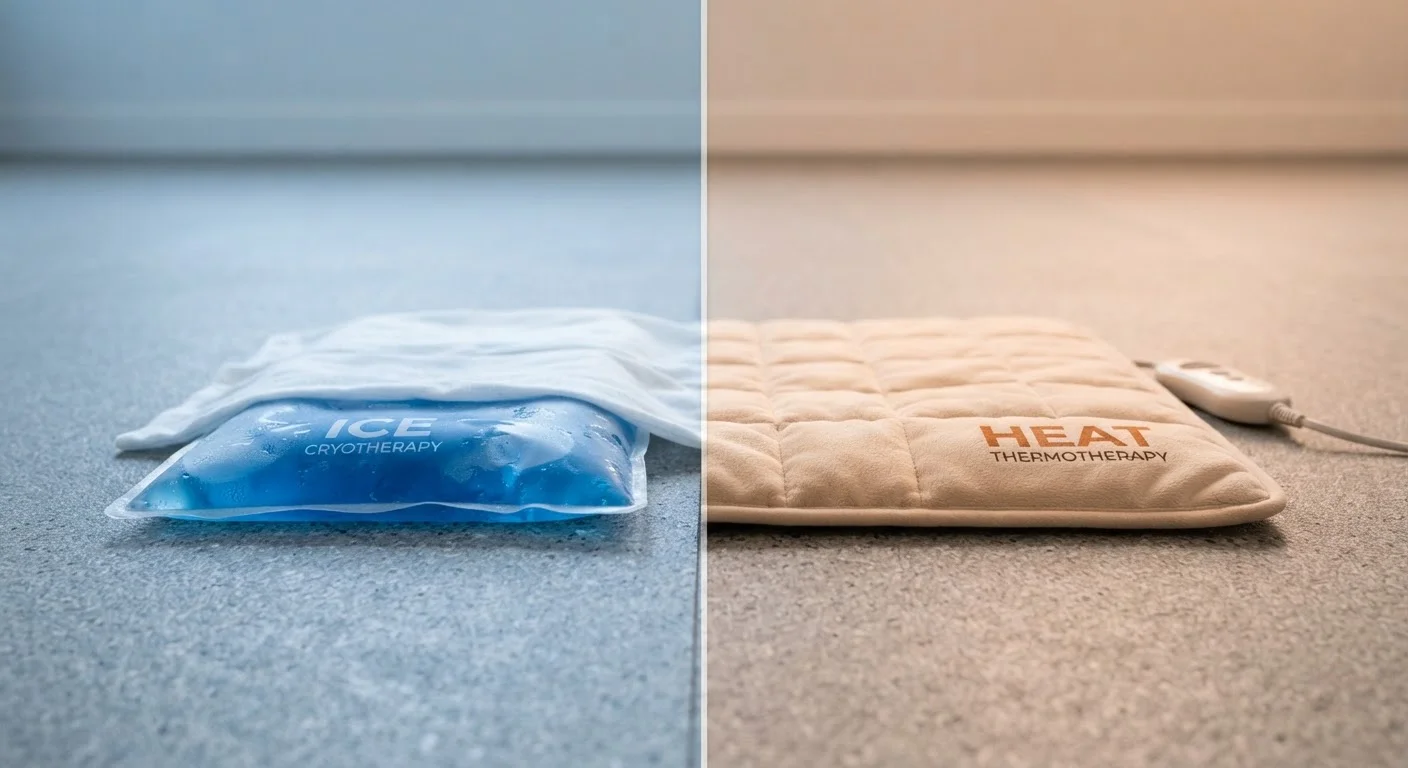
Cold therapy — applied through ice packs, cold compresses, or cold-water immersion — works primarily by causing vasoconstriction, the narrowing of blood vessels near the skin's surface. This slows local blood flow, which can limit the inflammatory cascade that produces swelling after acute injury or intense effort.
Cold also reduces nerve conduction velocity, which is why it dulls pain relatively quickly. This can make it easier to move through the initial hours after a hard workout or a minor sprain. However, research indicates that suppressing inflammation too aggressively, too often, may interfere with the body's natural adaptation signals — particularly for strength and hypertrophy training where some inflammatory activity appears necessary for muscle remodeling.
Rapidly reduces acute swelling and local inflammation
Cold therapy's vasoconstrictive effect limits fluid accumulation at the injury site within the first hours after trauma or intense exertion, which can help preserve range of motion.
Provides quick, drug-free pain relief
Lowering tissue temperature slows pain signal transmission along sensory nerves, offering meaningful short-term relief without the systemic effects of oral analgesics.
Heat relaxes chronically tense or stiff muscles
Increased blood flow and raised tissue temperature allow muscle fibers to lengthen more easily, which is useful for managing persistent tightness or pre-activity preparation.
Heat may ease DOMS discomfort effectively
Some research supports warm application for delayed-onset soreness peaking 24–48 hours post-exercise, where it can reduce the perception of aching without the anti-adaptation concerns linked to cold.
Both are widely accessible and low-cost
Ice packs and heating pads are household items; neither requires specialist equipment, making them practical options for everyday exercisers managing routine soreness.
For more context on how recovery tools compare across the evidence base, see this honest breakdown of cold therapy and other modalities.
How Heat Therapy Affects Muscles and Circulation
Heat application — via heating pads, warm towels, or warm baths — produces the opposite vascular response: vasodilation. Increased blood flow delivers more oxygen and nutrients to muscle tissue, which supports relaxation of tight fibers and may reduce the perception of stiffness and chronic aching.
Heat is particularly valued for delayed-onset muscle soreness (DOMS) that peaks 24–48 hours after exercise, as well as for loosening chronically tense muscles before activity. It is generally not recommended immediately after acute injury, however, because additional blood flow to an already inflamed area can worsen swelling.
Cold may blunt training adaptations if overused
Some studies suggest that frequent post-exercise cold immersion can attenuate hypertrophy and strength gains over time, as the inflammatory response cold suppresses plays a role in muscle remodeling.
Heat worsens acute swelling when applied too soon
Applying heat to a fresh injury or immediately after intense exercise can increase blood flow to an already inflamed area, potentially amplifying swelling and pain rather than relieving it.
Both carry skin and tissue injury risk if misapplied
Ice applied directly to bare skin for extended periods can cause frostbite; heating pads left on at high settings — especially during sleep — can produce contact burns.
Evidence base for routine soreness remains mixed
Neither modality shows consistently strong benefits for garden-variety post-workout soreness in otherwise healthy adults; placebo effects and individual variation make outcomes difficult to predict.
Not appropriate for all populations without guidance
People with circulatory disorders, diabetes, or reduced skin sensation face elevated risk from both therapies and should seek professional advice before use.
Understanding how recovery fits into a broader rest strategy is useful context — choosing between active recovery and complete rest is a related decision that interacts with how you apply these therapies.
Applying Each Approach Safely and Effectively
Both therapies carry risks when misused. Cold applied directly to bare skin or left on too long can cause frostbite or nerve damage; most clinical guidance recommends a barrier layer (such as a thin cloth) and sessions of 15–20 minutes at a time. Heat can cause burns if applied at high intensity or for extended periods, particularly during sleep.
When Neither Therapy Is the Right Answer
Significant swelling, joint instability, numbness, or pain that doesn't improve within a few days after exercise are signals to seek evaluation from a healthcare professional rather than continuing self-treatment. Cold and heat are supportive tools for minor soreness and routine recovery — they are not substitutes for diagnosis or care of a genuine injury. If you are unsure whether your symptoms represent normal post-exercise soreness or something that needs medical attention, err on the side of consulting a provider.
Timing matters significantly. A general clinical framework positions cold as most appropriate within the first 48–72 hours after acute injury, with heat becoming more appropriate once swelling has subsided and chronic stiffness is the primary complaint. For routine training soreness without acute injury, the evidence is more mixed — some people find benefit with either; individual response varies.
People with circulatory conditions, diabetes, or impaired sensation should consult a healthcare provider before using either therapy, as altered sensation increases injury risk. The same applies during pregnancy or when managing a diagnosed musculoskeletal condition. This article is general health information, not a substitute for professional medical guidance.
Warming up and cooling down before and after exercise also plays a role in how your muscles respond to recovery interventions, and is worth considering as part of a complete routine.
24–72 hrs
Window when cold therapy is typically most appropriate
Clinical frameworks generally recommend cold application during the acute inflammatory phase following injury or intense effort, after which heat may become more suitable.
15–20 min
Recommended per-session duration for either therapy
Most physical therapy guidelines advise limiting ice or heat application to 15–20 minute sessions to reduce the risk of skin or nerve damage.
This article is for informational purposes only and is not a substitute for professional medical advice. Always consult a qualified healthcare provider for personal health concerns or before beginning any new recovery practice.