
Cold Therapy, Foam Rolling, and Compression: Sorting Recovery Tools by Evidence

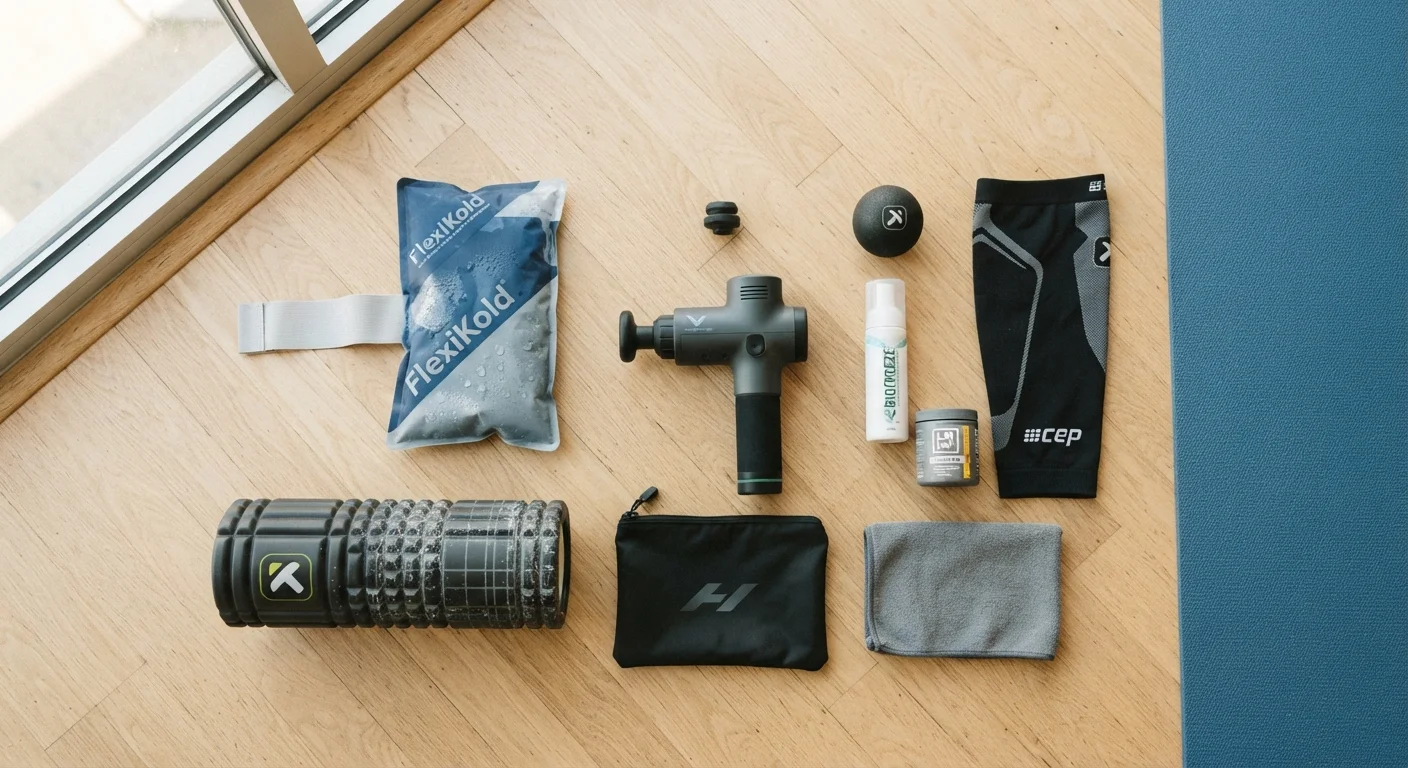
Key Takeaways
- Cold therapy reliably reduces perceived soreness but may blunt some long-term training adaptations.
- Foam rolling has consistent evidence for improving short-term range of motion and reducing muscle tenderness.
- Compression garments show modest benefits for reducing swelling and perceived fatigue after intense exercise.
- No single recovery tool is essential - sleep, nutrition, and stress management remain the strongest recovery drivers.
- Matching the tool to your goal and training phase matters more than using all tools at once.
Our Verdict
Foam rolling has the most consistent everyday evidence for reducing soreness and maintaining mobility, making it the most practical starting point for most people. Cold therapy is useful for acute soreness management but should be used thoughtfully around strength-focused training blocks. Compression offers modest, low-risk benefits that suit athletes recovering from high-volume endurance or team-sport sessions.
| Best for | Recommended |
|---|---|
| Everyday exercisers managing general muscle soreness | Foam Rolling |
| Athletes prioritizing rapid soreness reduction after intense events | Cold Therapy |
| Endurance athletes or those on their feet for long sessions | Compression |
| Those focused on maximizing long-term muscle growth | Foam Rolling (with cold therapy used cautiously) |
Why Recovery Tools Deserve Honest Scrutiny
Walk into any gym or scroll through a fitness feed and you'll encounter a wide array of recovery products - ice baths, massage guns, foam rollers, compression tights. Marketing language tends to be confident, but the research behind these tools varies considerably in quality and consistency. Understanding what each tool actually does - and for whom - helps you make better decisions without overspending or overdoing it.
Recovery, at its core, is the process by which your body restores tissue, replenishes energy stores, and adapts to training stress. As explored in our comprehensive recovery guide, sleep, nutrition, and stress regulation form the true foundation. The tools below work at the margins - and that's not dismissive. Marginal gains matter when the basics are covered. But they're rarely transformative on their own.
This article examines three of the most widely used physical recovery strategies - cold therapy, foam rolling, and compression - and sorts them by the strength of the evidence supporting each one.
Cold Therapy: Real Effects, Real Trade-Offs
Cold water immersion (CWI) and ice application reduce tissue temperature, slow nerve conduction, and cause blood vessels to constrict. The perceived effect - less soreness the day after a hard session - is fairly well supported in the research literature. Studies consistently show that CWI reduces delayed onset muscle soreness (DOMS) ratings and perceived fatigue compared to passive rest.
The trade-off is more nuanced. Research published in peer-reviewed sports science journals suggests that regular cold immersion after resistance training may blunt hypertrophy (muscle growth) signals, particularly those tied to inflammation-driven adaptation. If building muscle mass is your primary goal, using ice baths after every strength session may work against you over time.
Practically speaking, cold therapy appears best suited to: managing acute soreness between competition days, reducing perceived fatigue in high-volume endurance athletes, and situations where performance in the next 24-48 hours matters more than long-term adaptation. For a deeper look at how cold compares to heat, see our article on cold and heat therapy after exercise.
Cold Therapy Is Not Risk-Free for Everyone
People with Raynaud's phenomenon, cardiovascular conditions, or compromised circulation should consult a healthcare provider before using cold water immersion or prolonged ice application. Cold exposure causes rapid cardiovascular changes that can be unsafe for certain individuals. Even in healthy people, water temperature below 50°F (10°C) warrants caution and should never be used without supervision in an unfamiliar setting.
Foam Rolling: The Most Consistently Supported Tool
Self-myofascial release (SMR) via foam rollers or massage devices has become one of the most studied recovery modalities in exercise science. The evidence base here is broader and more consistent than for cold therapy, particularly for two outcomes: short-term improvements in range of motion and reductions in muscle tenderness after exercise.
A commonly cited mechanism is that sustained pressure on muscle tissue reduces neural tension and improves blood flow to the area, though the precise mechanisms are still being refined. What's clearer is the functional outcome - rolling for 60-90 seconds per muscle group before or after training appears to reduce perceived stiffness without meaningfully impairing force production.
Foam rolling is also accessible and low-risk, making it suitable for most people regardless of training level. It doesn't require ice, water, or specialized equipment beyond the roller itself. For a side-by-side look at how rolling compares to stretching and traditional massage, see our guide on foam rolling, stretching, and massage.
| Cold Therapy | Foam Rolling | Compression | |
|---|---|---|---|
| Evidence strength | Moderate - consistent for soreness, mixed for adaptation | Moderate-strong - consistent for ROM and tenderness | Moderate - small-to-moderate effect sizes |
| Primary benefit | Reduces perceived soreness and fatigue | Improves range of motion, reduces stiffness | Reduces swelling and perceived fatigue |
| Key limitation | May blunt muscle growth signals with overuse | Mechanical effects on tissue not fully understood | Benefits modest; not a standalone solution |
| Best timing | Post-session, especially before competition | Pre- or post-workout, 60-90 sec per area | During rest, travel, or between training days |
| Accessibility | Requires cold water or ice setup | Low cost, easy at home or gym | Wearable; passive and convenient |
| Risk level | Low-moderate (avoid with circulatory issues) | Low (use appropriate pressure) | Low (avoid if circulatory conditions present) |
Compression: Modest Benefits, Low Downside
Compression garments - sleeves, tights, and socks - apply graduated external pressure to limbs, supporting venous return (blood flow back to the heart) and potentially reducing fluid accumulation in tissues after strenuous activity. The evidence here is real but modest.
Research generally supports compression for reducing perceived muscle soreness and limb swelling after endurance events and high-volume training. The effect sizes tend to be small-to-moderate, meaning you may notice a difference, but it likely won't be dramatic. Compression appears most relevant for endurance athletes, people doing multi-day training blocks, or those who spend long periods on their feet.
One practical advantage: compression garments can be worn passively during rest or travel without requiring any additional time or effort. This passive nature makes them a low-commitment option compared to immersion protocols. If you're weighing how tools like these fit into a broader recovery strategy, our overview of active vs. complete rest provides useful context. It's also worth consulting your healthcare provider before using compression garments if you have any circulatory conditions.
Stack Tools Strategically, Not Simultaneously
Using every recovery tool after every session adds time, complexity, and cost without proportional benefit. A more effective approach is to choose tools based on your current training goal. Reserve cold immersion for high-volume blocks or competition periods. Use foam rolling as a consistent pre- and post-workout habit. Add compression on travel days or during prolonged rest. Rotating based on context tends to yield better results than an all-of-the-above approach.
This article is for general informational purposes only and is not a substitute for personalized medical or fitness advice. Consult a qualified healthcare professional before beginning any new recovery protocol, especially if you have an existing health condition.