

| Optimal bedroom temperature (general range) | 65–68°F (18–20°C) (Commonly cited in sleep medicine literature; individual variation applies) |
| Primary circadian timekeeper | Suprachiasmatic nucleus (SCN) in the hypothalamus |
| Light spectrum most disruptive to melatonin | Short-wavelength (blue-spectrum) light (Established in circadian biology research) |
| Noise characteristic most disruptive to sleep | Intermittent, unpredictable sound events (Supported by sleep architecture research) |
| Melatonin sensitivity window | 2–3 hours before habitual sleep time (Referred to as the biological 'dim-light melatonin onset' period) |
Why Your Bedroom Environment Matters
Many Americans focus their sleep improvement efforts entirely on behavior — cutting caffeine, avoiding screens, sticking to a schedule. Yet the physical space where sleep happens is equally consequential. Temperature, light, and sound are not minor background details; they directly engage the biological systems that regulate sleep onset, depth, and continuity.
This article distills what research tells us about each factor and how small adjustments can produce meaningful change. It is general health information, not personalized medical advice. If you're dealing with persistent sleep difficulties, consulting a qualified healthcare professional is always the right step.
| Optimal bedroom temperature (general range) | 65–68°F (18–20°C) (Commonly cited in sleep medicine literature; individual variation applies) |
| Primary circadian timekeeper | Suprachiasmatic nucleus (SCN) in the hypothalamus |
| Light spectrum most disruptive to melatonin | Short-wavelength (blue-spectrum) light (Established in circadian biology research) |
| Noise characteristic most disruptive to sleep | Intermittent, unpredictable sound events (Supported by sleep architecture research) |
| Melatonin sensitivity window | 2–3 hours before habitual sleep time (Referred to as the biological 'dim-light melatonin onset' period) |
For a broader view of how environment shapes sleep hygiene, see the full picture on sleep hygiene.
Temperature: The Body's Built-In Sleep Signal
Core body temperature follows a circadian rhythm, dropping naturally in the evening as a cue for sleep onset. When the ambient bedroom temperature is too warm, this physiological cooling is impaired, which can delay sleep onset and reduce time spent in slow-wave (deep) sleep.
Sleep research has generally identified a range of roughly 65–68°F (18–20°C) as conducive for most adults, though individual tolerance varies. What matters most is supporting — rather than working against — the body's natural temperature decline. Heavy bedding, overheating from electronics, and shared body heat can all raise the thermal environment above that threshold.
Practical considerations include using breathable, moisture-wicking bedding materials and, where possible, adjusting a thermostat or fan before bed rather than during the night. Those in hotter climates without air conditioning may benefit from lighter layers and keeping windows open when outdoor temperatures allow.
Circadian rhythm
A roughly 24-hour internal biological cycle that regulates sleep, hormone release, body temperature, and other physiological processes. It is primarily set by light and darkness.
Slow-wave sleep
The deepest stage of non-REM sleep, associated with physical restoration and memory consolidation. It is sometimes called deep sleep or N3 sleep.
Melatonin
A hormone produced by the pineal gland that signals darkness and promotes sleepiness. Its secretion is suppressed by light, particularly short-wavelength light.
Sleep fragmentation
Repeated brief disruptions to sleep continuity — often caused by noise or discomfort — that reduce overall sleep quality even when total sleep time appears adequate.
White noise
A type of consistent background sound containing all audible frequencies at equal intensity, sometimes used to mask intermittent environmental noise during sleep.
Light: The Dominant Circadian Regulator
Of the three environmental factors, light has the most well-established influence on the circadian system. The suprachiasmatic nucleus (SCN) — often called the brain's internal clock — relies on light signals from the retina to align the sleep-wake cycle with the external day. Even relatively dim light in the evening hours can delay melatonin secretion, effectively shifting the body's internal clock later.
Short-wavelength (blue-spectrum) light is particularly potent in this regard, which is why screen use before bed has attracted significant attention. The complete story, however, is more nuanced — research on screens and sleep suggests that engagement and timing matter alongside brightness.
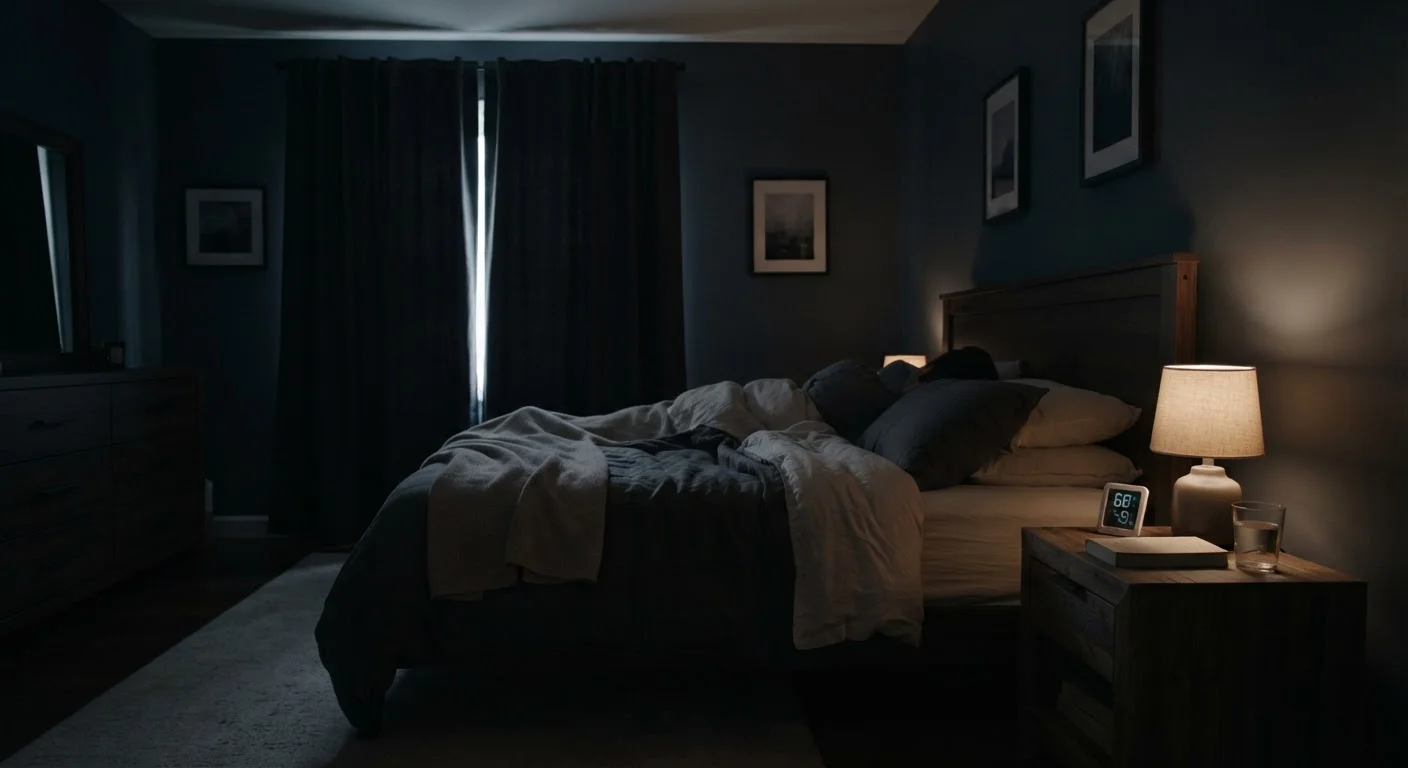
For the bedroom itself, the goal is minimizing light exposure during sleep: blackout curtains, covering indicator LEDs on electronics, and avoiding bright overhead lighting in the hour before bed. Conversely, morning light exposure is a powerful anchor for the circadian rhythm — a principle explored in morning routines that reinforce better sleep.
Sound: Managing Disruption Without Total Silence
Intermittent, unpredictable noise is more disruptive to sleep architecture than a consistent background level — the brain remains partially alert to novel sounds even during sleep. Traffic spikes, neighbor activity, and household disturbances can trigger brief arousals that fragment sleep without the sleeper necessarily waking fully or remembering it.
Complete silence is not always achievable or even preferred. Continuous low-level sound — including certain types of white, pink, or brown noise — may reduce the relative contrast of disruptive sounds, making abrupt noises less likely to cause arousal. Evidence for specific sound masking approaches is still developing, and individual responses vary considerably.
Earplugs offer a straightforward mechanical solution for many people, though comfort and fit tolerance differ. The broader principle is reducing acoustic variability rather than eliminating all sound. This connects to how environment shapes the nervous system more generally — see environmental factors in stress and the nervous system for related context.
For a practical room-by-room approach to evaluating all three factors, the bedroom environment checklist offers a structured starting point.
This article is for informational purposes only and does not constitute medical advice. Speak with a qualified healthcare professional about persistent sleep concerns.