

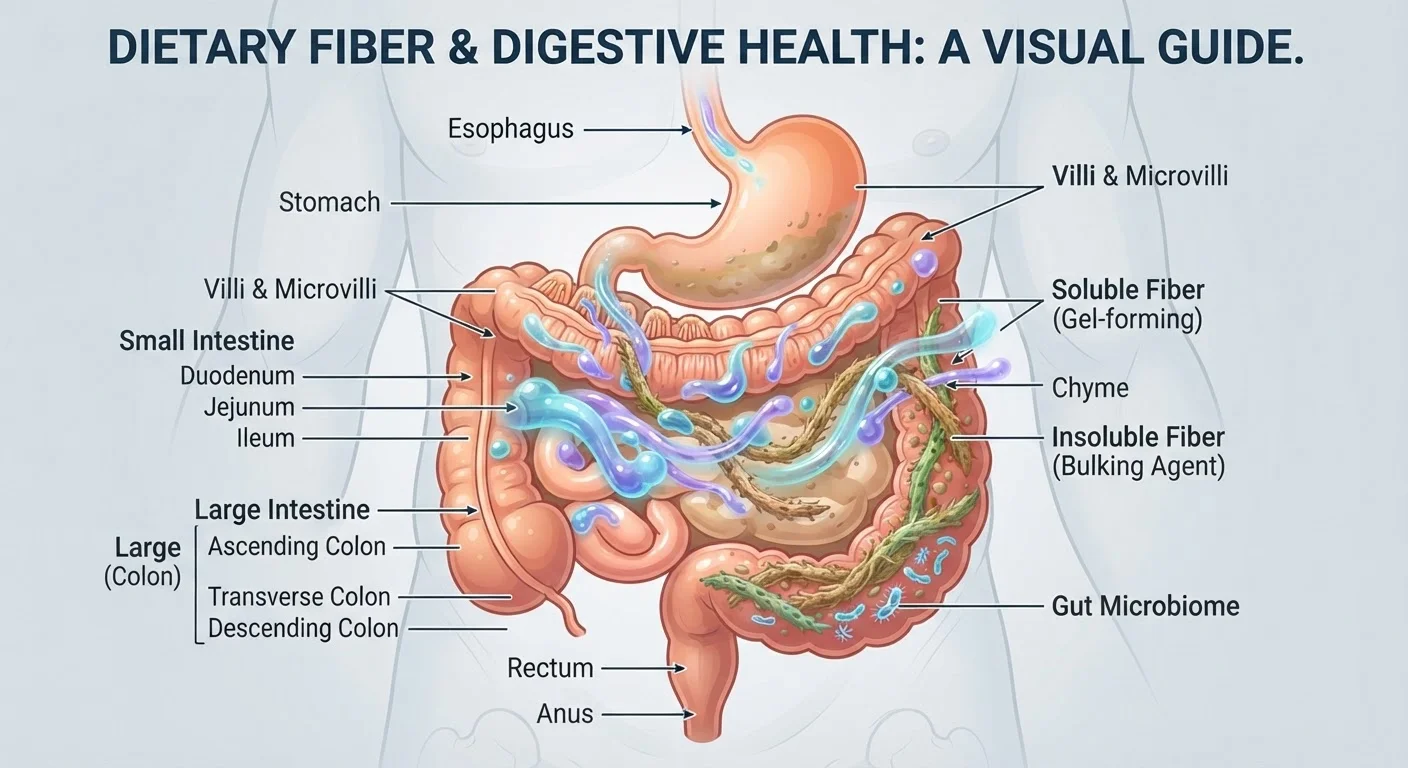
Key Takeaways
- Soluble fiber dissolves in water to form a gel, slowing digestion and feeding beneficial gut bacteria.
- Insoluble fiber does not dissolve; it adds bulk to stool and speeds movement through the colon.
- Both types work together — most fiber-rich foods contain a mix of each.
- Soluble fiber is especially important for microbiome diversity and short-chain fatty acid production.
- Insoluble fiber is more directly linked to preventing constipation and supporting colon regularity.
- Most Americans fall short of the recommended daily fiber intake from both types.
Option A
Soluble Fiber
The gel-forming, microbiome-nourishing type.
Best for: People looking to support gut bacteria, manage blood sugar, and promote softer stools.
Option B
Insoluble Fiber
The bulk-building, transit-accelerating type.
Best for: People seeking regular bowel movements, reduced constipation, and faster digestive transit.
If you struggle with constipation or slow bowel movements
Insoluble Fiber
Insoluble fiber adds bulk and accelerates transit time through the colon, making it the more direct tool for promoting regularity.
If you want to support your gut microbiome
Soluble Fiber
Soluble fiber acts as a prebiotic, fermenting in the colon to feed beneficial bacteria and stimulate short-chain fatty acid production.
If you want overall digestive and immune health
Both types together
A varied, fiber-rich diet naturally provides both types, offering complementary benefits for gut function, microbiome diversity, and immune support.
What Sets These Two Fiber Types Apart
Dietary fiber is often discussed as a single nutrient, but it actually encompasses two functionally distinct categories: soluble and insoluble. Both are non-digestible carbohydrates found in plant foods, yet they behave very differently once they enter your gut. Understanding those differences helps explain why fiber is about far more than just staying regular.
Soluble fiber dissolves in water, forming a thick, viscous gel inside the digestive tract. This gel slows the rate at which food moves through the stomach and small intestine. Common sources include oats, barley, legumes, apples, and psyllium husk. When soluble fiber reaches the colon largely intact, gut bacteria ferment it — a process central to microbiome health. For a deeper look at how fiber fuels those bacteria, see how dietary fiber supports gut bacteria.
Insoluble fiber, by contrast, does not dissolve. It resists fermentation and moves through the digestive system largely unchanged, drawing water into the colon and adding physical bulk to stool. Whole wheat, bran, nuts, and most vegetable skins are rich in insoluble fiber. Its primary mechanical role is accelerating intestinal transit — the speed at which waste moves toward elimination.
| Criterion | Soluble Fiber | Insoluble Fiber |
|---|---|---|
| Behavior in water | Dissolves, forms a gel | Does not dissolve |
| Primary digestive role | Slows digestion, nourishes bacteria | Adds bulk, speeds transit |
| Fermented by gut bacteria | Yes — produces SCFAs | Minimal fermentation |
| Effect on stool | Softens stool consistency | Increases stool bulk and weight |
| Prebiotic effect | Strong — feeds beneficial microbes | Limited |
| Key food sources | Oats, legumes, apples, psyllium | Wheat bran, vegetable skins, nuts |
| Transit time impact | Slows gastric emptying | Accelerates colonic transit |
How Each Type Interacts With Your Gut
The functional differences between these two fibers become most apparent at the level of the colon, where the majority of fiber's work takes place.
Soluble fiber's fermentation by colonic bacteria produces short-chain fatty acids (SCFAs) — particularly butyrate, propionate, and acetate. Butyrate is the primary energy source for the cells lining the colon (colonocytes) and plays a documented role in maintaining the gut barrier. A well-functioning gut barrier limits the passage of harmful bacteria and inflammatory molecules into the bloodstream. SCFAs also interact with immune signaling pathways, which is why soluble fiber's effects extend beyond digestion. This fiber-immunity connection is explored further in fiber's role in immune resilience.
Insoluble fiber's mechanical action is less metabolically complex but equally important. By bulking stool and reducing transit time, it decreases the duration that potential carcinogens and waste products remain in contact with the colon lining. Adequate insoluble fiber intake is consistently associated with lower rates of constipation and is a cornerstone of general colon health recommendations from gastroenterology organizations.
Most Fiber-Rich Foods Contain Both Types
Foods are rarely sources of just one fiber type. An apple, for instance, provides soluble pectin in its flesh and insoluble fiber in its skin. This natural combination is one reason whole-food sources are generally preferred over isolated fiber supplements, which typically deliver only one type. Eating a wide variety of plant foods is the most straightforward strategy for obtaining a balanced fiber profile.
It is also worth noting that most whole foods contain both types of fiber simultaneously — they are rarely found in isolation. Oats, for example, are celebrated for their soluble beta-glucan content but also provide insoluble components. This means a varied diet naturally delivers the combined benefits of both types.
Practical Implications for Your Diet
The U.S. Dietary Guidelines recommend 25–38 grams of total fiber daily for adults, yet surveys consistently show most Americans consume roughly half that amount. Both soluble and insoluble shortfalls contribute to suboptimal gut health outcomes.
~16g
Average daily fiber intake for U.S. adults
National Health and Nutrition Examination Survey (NHANES) data consistently shows Americans consume well below the recommended 25–38 g/day.
95%
Americans not meeting daily fiber recommendations
Research published in the American Journal of Lifestyle Medicine identified inadequate fiber intake as a widespread public health concern in the United States.
To meaningfully increase both types, focus on whole plant foods in variety rather than supplements alone. Legumes (beans, lentils, chickpeas) are among the most fiber-dense foods and supply both soluble and insoluble fiber in significant quantities. Vegetables — especially those consumed with their skins — contribute primarily insoluble fiber, while fruit flesh and oats lean more soluble.
Soluble fiber's prebiotic function also links it to the broader ecosystem of gut-supportive practices. Probiotics introduce beneficial bacteria; prebiotics (largely soluble fiber) feed them. That complementary relationship is explained in how probiotics and prebiotics interact.
One practical caution: increasing fiber intake too quickly — particularly insoluble fiber — can cause bloating, gas, and discomfort. Gradual increases paired with adequate water intake allow the gut microbiome and colon to adapt. If you have a digestive condition such as irritable bowel syndrome, inflammatory bowel disease, or diverticular disease, speak with a gastroenterologist before significantly changing your fiber intake, as recommendations vary by condition and individual.
This article is for general informational and educational purposes only and does not constitute medical or dietary advice. Always consult a qualified healthcare professional before making significant changes to your diet, particularly if you have an existing health condition.