

Key Takeaways
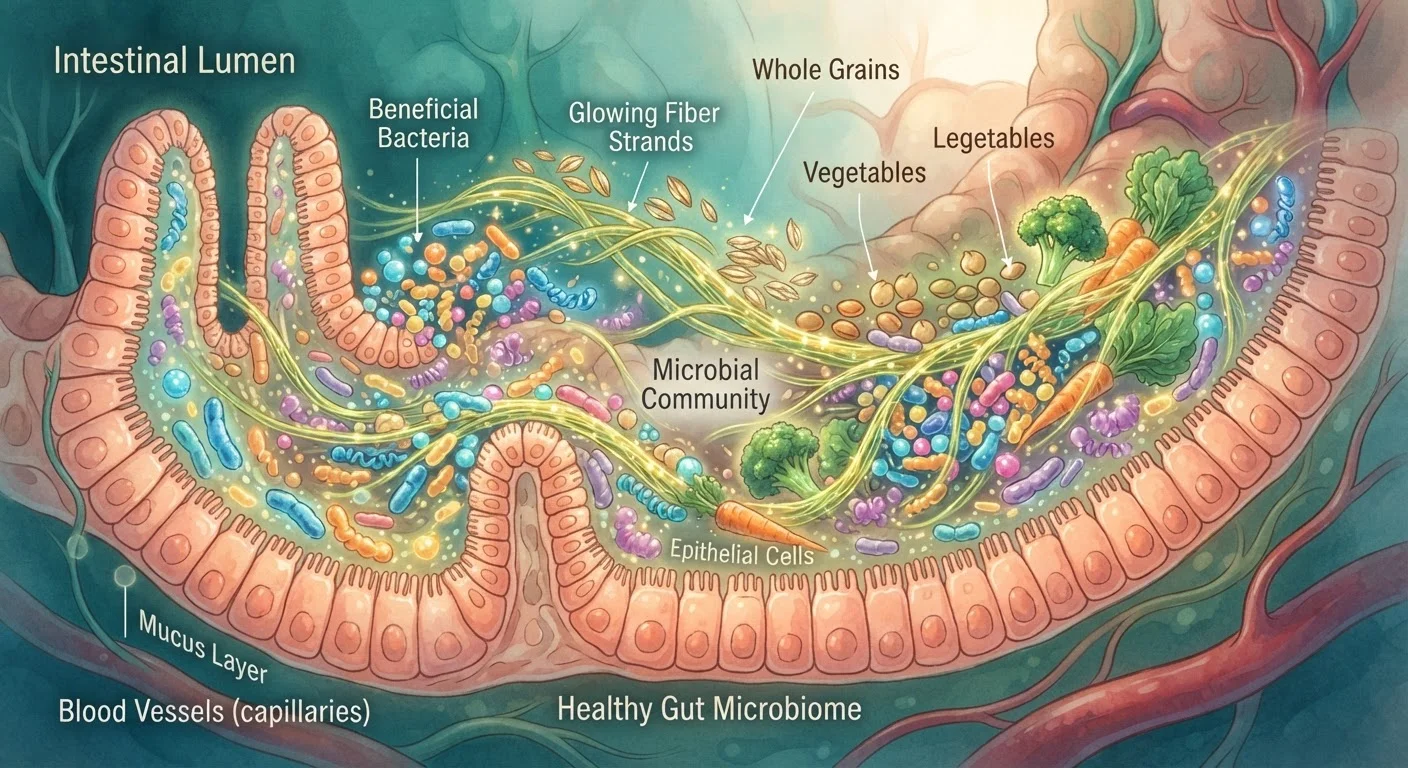
- Fiber feeds beneficial gut bacteria, which in turn produce compounds that support digestive and immune health.
- Most Americans consume significantly less fiber than current dietary guidelines recommend.
- Different fiber types — soluble and insoluble — each play distinct roles in the gut.
- Short-chain fatty acids, produced when bacteria ferment fiber, help maintain the gut lining.
- Gradually increasing fiber intake is the safest approach to avoid digestive discomfort.
- A varied, plant-rich diet is the most reliable way to deliver diverse fiber types to your gut microbiome.
Dietary Fiber
Dietary fiber is a type of carbohydrate found in plant foods that the human body cannot fully digest on its own. Instead of being broken down and absorbed in the small intestine, fiber passes mostly intact into the large intestine, where it serves as food for the trillions of bacteria that live there. This makes fiber uniquely important for gut health — not just as a digestive aid, but as a direct nutrient source for your gut microbiome.
Fiber is broadly classified as soluble (dissolves in water, forming a gel) or insoluble (does not dissolve), and many plant foods contain both types. A subset of soluble fiber known as prebiotic fiber is especially well studied for its ability to selectively stimulate beneficial bacterial populations such as Bifidobacterium and Lactobacillus.
Why Fiber Is More Than a Digestive Aid
Most people learn about fiber in the context of regularity — and that connection is real. But framing fiber purely as a laxative nutrient undersells its significance. Fiber is, more precisely, the primary food source for the microbial communities living in your large intestine. Without it, those communities shrink, lose diversity, and become less effective at their many jobs.
Your gut microbiome — the vast ecosystem of bacteria, fungi, and other microorganisms residing mainly in the colon — influences digestion, immune signaling, inflammation, and even metabolic health. These microbes depend on fermentable fiber to survive and thrive. To understand why that matters, it helps to understand how fiber actually behaves once you eat it. See our full explainer on fiber as a carbohydrate for a deeper look at what makes it chemically distinct from other carbs.
~10–15g
Average daily fiber intake in the U.S.
Dietary surveys consistently show American adults consume well under half the fiber recommended by current U.S. dietary guidelines.
25–38g
Daily fiber recommended by U.S. dietary guidelines
The Dietary Guidelines for Americans recommend 25g/day for women and 38g/day for men, varying by age and caloric intake.
~70%
Share of immune cells located in the gut
Estimates from immunology research suggest the majority of the body's immune tissue is associated with the gastrointestinal tract, underscoring the gut-immunity relationship.
From Your Plate to Your Microbiome: What Happens to Fiber
When you eat a meal containing fiber — say, a bowl of lentil soup or a piece of whole-grain bread — your stomach and small intestine do very little with the fiber itself. Enzymes that digest starches, proteins, and fats have essentially no effect on most dietary fiber. So fiber arrives largely intact in the colon, where bacteria equipped with specialized enzymes go to work fermenting it.
The byproducts of that fermentation are biologically active. Chief among them are short-chain fatty acids (SCFAs) — particularly acetate, propionate, and butyrate. Butyrate is the preferred energy source for colonocytes, the cells lining the colon wall. It helps maintain the integrity of the gut barrier, a critical layer that keeps bacteria and their byproducts from leaking into the bloodstream. Propionate is taken up by the liver and plays a role in metabolic regulation, while acetate circulates and may influence appetite signaling.
This is why researchers and clinicians increasingly view fiber not just as roughage, but as a key regulator of gut-lining health and immune readiness. The gut-immune connection runs directly through these SCFA pathways.
Soluble and Insoluble Fiber: Different Roles in the Same Ecosystem
Not all fiber behaves identically. The two main categories — soluble and insoluble — each contribute to gut health in distinct ways, and most plant foods contain some of both.
- Soluble fiber dissolves in water to form a gel-like substance. It slows digestion, moderates blood sugar absorption, and is highly fermentable by gut bacteria. Oats, barley, apples, citrus fruits, and legumes are good sources.
- Insoluble fiber does not dissolve and passes through the gut relatively intact. It adds bulk to stool, speeds transit time, and helps maintain regular bowel movements. Whole wheat, bran, nuts, and most vegetables are rich sources.
A subset of soluble fiber — called prebiotic fiber — is especially relevant for microbiome health. Prebiotic fibers, found in foods like garlic, onions, asparagus, and chicory root, selectively feed beneficial bacteria such as Bifidobacterium and Lactobacillus species. For a side-by-side look at how each fiber type works mechanically in the gut, see our guide to soluble vs. insoluble fiber.
The Intake Gap and How to Approach It
Despite fiber's well-documented importance, fiber intake across the U.S. population consistently falls short of recommended levels. Dietary guidelines generally suggest 25–38 grams of fiber daily, yet surveys indicate most Americans average closer to 10–15 grams — less than half the target.
Closing this gap matters not only for digestive regularity but for the long-term health of the gut microbiome. Research suggests that chronic low fiber intake is associated with reduced microbial diversity, a condition linked in observational studies to a range of health concerns. Diet quality, sleep, stress, and activity levels all interact with this ecosystem, as outlined in our explainer on everyday habits that influence the microbiome.
The most effective approach to increasing fiber is gradual and food-based: adding one or two servings of vegetables, legumes, or whole grains at a time, and increasing water intake alongside. Rapid increases can cause temporary bloating or gas as the bacterial population adjusts. If you have an existing gastrointestinal condition, consult a healthcare provider before making significant dietary changes.
For readers interested in structuring meals that actively support a diverse microbial community, our article on eating patterns for microbiome diversity explores what the research currently supports.
This article is for general informational and educational purposes only and is not a substitute for personalized medical advice. Always consult a qualified healthcare professional before making significant changes to your diet or if you have concerns about your digestive health.