

Key Takeaways
- Adults can lose 3–8% of muscle mass per decade starting in their 30s, with losses accelerating after 60.
- Hormonal shifts, reduced protein synthesis, and inactivity all compound muscle decline in later life.
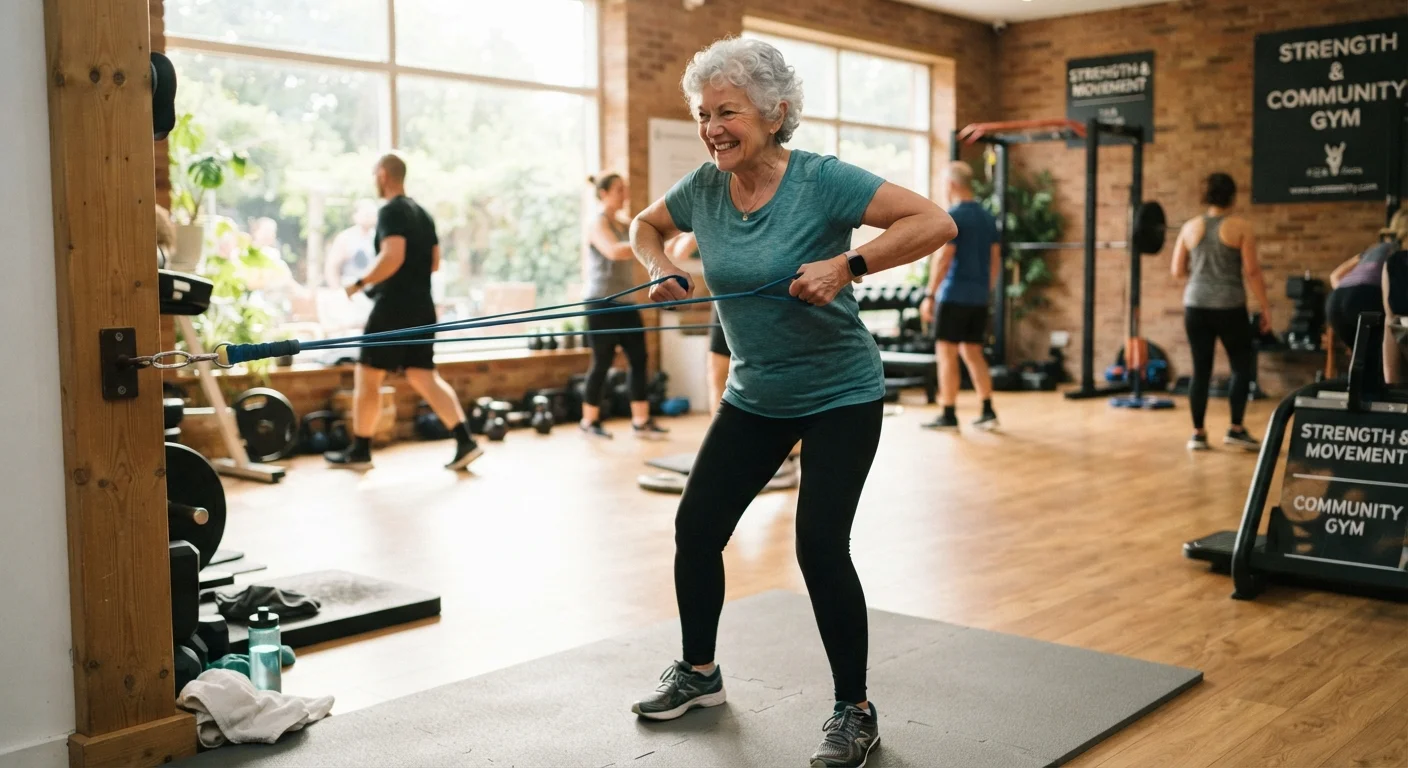
- Resistance training remains one of the most effective tools for slowing sarcopenia at any age.
- Adequate dietary protein works synergistically with exercise to support muscle retention.
- Sarcopenia is not inevitable — consistent, age-appropriate movement can meaningfully slow its progression.
Sarcopenia
Sarcopenia is the gradual, age-related loss of skeletal muscle mass, strength, and function. It typically begins in a person's 30s and accelerates noticeably after age 60. The condition can reduce physical independence, increase fall risk, and affect overall metabolic health. Importantly, sarcopenia is not an automatic or inevitable part of aging — its progression can be significantly influenced by lifestyle choices.
Sarcopenia is clinically defined by the European Working Group on Sarcopenia in Older People (EWGSOP) as low muscle strength combined with reduced muscle quantity or quality, with severe sarcopenia additionally marked by poor physical performance.
Why Muscle Loss Speeds Up After 60
Muscle loss is not a sudden event — it is a slow process that begins decades before most people notice it. However, several biological shifts converge in your 60s to push that process into a higher gear.
First, hormonal changes play a central role. Levels of testosterone, estrogen, and growth hormone — all of which support muscle protein synthesis — decline with age. Insulin-like growth factor 1 (IGF-1), another key driver of muscle repair and growth, also decreases. This hormonal environment makes it harder for the body to build and maintain muscle tissue even when physical activity stays constant.
Second, the body's anabolic response to protein weakens. A phenomenon researchers call anabolic resistance means that older muscles require a greater stimulus — more protein or more exercise — to generate the same muscle-building response that a younger body achieves with less. This is why nutrition strategies that worked in midlife may need revisiting after 60.
Third, motor neuron loss accelerates in later decades. Skeletal muscle is controlled by motor neurons, and as these neurons die off, the muscle fibers they once activated can atrophy or be recruited by neighboring neurons less efficiently. This affects not just mass but coordination and power output.
Finally, cumulative inactivity compounds everything. Periods of bed rest, illness recovery, or simply reduced daily movement have a disproportionately large impact on older adults compared with younger people — and recovery takes longer. Understanding this dynamic is covered in broader context in our active aging guide.
What Exercise Science Reveals About Reversing the Trend
The most consistent finding across decades of exercise physiology research is straightforward: resistance training works, regardless of age. Studies involving adults in their 70s and 80s have demonstrated measurable gains in both muscle cross-sectional area and functional strength after structured programs of progressive resistance exercise.
Progressive overload — gradually increasing the challenge placed on muscles over time — is as important for older adults as it is for anyone else. The body adapts to the demands placed on it. Without progressive challenge, adaptation plateaus.
3–8%
Muscle mass lost per decade from age 30
Research published in the Journal of Cachexia, Sarcopenia and Muscle estimates this range, with losses accelerating in later decades.
~30%
Muscle strength decline by age 70 vs. peak
Studies of aging populations suggest average strength reductions of up to 30% by the eighth decade compared with peak young-adult values.
10–15%
Strength gain possible in older adults after training
Controlled resistance training trials in adults over 65 have consistently demonstrated meaningful strength increases within 8–12 weeks.
Aerobic exercise also plays a supporting role. While it does not build muscle mass as directly as resistance training, regular aerobic activity improves mitochondrial function in muscle cells, supports cardiovascular health, and reduces systemic inflammation — a factor increasingly linked to accelerated muscle degradation.
If you are new to structured exercise or returning after a long break, the evidence suggests starting modestly and building consistently is far more effective than intensive short-term efforts. Our beginner's guide to strength training offers a practical starting point for older adults at any fitness level.
“Skeletal muscle is extraordinarily responsive to exercise training at virtually any age. The plasticity of muscle tissue means that the biological capacity for adaptation does not disappear — it just requires a sufficient and consistent stimulus.”
— Roger Fielding, Senior scientist and director, Nutrition, Exercise Physiology, and Sarcopenia Laboratory, Tufts University
The Role of Protein and Lifestyle Factors
Exercise does not work in isolation. Muscle protein synthesis — the process by which the body repairs and builds muscle tissue — requires adequate raw material in the form of dietary protein. Current research suggests that older adults generally benefit from higher protein intake than standard population recommendations, though specific targets should be discussed with a registered dietitian or physician, particularly for those with kidney disease or other conditions.
Timing also matters. Evidence points to distributing protein intake across meals — rather than concentrating it in one sitting — as more effective for older adults in stimulating muscle protein synthesis throughout the day.
Sleep, chronic stress, and smoking all influence muscle health as well. Poor sleep disrupts the hormonal environment needed for tissue repair. Chronic low-grade inflammation — accelerated by inactivity, obesity, and poor sleep — is increasingly recognized as a driver of sarcopenic muscle loss.
Many of the assumptions people hold about aging and exercise — that it is too late to start, or that heavy lifting is unsafe after 60 — are not well supported by the science. Our article on common exercise myths for older adults examines these beliefs directly.
Build Habits That Outlast Motivation
Consistency matters more than intensity when it comes to preserving muscle in later life. Even two sessions of resistance exercise per week, maintained over months and years, produces cumulative benefits that short bursts of intense training cannot replicate. Our piece on building lasting exercise habits explores practical strategies for staying on track through the common drop-off points.
This article provides general health information and is not a substitute for personalized medical advice. Consult a qualified healthcare professional before beginning any new exercise program, especially if you have existing health conditions.