

Key Takeaways
- Body scan meditation guides attention systematically through each region of the body to build present-moment awareness.
- Research suggests regular practice may support stress reduction, emotional regulation, and improved sleep quality.
- No prior meditation experience is required — even a 10-minute session offers meaningful practice.
- The goal is curious, non-judgmental observation, not relaxation or any specific physical sensation.
- Body scan is a core component of Mindfulness-Based Stress Reduction (MBSR) programs.
What you will need
What Body Scan Meditation Actually Is
Body scan meditation is a structured mindfulness practice in which you move your attention slowly and deliberately through different parts of your body — typically starting at the feet and working upward to the crown of the head. The purpose isn't to relax (though that sometimes happens) or to feel any particular sensation. Instead, you're practicing the skill of noticing: observing whatever is present — tension, warmth, tingling, numbness, or nothing at all — without trying to change it.
This quality of non-judgmental awareness is what distinguishes body scan from simple relaxation exercises. You're training your attention to land on the present moment rather than drifting toward worries about tomorrow or replays of yesterday. If you're curious about how mindfulness and meditation relate more broadly, the article Mindfulness vs. Meditation: Understanding the Distinction offers a helpful foundation.
Body scan is one of the signature practices within Mindfulness-Based Stress Reduction (MBSR), a structured program originally developed at the University of Massachusetts Medical School. Studies associated with MBSR have explored links between body scan practice and reduced perceived stress, improvements in sleep, and greater awareness of physical tension before it escalates — though individual results vary and more research is ongoing.
What You'll Need Before You Begin
The beauty of body scan meditation is that it requires almost nothing external. Before your first session, a few simple preparations will help the practice feel more settled.
What you will need
Start Short and Build Gradually
A 10-minute body scan is a complete, worthwhile practice — you don't need 45 minutes to benefit. Beginning with shorter sessions makes it easier to build consistency, which matters more than session length. Once the practice feels familiar, you can extend it naturally.
If you're brand new to any formal mindfulness practice, the guide Mindfulness From Scratch walks through what to realistically expect and how to build a habit that sticks.
How to Practice: Step by Step
Follow these steps at your own pace. A full body scan can run anywhere from 10 to 45 minutes depending on how slowly you move through each region. Shorter sessions are completely valid — especially when you're just starting out.
Find your position and settle in
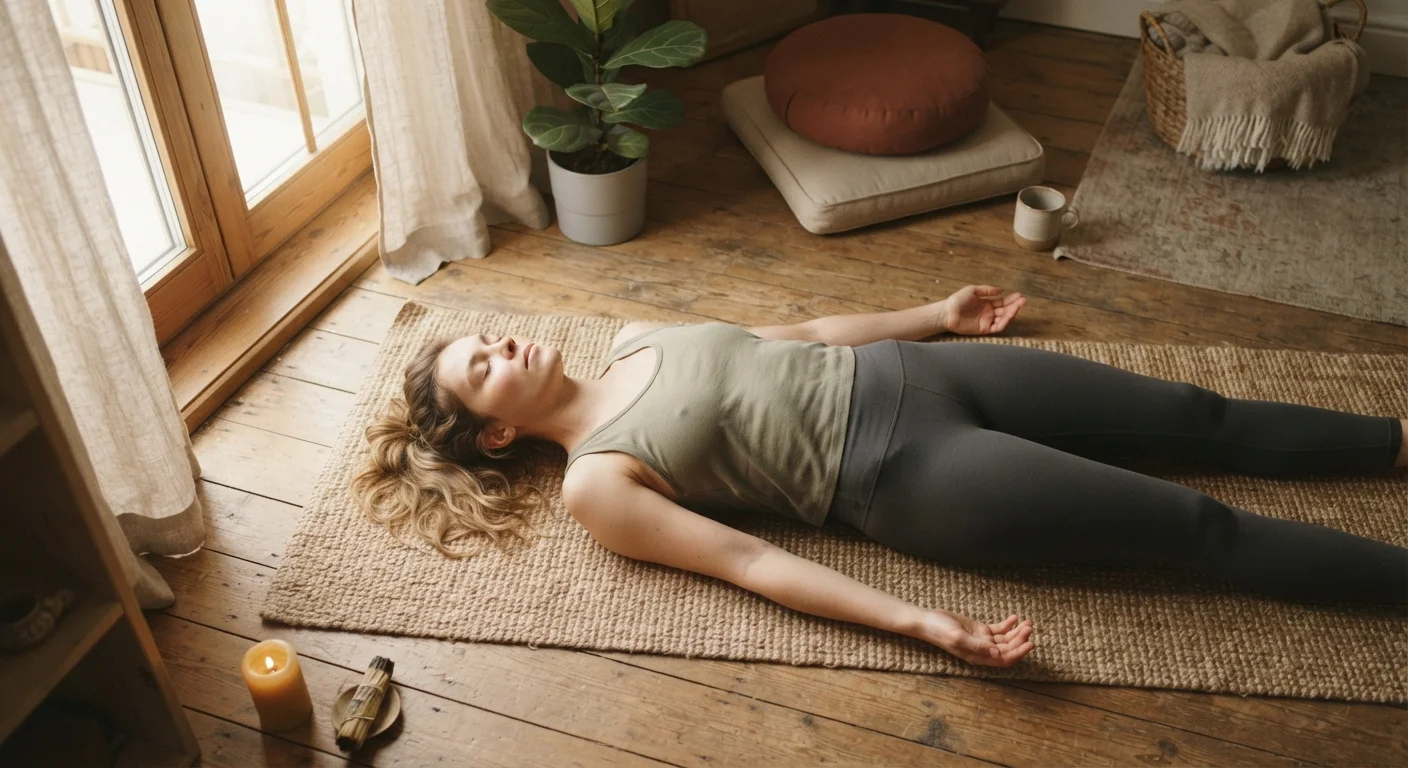
Lie on your back with your arms resting slightly away from your body, palms facing up. If lying flat is uncomfortable, bend your knees or place a pillow under them. Close your eyes gently, or soften your gaze downward if you prefer them open.
Take a few grounding breaths
Before moving attention through the body, spend a minute simply noticing your breath. Feel your chest or belly rise and fall. This helps anchor your attention in the present moment and signals to your nervous system that it's safe to slow down.
Begin at your feet
Bring your full attention to the soles of your feet. Notice any sensations — warmth, coolness, pressure from the floor, tingling, or nothing in particular. You're not trying to relax your feet; you're simply observing them. Spend 20–30 seconds here before moving on.
Move slowly upward through each body region
Gradually shift attention up through your body in the following sequence: feet → ankles → calves → knees → thighs → hips → lower back → abdomen → upper back → chest → hands → forearms → upper arms → shoulders → neck → face → crown of the head. Spend time with each area before moving to the next. There's no required pace — slower is generally more effective for building awareness.
Notice wandering and gently return
At some point — likely many times — your mind will drift to thoughts, plans, or memories. This is normal and expected. When you notice it has happened, acknowledge it without criticism and redirect your attention back to wherever you left off in the body. This redirection is the core skill you're building.
Expand awareness to the whole body, then close
After reaching the top of your head, spend a moment sensing your body as a whole — a single, unified field of sensation and breath. Then gradually bring your attention back to the room: notice sounds around you, feel the surface beneath you, and gently open your eyes. Take a moment before standing up.
This article is for general informational and educational purposes only and does not constitute medical advice. If you have a history of trauma, chronic pain, or a mental health condition, please consult a qualified healthcare professional before beginning a new mindfulness practice.
Common Challenges and How to Meet Them
Most beginners encounter a few predictable hurdles. Knowing about them in advance can keep you from abandoning the practice before it has a chance to settle.
- Falling asleep: This is extremely common, especially if you practice lying down. It doesn't mean you failed — it often means your nervous system finally felt safe enough to rest. Try practicing seated or at a time when you're less tired.
- Mind wandering: Your attention will drift. This is not a problem to fix; it's the practice itself. Each time you notice you've drifted and gently redirect attention back to the body, you've completed one repetition of the core skill.
- Not feeling anything: Some body regions feel neutral or blank. That's information too. Simply notice the absence of sensation without labeling it as failure.
- Discomfort or distress: Occasionally, bringing attention inward can surface unexpected emotions or physical discomfort. If this happens, you can widen your focus to the room around you, open your eyes, or stop the practice entirely. This response is worth discussing with a mental health professional.
Pairing body scan with breath-based practices can deepen your overall mindfulness foundation. The article Breathing Techniques Used in Mindfulness Practice explores how breath awareness complements body-focused attention.