

Key Takeaways
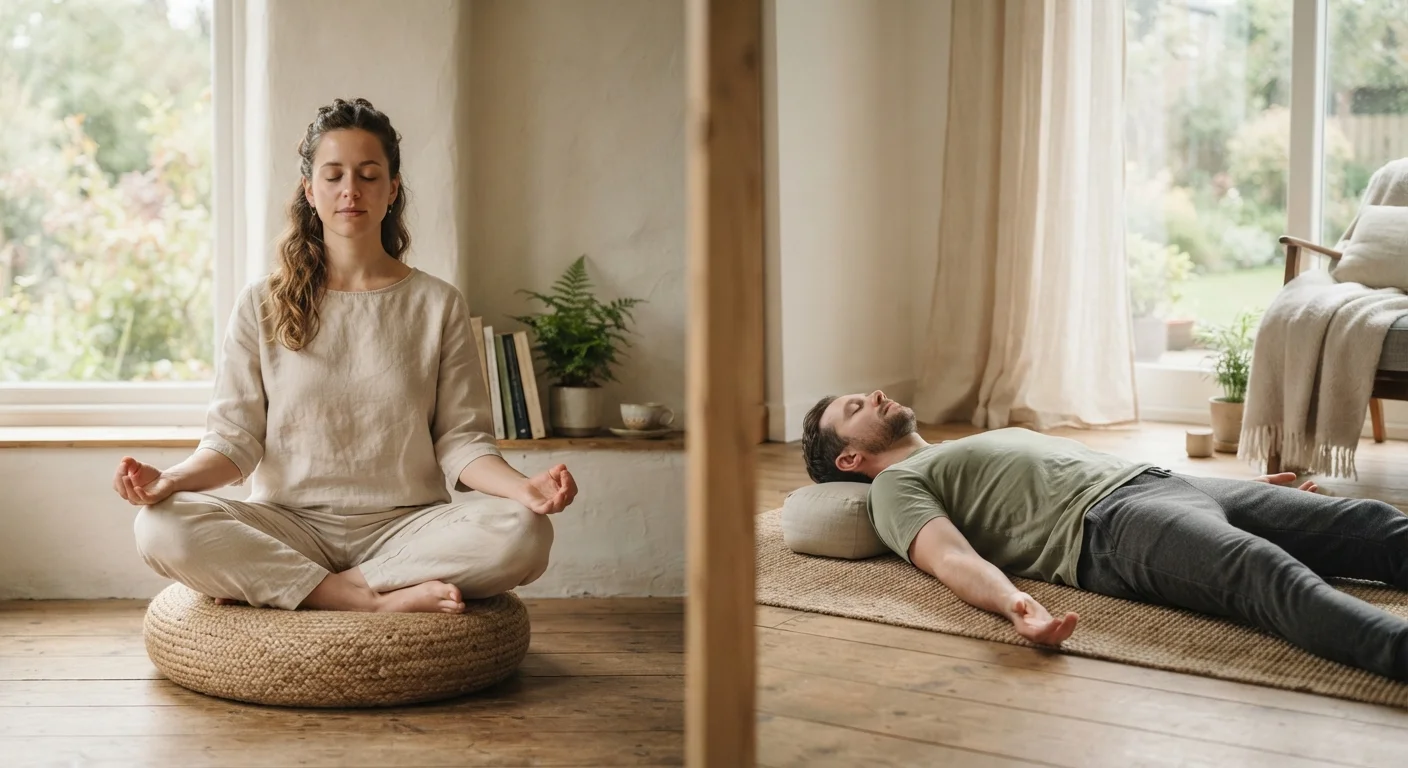
- Mindfulness meditation trains attention and emotional awareness; PMR targets physical muscle tension directly.
- Both approaches have strong research support for reducing daily stress and anxiety symptoms.
- PMR tends to produce faster physical results for beginners; mindfulness builds deeper long-term resilience.
- Neither requires special equipment or prior experience to start practicing at home.
- Combining both techniques may offer broader stress relief than either approach alone.
Our Verdict
Both mindfulness meditation and progressive muscle relaxation are well-supported, accessible tools for managing everyday stress. The better fit depends less on which is objectively superior and more on how you experience stress — in your thoughts and emotions, or in your body. Many people find value in practicing both over time.
| Best for | Recommended |
|---|---|
| Those whose stress shows up as racing thoughts or emotional overwhelm | Mindfulness Meditation |
| Those who carry stress as physical tension, headaches, or tight muscles | Progressive Muscle Relaxation |
| Complete beginners wanting structured, step-by-step guidance | Progressive Muscle Relaxation |
| Those seeking lasting emotional resilience and attention skills | Mindfulness Meditation |
How Each Technique Works
Before comparing outcomes, it helps to understand the different mechanisms at play. These are not just two versions of the same thing — they engage your mind and body through distinct pathways.
Mindfulness meditation involves deliberately directing your attention to present-moment experience — typically the breath, physical sensations, or sounds — without judging what arises. Over time, this practice strengthens your ability to observe stressful thoughts without automatically reacting to them. If you're new to the concept, understanding how mindfulness and meditation relate is a useful first step.
Progressive muscle relaxation (PMR), developed by physician Edmund Jacobson in the 1920s, works differently. You systematically tense individual muscle groups — hands, arms, shoulders, face, legs — hold for several seconds, then release. The deliberate contrast between tension and release teaches your nervous system to recognize and let go of chronic physical tension.
| Mindfulness Meditation | Progressive Muscle Relaxation | |
|---|---|---|
| Primary target | Thoughts, attention, emotional reactivity | Physical muscle tension |
| Mechanism | Present-moment awareness training | Systematic tension-and-release sequence |
| Typical session length | 5–20 minutes | 15–20 minutes (shorter versions possible) |
| Beginner learning curve | Moderate — takes patience to grasp | Low — concrete steps are easy to follow |
| Speed of physical relief | Gradual over weeks of practice | Often noticeable within first sessions |
| Long-term resilience benefits | High — changes attention patterns | Moderate — maintains body awareness |
| Equipment needed | None — quiet space preferred | None — mat or floor helpful |
What the Research Shows
Both practices have accumulated meaningful scientific support, though the evidence differs in scope and focus.
Mindfulness-based interventions have been studied extensively. Research consistently links regular mindfulness practice to reductions in perceived stress, cortisol levels, and symptoms of anxiety. Structured programs like Mindfulness-Based Stress Reduction (MBSR) have demonstrated benefits across diverse populations in numerous clinical trials.
PMR has a similarly robust track record, particularly for physical stress symptoms. Studies have found it effective for reducing muscle tension, lowering blood pressure, and improving sleep quality in people experiencing everyday stress. Its structured, body-focused format often makes measurable relief accessible within a few sessions.
~38%
Stress reduction with MBSR programs
A meta-analysis in JAMA Internal Medicine found mindfulness programs produced meaningful reductions in anxiety, depression, and stress measures.
2–4 weeks
Time to notice PMR benefits
Research on PMR consistently shows measurable reductions in muscle tension and self-reported stress within the first two to four weeks of regular practice.
Neither approach is a cure-all, and individual responses vary. What works well for one person may feel frustrating or inaccessible to another — which is why understanding your own stress pattern matters when choosing where to begin.
Practical Considerations: Time, Effort, and Access
Both practices are genuinely low-barrier, but they differ in what the early learning curve looks like.
Getting started with mindfulness can feel elusive at first — many beginners expect a quiet mind and feel discouraged when thoughts keep arriving. In reality, noticing a wandering mind is the practice. Even five to ten minutes of daily attention training builds meaningful skill over weeks. For a structured entry point, a practical beginner's guide to mindfulness can help you build a routine that actually sticks. You might also explore whether guided or silent practice suits you better.
PMR is highly concrete by design — you follow a physical sequence, which many beginners find reassuring. A full session typically takes 15 to 20 minutes, though abbreviated versions targeting specific muscle groups can fit into shorter windows. Free audio guides and written scripts are widely available.
If breathing-focused techniques interest you as a complement to either approach, research-backed breathing strategies offer additional options worth exploring.
Choosing What Works for You
The most effective stress management practice is the one you'll actually use consistently. Both techniques reward regularity over intensity — brief daily sessions outperform occasional marathon efforts.
Consider starting with PMR if you notice stress primarily in your body: tight shoulders, jaw clenching, headaches, or restless legs. Its tangible, step-by-step structure gives your nervous system clear feedback that something is shifting.
Consider starting with mindfulness meditation if your stress is driven more by rumination, worry, or emotional reactivity. The attention skills it builds extend well beyond the meditation cushion, affecting how you respond to stressors throughout the day. Clarifying the difference between mindfulness and meditation can help you set realistic expectations before you begin.
Many people eventually find value in drawing on both — using PMR when physical tension is acute and mindfulness when emotional reactivity needs steadying. Exploring how different reflective practices affect the brain may deepen your understanding of why combining approaches can be so useful.
This article is for general informational purposes only and is not a substitute for professional medical or mental health advice. If you are experiencing significant anxiety, chronic stress, or other mental health concerns, please consult a qualified healthcare provider.