

Key Takeaways
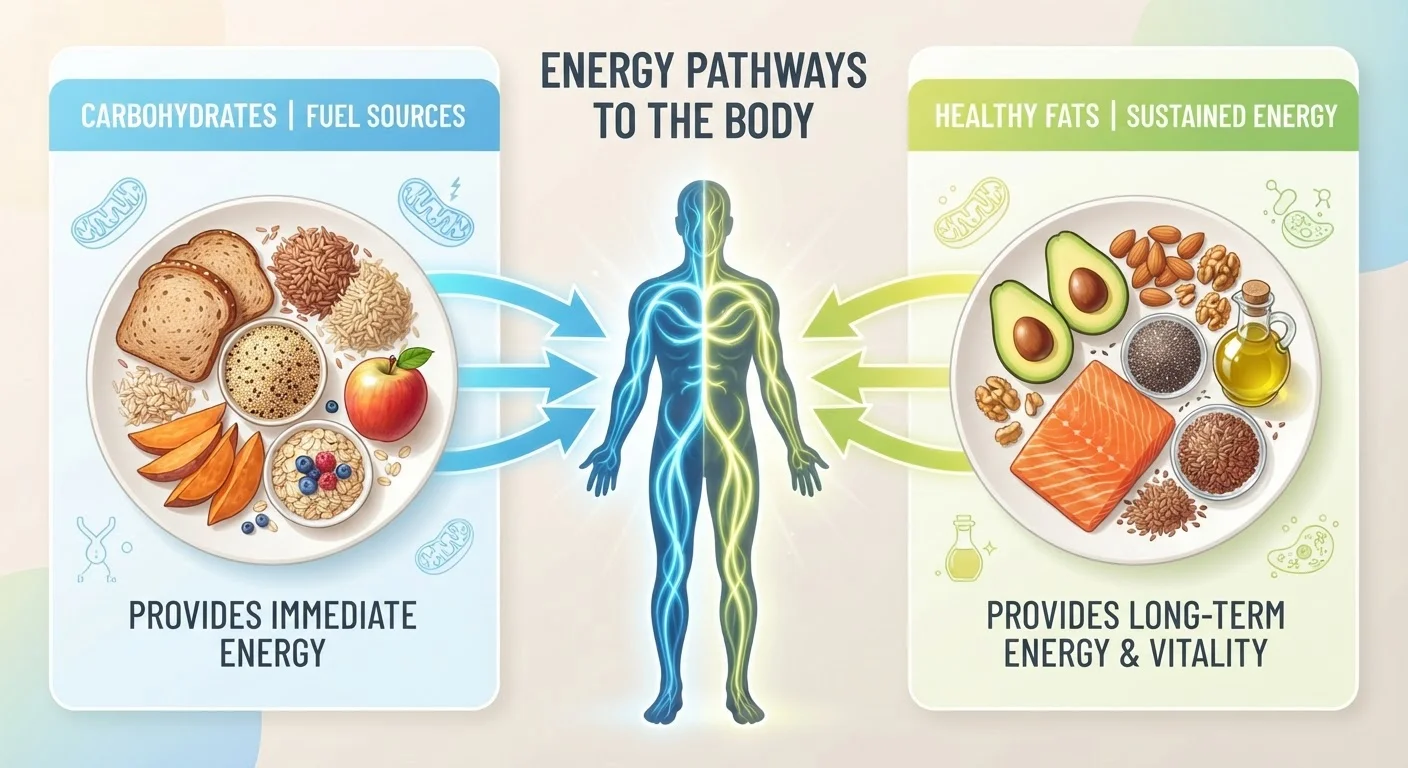
- The body uses both carbohydrates and fat for energy — the mix depends on activity intensity and meal timing.
- Carbohydrates are the preferred fuel during high-intensity exercise because they are broken down faster.
- Fat becomes the dominant fuel source during rest, low-intensity activity, and periods without food.
- Insulin is the key hormone that signals which fuel the body prioritizes at any given moment.
- A balanced diet supports metabolic flexibility — the ability to switch fuels efficiently.
- No single fuel source is inherently superior; both serve essential roles in everyday health.
Metabolic Fuel Switching
Metabolic fuel switching is the body's ability to shift between carbohydrates and fats as its primary energy source depending on availability, activity level, and hormonal signals. After a meal, carbohydrates tend to take priority; during fasting or prolonged exercise, fat becomes the dominant fuel. This flexibility is a normal and healthy function of human metabolism.
The shift is largely regulated by insulin levels and the availability of acetyl-CoA, the common intermediate through which both glucose and fatty acids enter the citric acid cycle for energy production.
Two Fuels, One Engine
Think of your metabolism as a hybrid engine. It can run on carbohydrates, fat, or — in practice — a blend of both at the same time. Which one dominates at any given moment is not random; it is determined by a set of physiological signals that your body reads constantly.
Carbohydrates are broken down into glucose, which is either used immediately for energy or stored as glycogen in the liver and muscles. Fat is stored in adipose tissue and circulates as fatty acids in the bloodstream. Both feed into the same fundamental energy-production process inside your cells. For a broader look at what each macronutrient does in the body, see Macronutrients Explained.
The body does not flip a single switch. Instead, the ratio of carbs to fat burned shifts along a spectrum depending on conditions — and understanding that spectrum helps clarify a lot of confusing nutrition claims.
The Role of Insulin in Fuel Selection
Insulin is the primary hormonal signal that tells the body which fuel to use. When you eat carbohydrates, blood glucose rises and the pancreas releases insulin. Elevated insulin signals cells to take up glucose and, importantly, suppresses the release of fatty acids from fat tissue. Carbohydrate becomes the default fuel.
As hours pass after a meal, insulin levels drop. The body gradually shifts toward drawing on stored fat. Overnight — when most people fast for seven or more hours — fat oxidation increases noticeably. This is entirely normal physiology, not a special dietary state.
Exercise and Insulin Are Not the Whole Story
Hormones beyond insulin — including glucagon, cortisol, and epinephrine — also influence fuel selection, particularly during stress or prolonged activity. The system is interconnected, and no single factor determines fuel use in isolation. This complexity is one reason blanket dietary rules often oversimplify what actually happens inside the body.
Exercise adds another layer to this picture. Muscle contractions themselves trigger glucose uptake independent of insulin, which is why physical activity affects blood sugar even without changes to eating habits.
How Exercise Intensity Changes the Equation
Exercise intensity is one of the clearest determinants of which fuel dominates. At rest and during light activity — a slow walk, gentle stretching — the body oxidizes a higher proportion of fat. The process is efficient enough to meet low energy demands.
As intensity rises toward a brisk run or a hard cycling session, the demand for energy rises sharply. Fat oxidation, while substantial, simply cannot release energy fast enough to keep pace. The body increasingly calls on glycogen — the stored form of carbohydrate — because glucose can be converted to usable energy more rapidly than fat.
~50–60%
Fat contribution to energy at rest
Research consistently shows that at rest, roughly half or more of the body's energy comes from fat oxidation in healthy adults, with the remainder from carbohydrates.
~85–90%
Carbohydrate contribution at high intensity
During near-maximal exercise efforts, carbohydrate oxidation can account for up to 85–90% of total energy expenditure, according to exercise physiology research.
~400–500g
Total glycogen storage capacity (average adult)
The liver and muscles together store roughly 400–500 grams of glycogen, providing a limited but rapidly accessible carbohydrate fuel reserve, per established physiology references.
This is why endurance athletes pay close attention to carbohydrate intake around training. It is also why someone doing a moderate walk does not need to carb-load beforehand. To understand more about how carbohydrates support energy and blood sugar regulation, visit Your Body on Carbohydrates.
Metabolic Flexibility: Why It Matters
Metabolic flexibility refers to how smoothly your body transitions between fuel sources. A metabolically flexible person shifts toward fat oxidation during fasting or light activity and back to carbohydrate burning during intense effort without strain. Research links good metabolic flexibility to better energy regulation and overall metabolic health, though the science is still developing.
Factors that may reduce metabolic flexibility include chronic overfeeding, very sedentary behavior, and consistently high intake of refined carbohydrates. Regular aerobic exercise is widely recognized as one of the strongest supports for fuel-switching efficiency.
It is worth noting that diet type — including low-carbohydrate and ketogenic approaches — can shift the resting fuel mix toward fat. However, that adaptation comes with trade-offs in high-intensity performance and is not appropriate for everyone. Anyone considering major dietary changes should consult a qualified healthcare professional. To explore how different types of fat function in the body, see Dietary Fat Demystified.
If you notice persistent fatigue, energy crashes, or difficulty recovering from exercise, those signals are worth examining. Signs Your Diet May Be Unbalanced Across Macronutrients explores what the body may be communicating through those patterns.
This article is for general informational and educational purposes only and is not a substitute for professional medical or dietary advice. Consult a qualified healthcare provider for guidance specific to your health situation.