

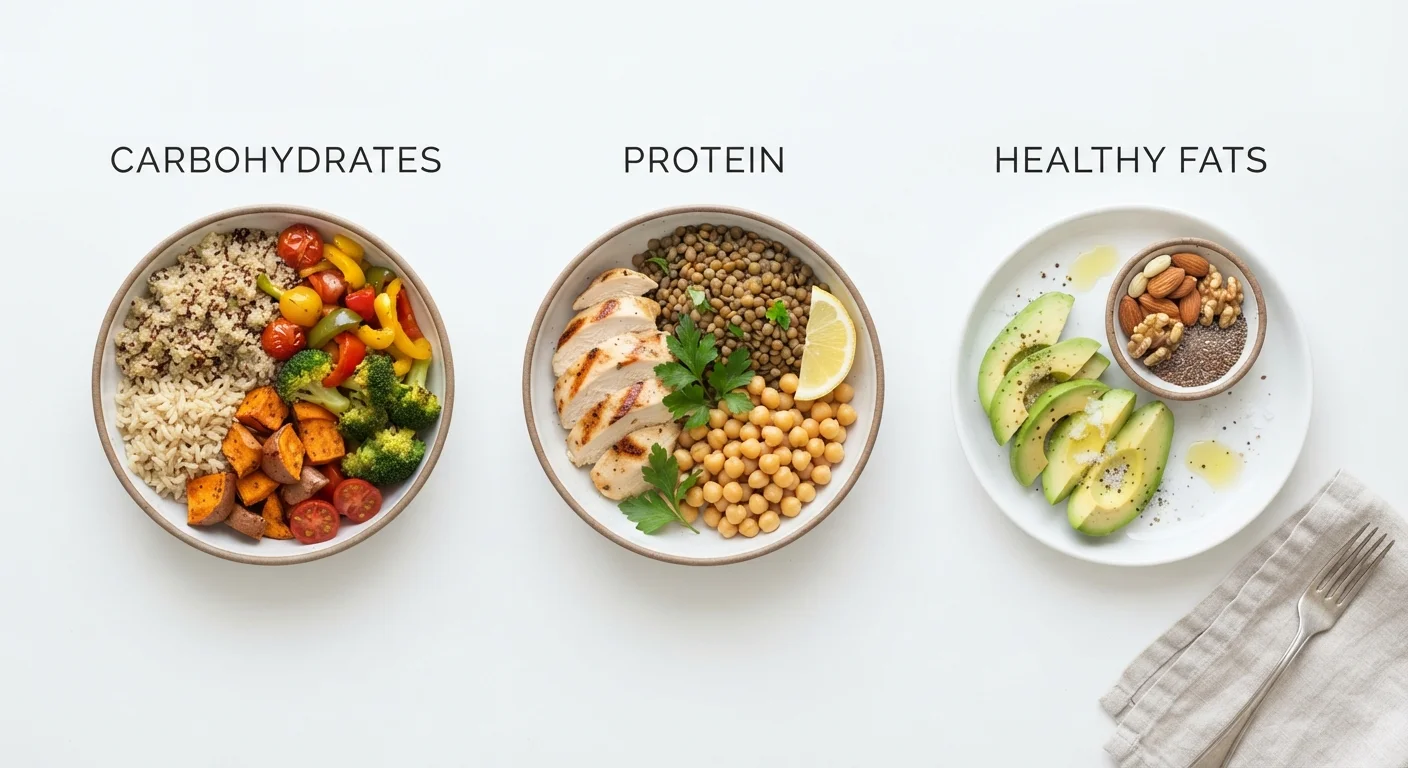
Key Takeaways
- Carbohydrates are the body's preferred and most efficient energy source, especially for brain function.
- Proteins provide the amino acids your body needs to build, repair, and maintain tissues.
- Fats support hormone production, vitamin absorption, and long-term energy storage.
- All three macronutrients are essential — eliminating any one entirely is not supported by established nutrition science.
- The quality and source of each macronutrient matters as much as the quantity you consume.
Macronutrients
Macronutrients are the three major nutrients your body requires in relatively large amounts to produce energy and sustain essential functions: carbohydrates, proteins, and fats. Unlike vitamins and minerals, which are needed in smaller quantities, macronutrients form the bulk of what you eat and directly fuel everything from breathing to exercise. Each macronutrient has a distinct chemical structure and plays a unique set of roles in the body.
Carbohydrates and proteins each provide 4 calories per gram, while fats provide 9 calories per gram — a difference that reflects their distinct molecular energy density.
Carbohydrates: Your Body's Primary Fuel
Carbohydrates are the macronutrient your body most readily converts into energy. When you eat carbs — whether from oatmeal, fruit, or bread — your digestive system breaks them down into glucose, a simple sugar that circulates in the bloodstream and fuels cells throughout the body. The brain, in particular, relies heavily on glucose and has a strong preference for it as its primary energy source.
Not all carbohydrates behave the same way. Simple carbohydrates (found in table sugar, candy, and white bread) digest quickly, causing a faster rise in blood sugar. Complex carbohydrates (found in whole grains, legumes, and vegetables) digest more slowly and typically provide more fiber, vitamins, and minerals alongside their energy.
Dietary fiber — technically a type of carbohydrate — deserves special mention. It isn't digested for energy but plays a vital role in digestive health, blood sugar regulation, and satiety. Most Americans consume far less fiber than current dietary guidelines recommend.
Focus on Macronutrient Quality First
Rather than obsessing over exact gram counts, start by examining the quality of each macronutrient in your diet. Choose whole grains over refined carbs, lean or plant-based proteins, and unsaturated fats where possible. Small, consistent improvements in food quality tend to have a meaningful impact over time.
To learn more about how macronutrient balance is expressed on food packaging, see reading a nutrition label through a macronutrient lens.
Protein: Building Blocks for Nearly Everything
Protein's most recognized role is building and repairing muscle tissue — but its responsibilities extend far beyond the gym. Proteins make up enzymes that drive chemical reactions, antibodies that support immune function, hormones that regulate metabolism, and structural components like hair and skin. In short, protein is involved in nearly every process that keeps your body running.
Proteins are made up of smaller units called amino acids. Of the 20 amino acids the body uses, nine are classified as essential — meaning the body cannot manufacture them and must obtain them through food. Animal sources like meat, eggs, and dairy generally provide all nine essential amino acids, making them complete proteins. Many plant-based sources are lower in one or more essential amino acids, though a varied plant-based diet can meet all protein needs.
10–35%
Recommended protein share of daily calories
According to the Dietary Reference Intakes established by the National Academies of Sciences, Engineering, and Medicine, protein should make up 10–35% of total daily calorie intake for adults.
45–65%
Recommended carbohydrate share of daily calories
The same National Academies guidelines suggest carbohydrates should comprise 45–65% of daily calorie intake for most adults, reflecting their central role in fueling the body.
20–35%
Recommended fat share of daily calories
The National Academies recommend that dietary fat account for 20–35% of total daily calories for adults, emphasizing fat's essential physiological roles.
Protein needs vary based on age, activity level, and health status. General guidance from institutions like the National Academies suggests a baseline of 0.8 grams of protein per kilogram of body weight for sedentary adults, though active individuals or older adults may benefit from higher amounts. If you're unsure what level is right for you, consult a registered dietitian or your healthcare provider.
Curious about how protein needs shift as you age? See our overview of macronutrients across the lifespan.
Fat: Essential, Not the Enemy
Dietary fat has long been mischaracterized as something to minimize or avoid entirely. In reality, fat is an indispensable macronutrient with critical functions. It enables the absorption of fat-soluble vitamins A, D, E, and K — nutrients that simply cannot enter the bloodstream without fat present. Fat also plays a central role in hormone synthesis, including hormones that regulate reproduction and stress responses, and it forms the structural basis of every cell membrane in the body.
Fat provides more than twice the calories per gram compared to carbohydrates or protein, making it the body's most energy-dense macronutrient and a key form of long-term energy storage. This density also explains why fat contributes substantially to satiety — helping you feel full after meals.
The type of fat in your diet has meaningful implications for health. Unsaturated fats — found in foods like olive oil, avocados, fatty fish, and nuts — are generally associated with favorable health outcomes. Trans fats, largely eliminated from the U.S. food supply through regulatory action, are associated with increased cardiovascular risk. For a thorough breakdown, see our article on saturated, unsaturated, and trans fats.
Common Macronutrient Misconceptions
It's easy to hear oversimplified claims — that all carbs cause weight gain, that fat should be avoided, or that more protein is always better. Current nutrition science doesn't support any of these positions. For a detailed look at these ideas, see our article on macronutrient myths that keep tripping people up.
This article is for general informational purposes only and does not constitute medical or dietary advice. Always consult a qualified healthcare professional or registered dietitian for guidance specific to your health situation.