

Key Takeaways
- Nutrition labels list total carbohydrates, protein, and fat in grams per serving — always check serving size first.
- Total fat is divided into subcategories; unsaturated fats are generally considered more beneficial than saturated or trans fats.
- Total carbohydrates include fiber and sugars, which behave differently in the body.
- Protein grams are listed without subcategories, but quality and source matter beyond the number.
- Percent Daily Values on labels are based on a 2,000-calorie reference diet and may not reflect your individual needs.
What you will need
Why Read a Label Through a Macronutrient Lens?
Most people glance at calories and move on. But the macronutrient breakdown — carbohydrates, protein, and fat — tells a much richer story about what a food actually does once you eat it. These three nutrients fuel your body differently, affect satiety differently, and interact with your metabolism in distinct ways.
If you've ever wondered why two foods with identical calorie counts can leave you feeling differently an hour later, macronutrient composition is a big part of the answer. Reading a label with this lens shifts you from passive consumer to informed decision-maker.
For a broader introduction to what the full label contains beyond macros, the practical introduction to reading nutrition labels covers the complete picture. And if you're also decoding supplement packaging, reading a supplement label addresses the distinct terminology you'll encounter there.
What you will need
How to Read a Nutrition Label for Macronutrients
Follow these steps the next time you pick up a packaged food. Once you've done it a few times, the process becomes second nature — typically taking under a minute per label.
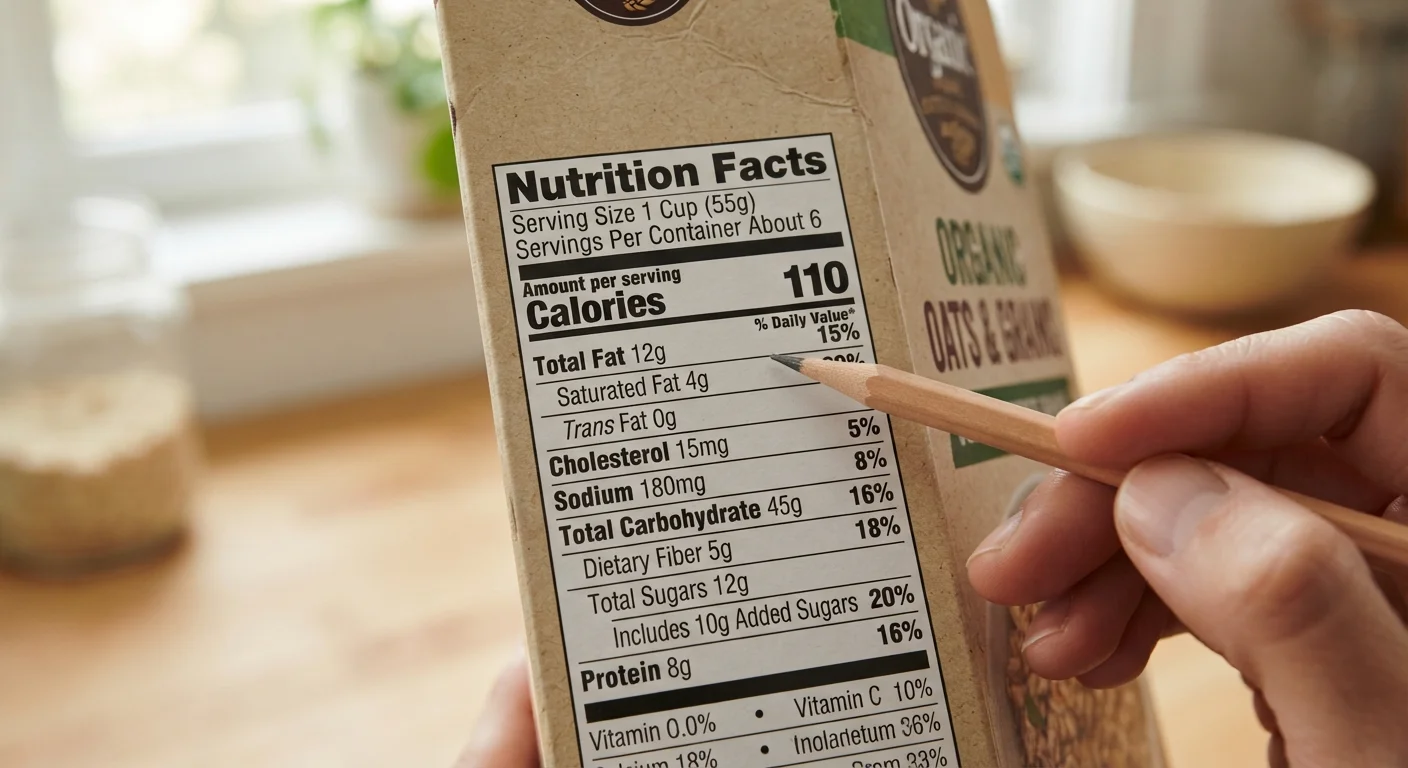
Start with the serving size
Before reading any macronutrient number, locate the serving size at the very top of the label. All grams and percentages listed below it apply to that one serving — not necessarily the whole package. If a bag of chips lists 150 calories per serving but contains three servings, consuming the entire bag means tripling every figure on the label.
Read the Total Fat line and its subcategories
The Total Fat row shows all fat grams combined. Below it, you'll find subcategories indented slightly:
- Saturated fat — linked to cardiovascular risk when consumed in excess; most dietary guidelines recommend limiting intake.
- Trans fat — industrially produced trans fats are considered harmful; aim for 0g per serving.
- Unsaturated fats (monounsaturated and polyunsaturated) — generally considered beneficial; they won't always appear as a separate line but make up the remainder when you subtract saturated and trans fats from the total.
Fat provides 9 calories per gram — more than twice the caloric density of carbohydrates or protein.
Decode Total Carbohydrates and its subcategories
Total Carbohydrates is the sum of all carbs in the serving. Directly below, you'll find two important subcategories:
- Dietary Fiber — fiber is not fully digested and does not raise blood sugar the way other carbs do. It supports digestive health and satiety. Look for foods with meaningful fiber content relative to total carbs.
- Total Sugars — this includes both naturally occurring sugars (from fruit or dairy) and Added Sugars, which are now listed on their own line. Added sugars are those introduced during processing and are worth monitoring separately.
Carbohydrates provide 4 calories per gram. Context matters: 30g of carbs from oats behaves quite differently in the body than 30g from a sweetened beverage.
Check the Protein line
Protein is listed as a single number with no required subcategories on most U.S. labels. It provides 4 calories per gram. The label won't tell you whether the protein is complete (containing all essential amino acids) or incomplete — for that, consider the food source. Animal proteins (meat, dairy, eggs) are generally complete; plant proteins often need to be combined over the course of the day to cover all amino acids.
For a deeper look at how each macronutrient functions in the body, see our full macronutrient breakdown.
Interpret the % Daily Value column
The % Daily Value (%DV) column tells you how much of a nutrient one serving contributes toward a reference daily intake based on a 2,000-calorie diet. As a general guide: 5% DV or less is considered low; 20% DV or more is considered high. These thresholds apply to both macronutrients and micronutrients. Keep in mind that your individual calorie needs may differ significantly from the 2,000-calorie benchmark depending on your age, sex, body size, and activity level.
Labels Tell You Grams, Not Context
A nutrition label is a tool, not a verdict. A food high in fat isn't automatically unhealthy, and a food low in calories isn't automatically nutritious. Use the macronutrient breakdown as one piece of information alongside the ingredients list and the overall quality of your diet. If you're reading labels on gut health products, the field guide to gut health label claims can help you decode additional terminology.
Once you're comfortable reading individual labels, you may find it helpful to track how your macros balance across an entire day. Our guide on tracking macros without obsessing over every gram offers practical principles for doing that sustainably. And if you want to understand how whole and processed foods fit into the bigger picture — beyond just what labels show — see whole foods vs. processed foods.
This article is for general informational and educational purposes only and does not constitute medical or dietary advice. Individual nutritional needs vary. Consult a qualified healthcare professional or registered dietitian before making significant changes to your diet.