

Key Takeaways
- Zinc and vitamin C support immunity through distinct biological mechanisms, so they are not interchangeable.
- Evidence suggests zinc may modestly shorten cold duration when taken early; vitamin C's effect on duration is smaller than commonly believed.
- Neither nutrient 'boosts' immunity in a simple way — deficiency correction matters more than high-dose supplementation.
- Both are attainable through a varied diet for most Americans without supplementation.
- High-dose supplementation of either carries potential risks and should be discussed with a healthcare provider.
Option A
Zinc
The mineral that keeps immune cells functioning.
Best for: People whose diets may be low in zinc, particularly those who eat little meat or shellfish and want to maintain normal immune cell development.
Option B
Vitamin C
The antioxidant vitamin long linked to cold recovery.
Best for: People looking to support antioxidant defenses and skin-barrier immunity, especially those with limited fruit and vegetable intake.
If you want to support everyday immune maintenance through diet
Both (food sources)
A varied diet providing adequate zinc and vitamin C covers the baseline needs of most healthy adults without the risks associated with high-dose supplements.
If you are concerned about cold duration and want to try a supplement early in illness
Zinc
Some clinical evidence supports zinc lozenges or syrup, started within 24 hours of symptom onset, modestly reducing cold duration — though evidence quality varies.
If you eat few fruits and vegetables and are concerned about antioxidant gaps
Vitamin C
Vitamin C deficiency is uncommon but real in low-produce diets; correcting a shortfall through food or a standard-dose supplement is well-supported.
If you follow a plant-based or vegetarian diet
Zinc
Zinc bioavailability is lower from plant foods, making it a nutrient worth monitoring more carefully in vegetarian and vegan eating patterns.
How Each Nutrient Works in the Immune System
Zinc and vitamin C are both described as immune-supporting nutrients, but they operate through very different pathways — and understanding that distinction is key to interpreting the evidence around them.
Zinc is an essential mineral involved in the development and activation of immune cells, including T-cells and natural killer cells. It also plays a structural role in hundreds of enzymes and supports the integrity of physical barriers like skin and mucous membranes. According to the National Institutes of Health (NIH), even mild zinc deficiency can impair immune responses. Because the body doesn't store zinc in a dedicated reservoir, consistent daily intake matters.
Vitamin C (ascorbic acid) is a water-soluble antioxidant that helps neutralize free radicals — unstable molecules that can damage cells. It supports the production and function of white blood cells called phagocytes and lymphocytes, and it contributes to the maintenance of the skin's barrier function. Unlike many animals, humans cannot synthesize vitamin C on their own, making dietary intake essential.
For a broader look at how these two nutrients compare alongside vitamin D, see our article on sorting the evidence on immune nutrients.
| Criterion | Zinc | Vitamin C |
|---|---|---|
| Nutrient type | Essential mineral | Water-soluble vitamin |
| Primary immune role | Immune cell development and activation | Antioxidant defense, white blood cell support |
| Cold prevention evidence | Limited for general population | Little to none for general population |
| Cold duration evidence | Modest reduction if started early | Small reduction with regular supplementation |
| Dietary sources | Oysters, beef, beans, nuts, fortified cereals | Bell peppers, citrus, broccoli, strawberries, kiwi |
| Adult RDA (men / women) | 11 mg / 8 mg per day | 90 mg / 75 mg per day |
| Upper tolerable limit | 40 mg/day | 2,000 mg/day |
| Risk of over-supplementation | Can impair immunity; interferes with copper | GI discomfort; possible kidney stone risk |
What the Research Actually Shows
Popular belief often credits both nutrients with preventing or curing the common cold. The actual evidence is more nuanced.
For zinc, a 2017 meta-analysis published in the Open Forum Infectious Diseases journal found that zinc acetate lozenges may reduce the duration of the common cold by roughly 40%, when started within 24 hours of symptom onset. However, study quality has varied, formulations differ, and results are not uniform across all trials. Notably, these findings apply to zinc taken at the onset of symptoms, not as a year-round preventive measure for otherwise healthy, non-deficient individuals.
For vitamin C, the landmark Cochrane Review on this topic — updated repeatedly over the years — found that regular vitamin C supplementation did not prevent colds in the general population. It was associated with a modest reduction in cold duration (roughly 8% in adults), and showed slightly stronger effects in people under intense physical stress, such as marathon runners or soldiers in extreme conditions. Mega-doses taken after a cold starts do not appear to provide meaningful benefit.
~40%
Potential reduction in cold duration with zinc lozenges
A 2017 meta-analysis in Open Forum Infectious Diseases estimated this effect when zinc acetate lozenges were started within 24 hours of symptom onset.
~8%
Reduction in cold duration with regular vitamin C
The Cochrane Review on vitamin C and the common cold found this modest average effect in adults taking vitamin C supplements regularly.
40 mg/day
Upper tolerable zinc intake for adults
The NIH Office of Dietary Supplements sets this limit; chronic excess can impair immune function and disrupt copper metabolism.
It's worth noting that most immune-related benefits from both nutrients are most clearly documented in people who are deficient. Correcting a deficiency has measurable effects; piling on extra when levels are already adequate has a much weaker evidence base. You can explore more about common immune health claims that don't hold up for broader context on this pattern.
Getting Enough Through Food — and When Supplements Enter the Picture
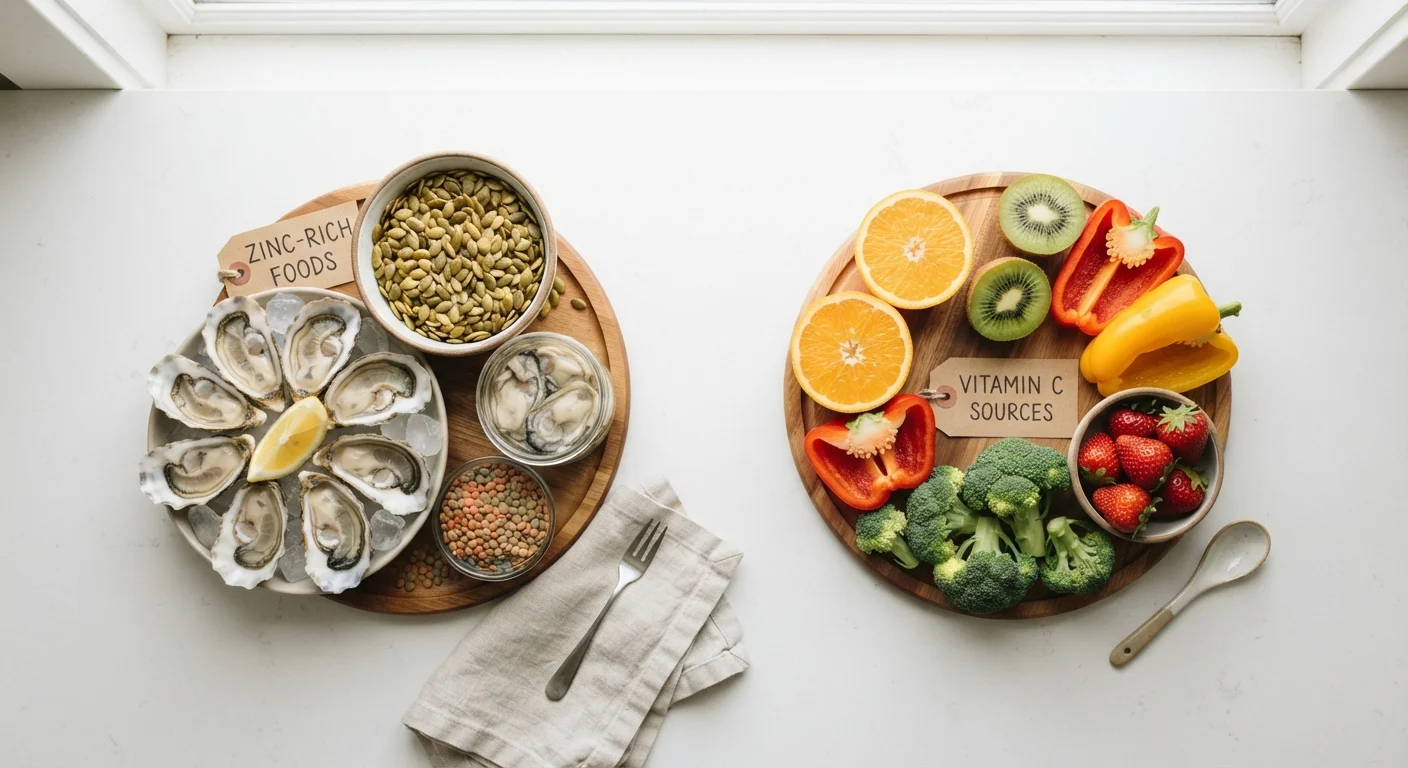
For most Americans eating a varied diet, both nutrients are accessible through food alone. Zinc is found in oysters (one of the richest sources), beef, poultry, beans, nuts, and fortified cereals. The RDA for zinc is 11 mg/day for adult men and 8 mg/day for adult women, according to the NIH Office of Dietary Supplements.
Vitamin C is abundant in citrus fruits, but also in bell peppers, broccoli, strawberries, and kiwi. The RDA is 90 mg/day for adult men and 75 mg/day for adult women. Smokers are advised to consume an additional 35 mg/day due to increased oxidative stress. If you're curious about non-obvious food sources, our piece on foods surprisingly high in vitamin C covers options beyond oranges.
When it comes to supplementation, both nutrients carry upper tolerable limits. For zinc, the tolerable upper intake level (UL) is 40 mg/day for adults — chronic over-supplementation can paradoxically impair immune function and interfere with copper absorption. Vitamin C's UL is 2,000 mg/day; excess is generally excreted, but high doses can cause gastrointestinal discomfort and, in some cases, kidney stone risk in susceptible individuals.
Anyone considering immune-related supplements should review what to understand before taking immune supplements and speak with a qualified healthcare provider — particularly those who are pregnant, managing a chronic condition, or giving supplements to children.
Dietary Patterns Matter More Than Single Nutrients
Research consistently shows that overall dietary quality — not any single vitamin or mineral — is the strongest nutritional predictor of immune resilience. Zinc and vitamin C are important pieces, but they work best in context. Our article on nutrition patterns that support immune function explains why variety outperforms any individual nutrient strategy.
This article is for general informational purposes only and is not a substitute for professional medical advice, diagnosis, or treatment. Always consult a qualified healthcare provider before starting any supplement regimen.