

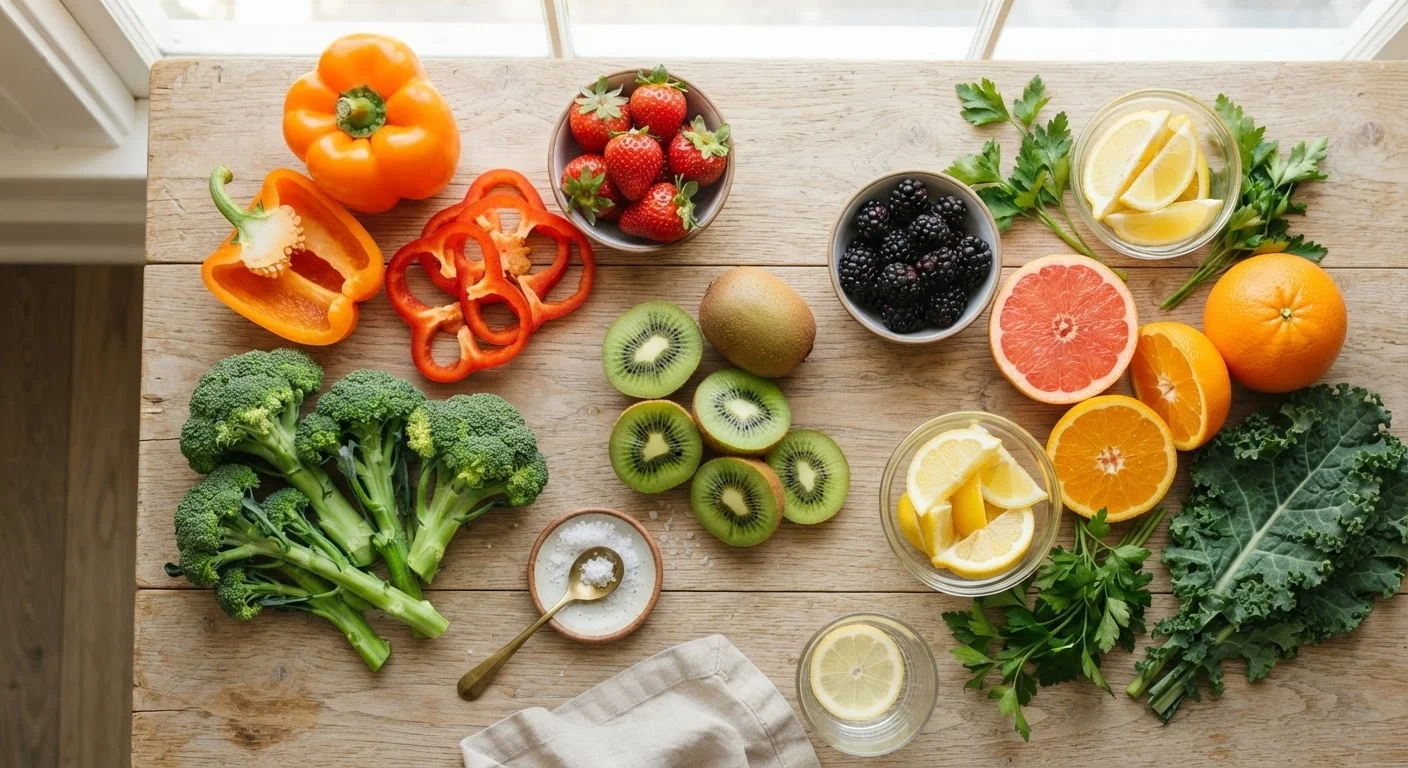
Key Takeaways
- Red bell peppers contain nearly three times more vitamin C per serving than a medium orange.
- Several common vegetables — including broccoli, kale, and Brussels sprouts — are excellent vitamin C sources.
- Cooking method matters: steaming or eating raw preserves more vitamin C than boiling.
- The recommended daily intake for vitamin C is 75–90 mg for most adults, according to the NIH.
- Eating a variety of produce across colors and types makes it easier to consistently meet vitamin C needs.
Why Vitamin C Isn't Just an Orange Thing
Ask most people where they get their vitamin C and the answer is almost always the same: orange juice or an orange. It's a culturally ingrained association — and not a wrong one — but it leaves a lot of great sources off the table. In reality, the orange is a solid but not exceptional source of vitamin C, providing roughly 70 milligrams per medium fruit.
Vitamin C (ascorbic acid) is an essential nutrient the body cannot produce on its own, so it must come entirely from food or supplements. It plays a role in collagen synthesis, immune function, iron absorption, and acts as an antioxidant. The NIH sets the Recommended Dietary Allowance at 75 mg per day for adult women and 90 mg per day for adult men, with smokers needing an additional 35 mg daily due to increased oxidative stress.
The good news: many everyday, affordable foods exceed the orange's vitamin C content — and some by a significant margin. Understanding which foods are genuinely high in this nutrient makes it easier to meet your needs even on days when citrus isn't on the menu. For a broader look at how vitamin C fits into immune health alongside other key nutrients, see our breakdown of immune-support nutrients.
Red Bell Peppers
Red bell peppers are arguably the single most concentrated common dietary source of vitamin C, providing approximately 190 mg per cup of raw, chopped pepper — well over 100% of the daily recommended intake for most adults. Green and yellow bell peppers also contain notable amounts, but the red variety edges ahead because it is allowed to ripen fully on the vine, concentrating its nutrients. Add them raw to salads, slice them for dips, or stir-fry quickly to preserve more of their vitamin C content.
One cup of raw red bell pepper can deliver more than double the daily vitamin C recommendation.
Kiwifruit
A single medium kiwifruit provides around 70 mg of vitamin C — comparable to an orange — but two kiwis together push well past the daily requirement. Kiwis are also a source of vitamin K, potassium, and dietary fiber, making them a nutrient-dense snack. The green flesh variety is most common in American supermarkets, but gold-fleshed kiwis tend to contain even more vitamin C per fruit. Both are eaten raw, which preserves the full vitamin C content.
Two medium kiwis easily meet an adult's daily vitamin C needs in a compact, portable snack.
Broccoli
A cup of raw broccoli provides roughly 80–90 mg of vitamin C. Lightly steamed broccoli retains a significant portion of that, making it one of the most practical cooked sources in American kitchens. Beyond vitamin C, broccoli contributes folate, vitamin K, and fiber. It's worth noting that overcooking — especially boiling in large amounts of water — noticeably reduces vitamin C content, so shorter cooking times are preferable.
Lightly steamed broccoli is one of the most practical and nutritious cooked sources of vitamin C.
Strawberries
A cup of whole strawberries delivers roughly 85–90 mg of vitamin C, making them one of the more surprising fruit sources. They're widely available fresh in spring and summer, and frozen strawberries — which retain most of their vitamin C — extend that access year-round. Strawberries are also relatively low in calories and contain manganese and various antioxidant compounds. They work well in smoothies, on yogurt, or eaten plain.
Frozen strawberries retain most of their vitamin C, making them a practical year-round option.
Brussels Sprouts
Half a cup of cooked Brussels sprouts provides approximately 48 mg of vitamin C, and a full cup raw offers closer to 75 mg. While they aren't as flashy a source as bell peppers, they're a dependable contributor when eaten regularly — and their cruciferous nature means they also supply compounds studied for other potential health benefits. Roasting at moderate heat preserves more vitamin C than boiling and enhances flavor, making them more appealing to skeptical eaters.
Roasting Brussels sprouts preserves more vitamin C than boiling while improving their flavor.
Kale
Raw kale contains around 80 mg of vitamin C per cup, though cooking reduces this. Even sautéed or baked into chips, kale remains a meaningful source. It's also rich in vitamins A and K, calcium, and antioxidants. Massaging raw kale with a small amount of oil or acid (like lemon juice) breaks down its fibrous texture for salads without the heat-related nutrient loss that cooking causes — a practical technique for getting more vitamin C from the leaf.
Massaging raw kale preserves its vitamin C content while making it far more palatable for salads.
Getting the Most Vitamin C From Your Food
One underappreciated fact about vitamin C is that it's heat-sensitive and water-soluble, which means cooking method genuinely affects how much you absorb. Boiling vegetables can cause significant losses — some estimates suggest up to 50% or more of vitamin C leaches into cooking water. Steaming, roasting, or eating produce raw tends to preserve a greater proportion of the nutrient.
Preserve More Vitamin C When Cooking
To retain the most vitamin C from vegetables, choose steaming, roasting, or microwaving over boiling in large volumes of water. Cutting vegetables just before cooking — rather than prepping them hours ahead — also helps minimize oxidative losses. When you do boil vegetables, consider using the cooking water in soups or sauces to recapture some of the water-soluble nutrients.
Because no single food or nutrient acts as a silver bullet for health, variety remains the core principle. Dietary patterns emphasizing a wide range of produce are more consistently linked to immune resilience than any single superfood. Vitamin C is one important piece — but it works best alongside a well-rounded diet. If you're curious how it compares to other commonly discussed immune nutrients, zinc and vitamin C each have distinct roles worth understanding.
This article is for general informational and educational purposes only and is not a substitute for professional medical advice, diagnosis, or treatment. Consult a qualified healthcare provider with any questions about your diet or nutritional needs.