

Key Takeaways
- Vitamin D deficiency is clearly linked to impaired immune function; correcting it matters more than supplementing when levels are already adequate.
- Zinc plays a well-established structural and signaling role in immune cells, but excess supplementation can backfire.
- Vitamin C supports immune cell activity and may modestly shorten cold duration, but mega-doses show limited additional benefit.
- Food sources remain the most reliable and safe way to maintain adequate levels of all three nutrients.
- Consult a healthcare provider before supplementing, especially if you have underlying conditions or take medications.
Our Verdict
All three nutrients contribute meaningfully to immune health, but the strength and nature of the evidence differs significantly. Vitamin D has the strongest case for supplementation when deficiency is confirmed. Zinc has solid mechanistic support but a narrow therapeutic window. Vitamin C offers modest, consistent benefits — particularly during physical stress — without the same risks of excess. For most people, a varied diet covers the basics; targeted supplementation is best guided by a healthcare provider.
| Best for | Recommended |
|---|---|
| Those with confirmed or suspected deficiency | Vitamin D |
| Those seeking support during early cold symptoms | Zinc |
| Those with high physical stress or poor dietary variety | Vitamin C |
| Most everyday adults with a balanced diet | Food-first approach covering all three |
Why These Three Nutrients Dominate the Immune Conversation
Walk through any pharmacy or scroll a wellness feed, and vitamin D, zinc, and vitamin C appear repeatedly alongside claims about immune support. Their prominence isn't arbitrary — each has a legitimate biological role in how the immune system functions. The challenge is that public perception often outpaces the actual evidence, turning nuanced research findings into oversimplified promises.
This article takes a structured look at what current science supports, where gaps remain, and how to think about each nutrient practically. For a broader view of how individual nutrients fit into overall immune health, see our guide to building immune resilience.
| Vitamin D | Zinc | Vitamin C | |
|---|---|---|---|
| Strength of immune evidence | Strong (especially for deficiency) | Moderate to strong | Moderate |
| Best documented benefit | Reduced infection risk when deficient | Shorter cold duration if taken early | Modest cold duration reduction |
| Risk of over-supplementing | Yes — toxicity possible at high doses | Yes — copper depletion, immune impairment | Low — excess mostly excreted |
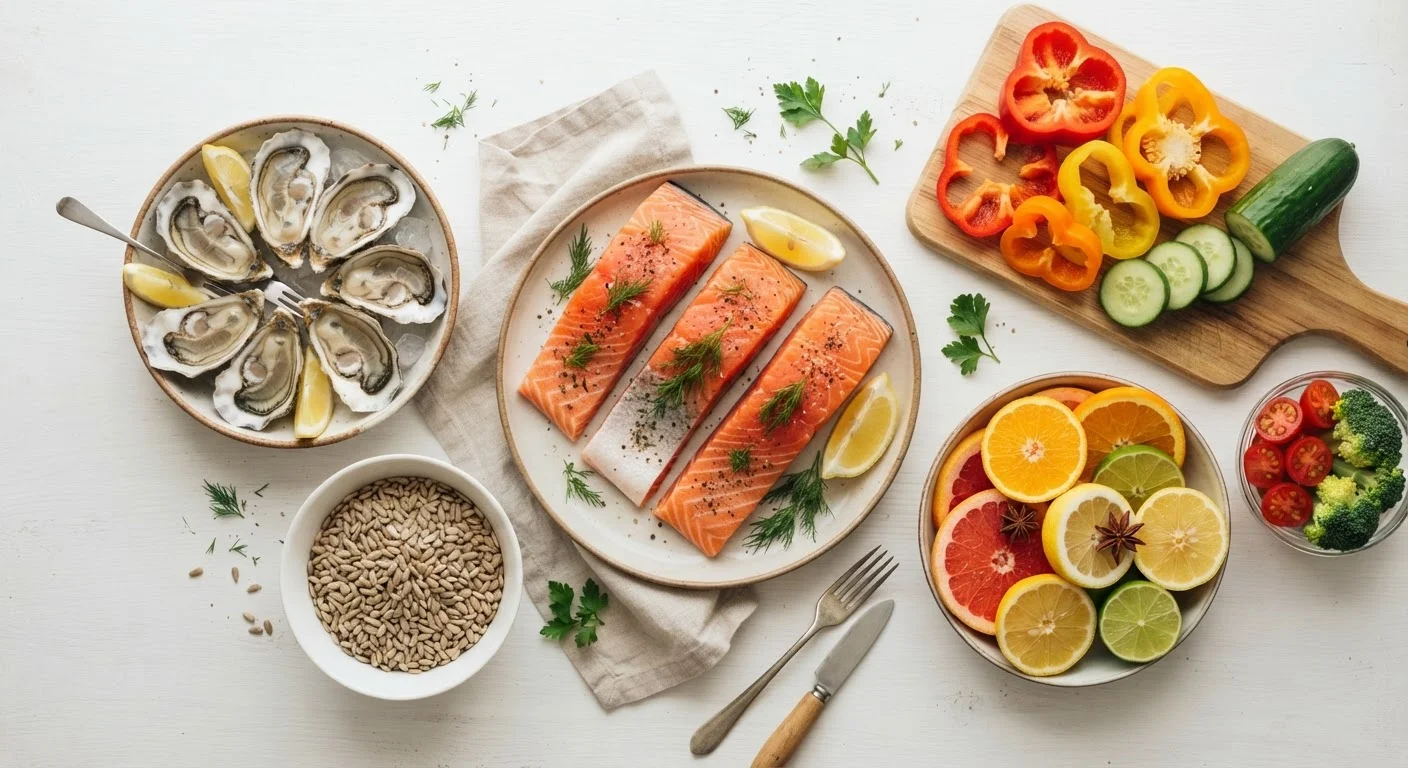
| Key food sources | Fatty fish, fortified dairy, egg yolks | Oysters, beef, pumpkin seeds, legumes | Bell peppers, broccoli, kiwi, citrus |
| Who benefits most from supplementing | Those with confirmed deficiency | Those with early cold symptoms | Those under heavy physical stress |
| Evidence for prevention in healthy adults | Limited without deficiency | Limited without deficiency | Limited for prevention |
Vitamin D: The Deficiency-Driven Case
Vitamin D is unusual among nutrients because the body synthesizes it from sunlight exposure, yet a significant portion of Americans have insufficient blood levels — particularly those in northern latitudes, older adults, and people with darker skin tones. This matters immunologically: vitamin D receptors are found on nearly every immune cell type, and the vitamin plays a direct role in regulating both innate and adaptive immune responses.
Research consistently shows that correcting deficiency improves immune-related outcomes. A 2017 meta-analysis published in The BMJ found that vitamin D supplementation reduced the risk of acute respiratory infection, with the strongest protective effects seen in people who were deficient at baseline. Critically, the benefit was much smaller or absent in people who already had adequate levels.
What vitamin D actually does in the body goes beyond bone health — its immune-regulatory functions are well-supported. Food sources include fatty fish, egg yolks, and fortified dairy products, but dietary intake alone rarely reaches adequate levels for those who are deficient.
Get Tested Before Supplementing Vitamin D
Because vitamin D is fat-soluble, it accumulates in the body and can reach toxic levels with excessive supplementation. A simple blood test measuring 25-hydroxyvitamin D gives a clear picture of your status. This allows any supplementation to be calibrated to your actual needs rather than a generalized guess — and helps avoid unnecessary cost or risk.
Zinc: Essential but Easy to Overdo
Zinc is a trace mineral involved in the development and function of virtually every immune cell category — neutrophils, natural killer cells, T-lymphocytes, and B-lymphocytes all depend on it. It also acts as a cofactor for hundreds of enzymatic reactions and plays a role in inflammatory signaling. Deficiency, which is more common in older adults and those with certain gastrointestinal conditions, is associated with measurably impaired immune responses.
The evidence for zinc in reducing cold duration is reasonably consistent. Multiple trials have found that zinc acetate or gluconate lozenges, when taken within 24 hours of symptom onset, can modestly shorten the duration of the common cold. The effect is real but modest — and highly sensitive to formulation and timing.
What the evidence does not support is routine high-dose zinc supplementation for people who are not deficient. Excess zinc interferes with copper absorption, can cause nausea, and may paradoxically impair immune function over time. The tolerable upper intake level set by the National Institutes of Health is 40 mg per day for adults — a threshold easy to exceed when stacking supplements.
For guidance on evaluating supplement claims more broadly, see what to understand before taking immune supplements.
Vitamin C: Consistent but Often Overstated
Vitamin C is perhaps the most culturally embedded immune nutrient, largely due to research popularized in the latter half of the twentieth century. The actual evidence is more measured. Large reviews, including a Cochrane analysis of dozens of randomized trials, found that regular vitamin C supplementation does not reduce cold incidence in the general population — but it does modestly reduce cold duration (roughly 8% in adults) and may have more pronounced effects in people under heavy physical stress, such as marathon runners or military personnel in extreme conditions.
Mechanistically, vitamin C supports the production and function of white blood cells, acts as an antioxidant that protects immune cells from oxidative damage, and contributes to skin barrier integrity — the body's first line of defense. These roles are well-established.
The idea that high-dose supplementation dramatically amplifies these benefits is not well-supported. The kidneys excrete excess vitamin C efficiently, and most adults consuming a varied diet — including vegetables beyond citrus — reach adequate intake without supplementation. Foods surprisingly high in vitamin C include bell peppers, broccoli, and kiwi, often exceeding what an orange provides per serving.
For context on how individual nutrients fit within broader dietary patterns, see nutrition patterns that support immune function.
Putting It Into Practice
Understanding the evidence helps avoid two common errors: dismissing these nutrients entirely, or treating them as cure-alls. The practical picture looks like this:
- Vitamin D: If you spend limited time outdoors, live at a northern latitude, or belong to a higher-risk group, ask your healthcare provider about testing your 25-hydroxyvitamin D level. Supplementation guided by actual levels is far more rational than blanket high-dose use.
- Zinc: Focus on dietary sources — oysters, beef, pumpkin seeds, legumes — and reserve lozenges for early cold symptoms only. Avoid chronic high-dose supplementation without medical supervision.
- Vitamin C: A diet with generous vegetables and fruit almost certainly covers your needs. Supplementation may offer modest benefit during periods of intense physical stress, but mega-dosing above 1,000 mg daily provides diminishing returns and can cause digestive discomfort.
None of these nutrients operate in isolation. The immune claims that don't hold up to scrutiny often rest on single-nutrient thinking — the immune system is a network, and supporting it well involves sleep, stress management, and overall dietary quality alongside individual micronutrients.
This article is for general informational purposes only and does not constitute medical advice. Consult a qualified healthcare provider before making changes to your supplement regimen or if you have questions about your individual nutritional needs.