

Key Takeaways
- Blue light from screens can suppress melatonin, but the effect varies by individual and device settings.
- Content type matters as much as screen exposure — stimulating content delays sleep more than passive viewing.
- Some evening screen activities, like reading or relaxation apps, may have neutral or even calming effects.
- Small environmental adjustments — brightness, distance, timing — can reduce most of the measurable sleep disruption.
- People with chronic insomnia or sleep disorders should consult a clinician before making significant routine changes.
Certain content supports relaxation and wind-down
Calm, low-stimulation screen activities — such as guided breathing apps, audiobooks, or gentle programming — can reduce perceived stress before sleep for some individuals, serving a legitimate pre-bed function.
Social connection may reduce stress-related sleep barriers
Brief, positive social interaction via messaging or video can lower perceived isolation and anxiety for some users, both of which are independent contributors to sleep difficulty.
Night mode settings meaningfully reduce blue light output
Warm-toned display settings and reduced brightness can attenuate melatonin-suppressing light exposure, making device use less physiologically disruptive without requiring complete avoidance.
Cognitive distraction can ease pre-sleep rumination
For people prone to anxious thinking at bedtime, engaging but not highly stimulating screen content may interrupt repetitive thought loops that themselves delay sleep onset.
Blue light suppresses melatonin, delaying sleep onset
Short-wavelength light from screens signals the brain's suprachiasmatic nucleus to delay melatonin release, effectively pushing back the internal clock's sleep-readiness window.
Stimulating content raises arousal at the wrong time
News feeds, social media, and fast-paced video increase cognitive and emotional alertness, counteracting the physiological downshift the nervous system needs to initiate sleep.
Close-proximity screen use amplifies light exposure contrast
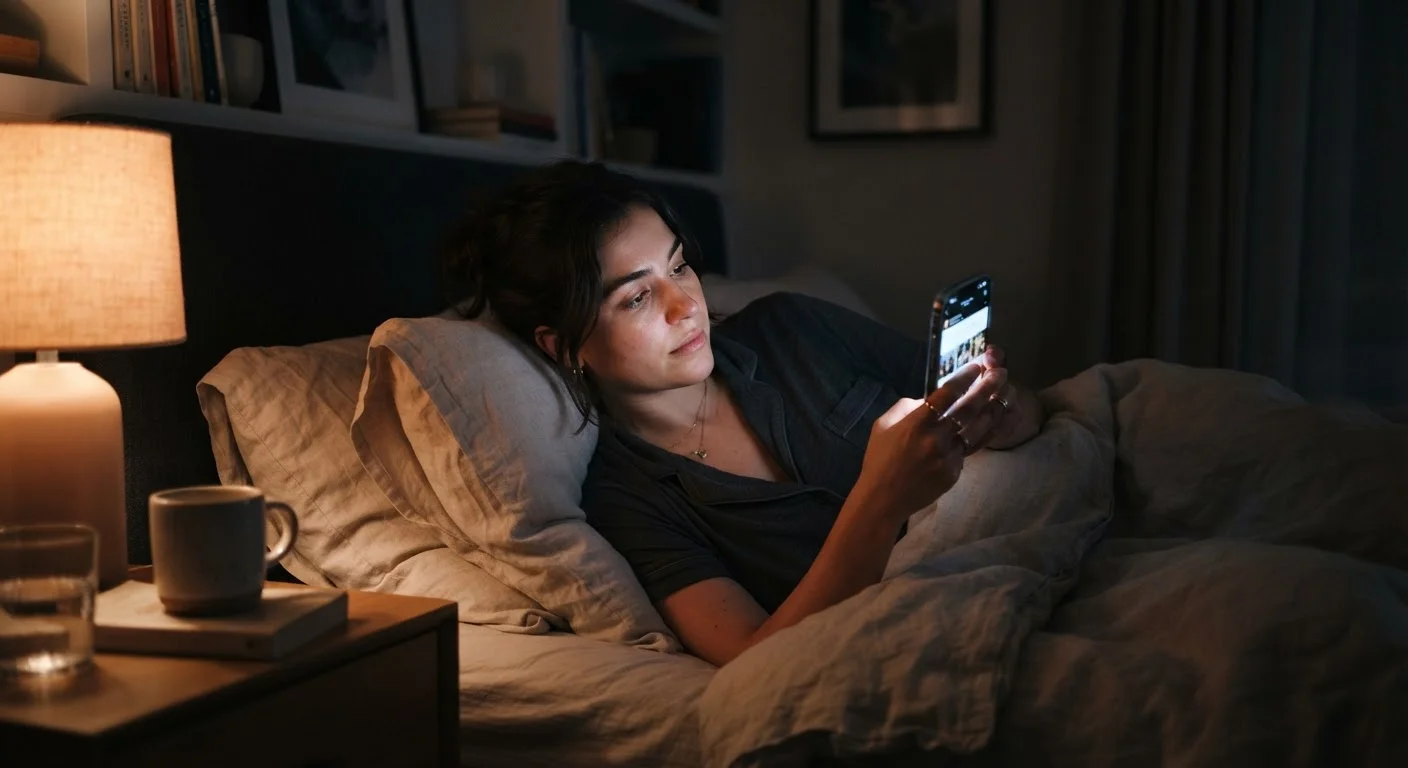
Holding a bright device in a dark room maximizes the relative intensity of light hitting the retina, producing a stronger circadian signal than the same screen in a well-lit space.
Habitual use may erode the bed-sleep mental association
Stimulus control — the learned link between the bed environment and sleepiness — is a cornerstone of behavioral sleep medicine; regular device use in bed can weaken this association over time.
Notification-driven interruptions fragment early sleep
Alerts received after initial sleep onset, even if briefly acknowledged, disrupt sleep architecture and reduce time in deeper, restorative sleep stages.
Our Verdict
Evening screen use is neither uniformly harmful nor harmless. The research points to real but modifiable risks — primarily from bright, stimulating content close to bedtime — alongside genuine benefits for relaxation, social connection, and wind-down routines when devices are used thoughtfully. A blanket ban on screens rarely reflects how most Americans live or what the nuanced evidence actually supports.
This balanced approach is most useful for adults who want to protect sleep quality without abandoning evening routines they value, and who are willing to make modest, evidence-informed adjustments.
Why This Conversation Is Worth Having
Screen time before bed has become a near-universal habit. A substantial share of American adults use a smartphone, tablet, or television in the hour before sleep — often without noticing any obvious consequence. Yet sleep scientists, clinicians, and public health communicators have raised consistent questions about whether that exposure shapes sleep quality in ways most people underestimate.
This article isn't a call to put devices away permanently. It's a structured look at what the evidence shows on both sides — the real costs, the overstated fears, and the practical middle ground most people can actually use. For a broader grounding in how circadian biology and environmental factors shape rest, see the full picture on sleep hygiene.
The Case Against Screens Before Bed
The most cited concern is blue light — the short-wavelength light emitted by LED screens. Research has demonstrated that exposure to blue-enriched light in the evening can suppress melatonin production, the hormone that signals the brain it's time to sleep. Delaying melatonin onset can push back sleep timing, reduce total sleep duration, and affect the proportion of restorative sleep stages achieved.
Beyond light itself, content engagement plays a significant role. Emotionally activating material — news feeds, social media arguments, fast-paced video — raises physiological arousal and cognitive alertness at the precise moment the nervous system should be downshifting. This is distinct from the light question and is often underweighted in popular coverage. For comparison, caffeine's effects on sleep timing follow a similar arousal-delaying mechanism through a different pathway.
Blue light suppresses melatonin, delaying sleep onset
Short-wavelength light from screens signals the brain's suprachiasmatic nucleus to delay melatonin release, effectively pushing back the internal clock's sleep-readiness window.
Stimulating content raises arousal at the wrong time
News feeds, social media, and fast-paced video increase cognitive and emotional alertness, counteracting the physiological downshift the nervous system needs to initiate sleep.
Close-proximity screen use amplifies light exposure contrast
Holding a bright device in a dark room maximizes the relative intensity of light hitting the retina, producing a stronger circadian signal than the same screen in a well-lit space.
Habitual use may erode the bed-sleep mental association
Stimulus control — the learned link between the bed environment and sleepiness — is a cornerstone of behavioral sleep medicine; regular device use in bed can weaken this association over time.
Notification-driven interruptions fragment early sleep
Alerts received after initial sleep onset, even if briefly acknowledged, disrupt sleep architecture and reduce time in deeper, restorative sleep stages.
Environmental factors compound both issues. Screens are typically held close to the face and viewed in otherwise dim rooms, maximizing relative light contrast. The role of light in sleep environments is well-established — screens introduce a controllable but often uncontrolled variable into that environment.
The Case for Context and Nuance
The counterargument is not that screens are harmless — it's that the harm is neither automatic nor uniform. Effect sizes in blue light studies vary considerably by individual, screen brightness, distance, ambient lighting, and duration of exposure. Many studies measure laboratory conditions that don't map cleanly onto how people actually use devices at home.
Certain content supports relaxation and wind-down
Calm, low-stimulation screen activities — such as guided breathing apps, audiobooks, or gentle programming — can reduce perceived stress before sleep for some individuals, serving a legitimate pre-bed function.
Social connection may reduce stress-related sleep barriers
Brief, positive social interaction via messaging or video can lower perceived isolation and anxiety for some users, both of which are independent contributors to sleep difficulty.
Night mode settings meaningfully reduce blue light output
Warm-toned display settings and reduced brightness can attenuate melatonin-suppressing light exposure, making device use less physiologically disruptive without requiring complete avoidance.
Cognitive distraction can ease pre-sleep rumination
For people prone to anxious thinking at bedtime, engaging but not highly stimulating screen content may interrupt repetitive thought loops that themselves delay sleep onset.
Certain screen activities may genuinely support pre-sleep wind-down. Audiobooks, guided meditation apps, calming long-form reading, and even familiar low-stimulation television can serve a legitimate relaxation function for some people. The key variable is cognitive and emotional load, not the device itself. Separating real screen-related risks from overstated ones is worth understanding before defaulting to wholesale avoidance.
Night mode and reduced-brightness settings do attenuate blue light output meaningfully, though they don't eliminate it. These adjustments lower — not remove — the biological signal disruption, making them a practical harm-reduction strategy rather than a perfect solution.
Making Informed Trade-Offs
Most sleep researchers don't advocate for zero evening screen time. They advocate for intentional use — choosing content that doesn't spike arousal, reducing screen brightness after sunset, maintaining physical distance from the device, and establishing a consistent wind-down window in the final 30 to 60 minutes before sleep that reduces stimulating input.
Not All Screen Time Is Equivalent
Research consistently distinguishes between passive, low-arousal screen use and active, high-stimulation engagement. Watching a familiar, calming program differs meaningfully from scrolling a social media feed — both in cognitive load and emotional response. When evaluating your own evening habits, the type and emotional tone of content is at least as relevant as the fact of screen exposure itself. Blanket policies that treat all evening screen use identically may oversimplify what the evidence shows.
Morning behavior also matters. A consistent wake time and morning light exposure reinforce your circadian anchor point, making you more resilient to modest evening disruptions. Morning routines that support better sleep the following night explains why daytime habits belong in this conversation.
If you experience chronic sleep difficulty — difficulty falling asleep, staying asleep, or waking unrefreshed regularly — evening screen habits are worth examining as one factor among many. A qualified healthcare provider or sleep specialist can help assess whether behavioral interventions, including evidence-based approaches like cognitive behavioral therapy for insomnia (CBT-I), are appropriate for your situation.
This article is for general informational purposes only and does not constitute medical advice. If you have persistent sleep problems or concerns about your health, please consult a qualified healthcare professional.