
Insomnia, Hypersomnia, and Parasomnia: Sorting Out the Sleep Disorder Spectrum

| Most common sleep disorder category | Insomnia (American Academy of Sleep Medicine) |
| Chronic insomnia duration threshold | 3+ nights/week for ≥3 months (ICSD-3 diagnostic criteria) |
| Narcolepsy prevalence estimate | ~1 in 2,000 people (National Institute of Neurological Disorders and Stroke) |
| Sleepwalking prevalence in children | Up to 17% at peak ages (Stanford Sleep Medicine Center estimates) |
| Key diagnostic tool for parasomnias | Overnight polysomnography (sleep study) |
| RBD neurological association | Linked to Parkinson's and related conditions (Research literature, not a diagnostic rule) |
Why Sleep Disorders Are Not All the Same
Most people have experienced a bad night of sleep. But when disruptions become persistent and begin affecting daytime functioning, they may signal a recognized sleep disorder. The challenge is that sleep disorders are not a single condition — they span a wide spectrum with very different presentations, mechanisms, and consequences.
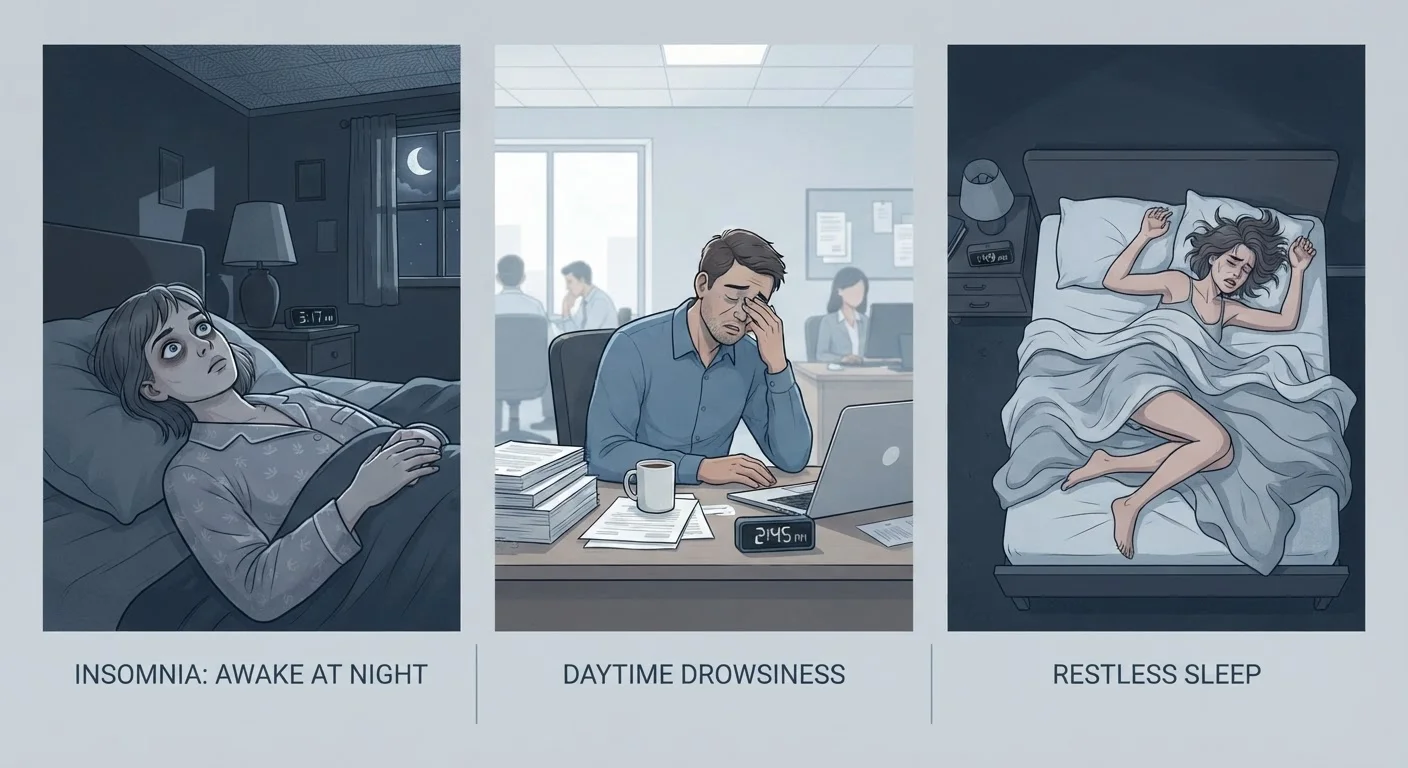
Clinicians typically organize sleep disorders into major categories. Three of the most commonly discussed are insomnia (difficulty initiating or maintaining sleep), hypersomnia (excessive sleepiness despite adequate or extended sleep), and parasomnia (unusual behaviors or experiences that occur during sleep). Understanding the distinctions helps readers recognize patterns in their own experience and have more informed conversations with a healthcare provider.
For a broader foundation, see our overview of common sleep disorders covering how these conditions differ and why persistent disruption deserves attention.
| Most common sleep disorder category | Insomnia (American Academy of Sleep Medicine) |
| Chronic insomnia duration threshold | 3+ nights/week for ≥3 months (ICSD-3 diagnostic criteria) |
| Narcolepsy prevalence estimate | ~1 in 2,000 people (National Institute of Neurological Disorders and Stroke) |
| Sleepwalking prevalence in children | Up to 17% at peak ages (Stanford Sleep Medicine Center estimates) |
| Key diagnostic tool for parasomnias | Overnight polysomnography (sleep study) |
| RBD neurological association | Linked to Parkinson's and related conditions (Research literature, not a diagnostic rule) |
Insomnia: When Sleep Won't Come or Stay
Insomnia is the most prevalent sleep complaint in clinical settings. It involves difficulty falling asleep, staying asleep, or waking too early and being unable to return to sleep — resulting in sleep that feels inadequate or unrestorative. To meet the clinical threshold for an insomnia disorder, these difficulties must occur at least three nights per week, persist for at least three months (chronic insomnia), and cause measurable distress or daytime impairment.
Short-term insomnia, lasting days to a few weeks, is often linked to identifiable stressors such as illness, travel, or life events. Chronic insomnia is more complex and frequently involves a combination of predisposing factors (such as heightened physiological arousal), precipitating triggers, and perpetuating habits — like irregular sleep schedules or excessive time in bed — that can sustain the problem long after the original stressor has resolved.
Insomnia commonly co-occurs with anxiety, depression, and chronic pain, though the relationship is bidirectional and not simply causal in one direction. If you suspect insomnia is affecting your health, consult a qualified healthcare professional to explore appropriate evaluation and support.
Insomnia
A sleep disorder characterized by persistent difficulty falling asleep, staying asleep, or waking too early, resulting in inadequate sleep and daytime impairment. Chronic insomnia is typically defined as occurring at least three nights per week for three months or more.
Hypersomnia
A category of sleep disorders marked by excessive daytime sleepiness despite sufficient or extended nighttime sleep. It includes conditions like narcolepsy and idiopathic hypersomnia, and is distinct from ordinary tiredness.
Parasomnia
A group of sleep disorders defined by abnormal behaviors, movements, emotions, or perceptions during sleep or sleep transitions. Examples include sleepwalking, night terrors, and REM sleep behavior disorder.
REM Sleep Behavior Disorder (RBD)
A parasomnia in which a person physically acts out vivid dreams during REM sleep, sometimes with vigorous movements. It is associated with certain neurological conditions and requires clinical evaluation.
Sleep Inertia
A state of grogginess, disorientation, and impaired performance that occurs immediately upon waking, often more pronounced in people with hypersomnia disorders.
Polysomnography
A comprehensive overnight sleep study that records brain activity, eye movements, heart rate, breathing, and muscle activity to help diagnose sleep disorders. It is sometimes referred to simply as a 'sleep study.'
Hypersomnia: Too Much Sleep, Not Enough Alertness
Hypersomnia refers to conditions characterized by excessive daytime sleepiness that persists despite sleeping a normal or even extended amount at night. This is distinct from ordinary fatigue or the drowsiness that follows a poor night's rest.
The most well-known hypersomnias include narcolepsy — a neurological disorder involving dysregulation of the brain's wake-promoting systems — and idiopathic hypersomnia, where excessive sleepiness occurs without an identifiable cause. Obstructive sleep apnea, though classified separately, can also produce significant daytime sleepiness by fragmenting nighttime sleep through repeated breathing interruptions.
People with hypersomnia often describe feeling unrefreshed even after long sleep periods, difficulty waking, and a persistent cognitive fog sometimes called "sleep inertia." These symptoms can be misattributed to laziness or depression, which delays diagnosis. Understanding the neurological underpinnings of these conditions is important — our article on brain activity during sleep disorders explores this in more depth.
Parasomnia: Unusual Behaviors During Sleep
Parasomnias are a diverse group of disorders defined by abnormal movements, behaviors, emotions, perceptions, or physiological events that occur during sleep transitions or within specific sleep stages. Unlike insomnia and hypersomnia, which primarily affect sleep quantity or quality, parasomnias are notable for what happens during sleep.
Common examples include:
- Sleepwalking (somnambulism): Complex motor behaviors during non-REM sleep, typically without conscious awareness or later memory of the event.
- Night terrors: Episodes of intense fear, screaming, or agitation arising from deep sleep — distinct from nightmares, which occur during REM sleep.
- REM sleep behavior disorder (RBD): Acting out vivid dreams, sometimes with vigorous or potentially harmful movements. RBD has associations with certain neurodegenerative conditions and warrants prompt clinical evaluation.
- Sleep paralysis: A brief inability to move or speak when falling asleep or waking, sometimes accompanied by hallucinations.
Many parasomnias are more common in children and diminish with age, though adult-onset cases do occur and deserve evaluation. If parasomnia episodes are frequent, distressing, or pose a safety risk, a sleep study can help clarify what is happening during the affected sleep stages.
Recognizing Patterns and Seeking the Right Help
Sorting out which category a sleep problem falls into is the first step toward appropriate care. Self-recognition is valuable, but diagnosis requires a trained clinician — particularly because different disorders can overlap, and some (such as sleep apnea producing insomnia symptoms) can masquerade as others.
Keeping a brief sleep diary — noting bedtimes, wake times, overnight disturbances, and daytime energy — can provide useful information for a healthcare provider. For many insomnia cases, behavioral and cognitive treatments are considered a frontline approach. Hypersomnias and parasomnias may require more specialized workup, including overnight sleep monitoring.
Good sleep practices remain foundational regardless of diagnosis. Our sleep hygiene hub covers practical habits that support more consistent, restorative rest — a complement to, not a substitute for, professional care when a disorder is suspected.
This article is for general informational and educational purposes only and is not a substitute for professional medical advice, diagnosis, or treatment. If you have concerns about your sleep health, please consult a qualified healthcare professional.