

Key Takeaways
- Core principles like progressive overload and consistency work the same regardless of where you train.
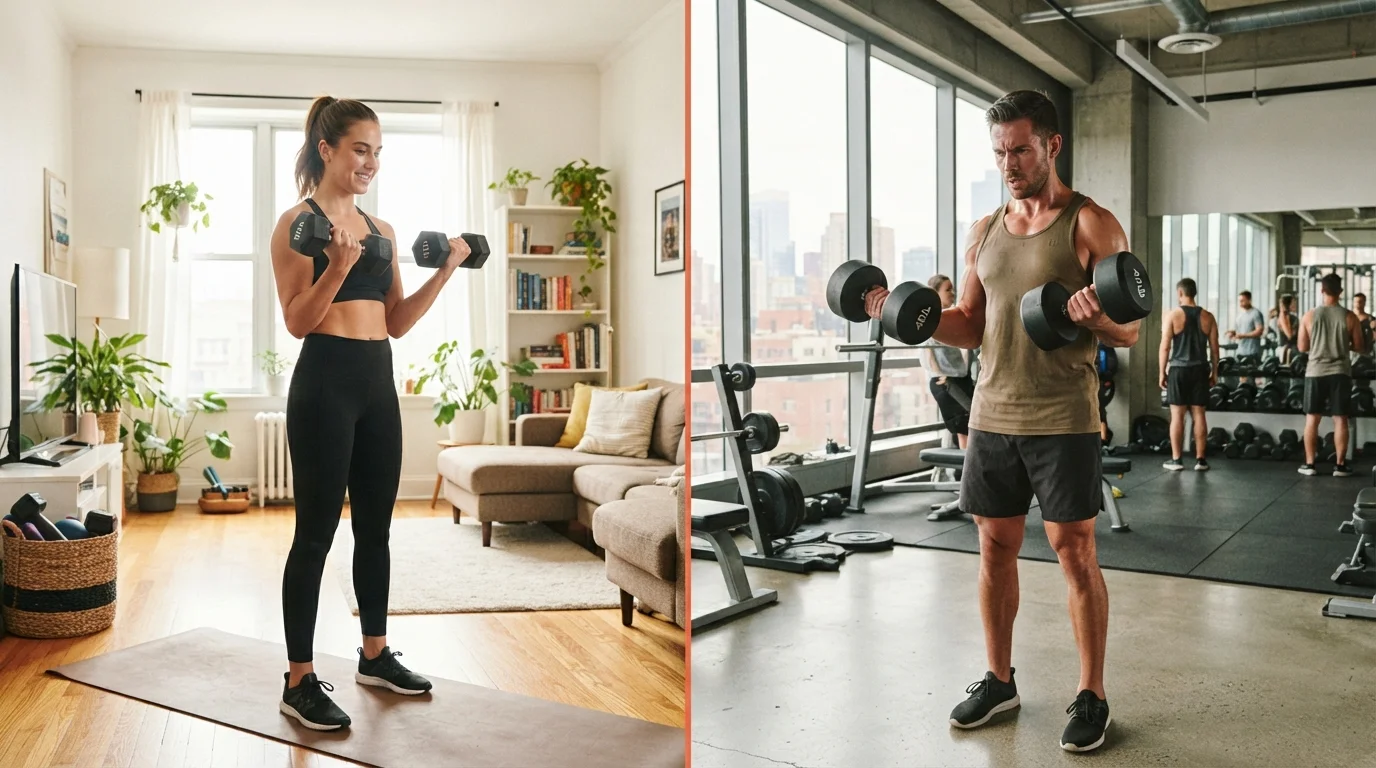
- Gyms offer more equipment variety and structured environments; home training offers flexibility and lower ongoing cost.
- Neither setting is universally superior — the best environment is the one you'll actually use regularly.
- Most training goals, including building strength and improving cardiovascular fitness, are achievable in both settings.
- Small equipment investments can meaningfully expand what's possible in a home workout space.
Our Verdict
Home and gym training are both capable of producing meaningful fitness results when core exercise principles are applied consistently. The decision ultimately comes down to personal preferences around cost, scheduling, social motivation, and the type of training you want to do. Many people find that a hybrid approach — gym access for heavier lifting or variety, home training for convenience on busy days — offers the most sustainable balance.
| Best for | Recommended |
|---|---|
| Those prioritizing convenience, privacy, and low long-term cost | Home Training |
| Those who need varied equipment, coaching access, or social accountability | Gym Training |
| Beginners building foundational movement habits | Either setting — consistency matters most |
| Those pursuing advanced strength or sport-specific goals | Gym Training |
The Principles That Don't Change
No matter where you exercise, the physiological rules governing adaptation remain constant. Progressive overload — gradually increasing the challenge placed on your muscles and cardiovascular system — drives improvement whether you're in a garage or a commercial facility. Recovery, consistency, and appropriate intensity matter equally in both environments.
This is worth stating plainly because location is often treated as the deciding factor in fitness success. It isn't. A person who trains three times per week at home with a pair of adjustable dumbbells and a clear plan will generally see better results than someone who pays for a gym membership but attends sporadically. Understanding what cardio and strength training each build is a more consequential question than choosing a venue.
Start With the Environment You'll Actually Use
The most sophisticated gym setup won't help if you rarely go, and a modest home space won't matter if you work out there consistently. Honest self-assessment about your schedule, personality, and motivation style is one of the most productive steps a new exerciser can take. Consider trying both environments before committing long-term.
Where Home and Gym Training Diverge
While the principles stay fixed, the practical experience of each environment differs considerably across several dimensions.
| Home Training | Gym Training | |
|---|---|---|
| Upfront cost | Low to moderate (optional equipment) | Low (membership fee only) |
| Ongoing cost | Minimal after initial setup | Monthly or annual membership fees |
| Equipment variety | Limited unless you invest | Extensive — barbells, cables, machines |
| Schedule flexibility | Train any time, no commute | Bound by facility hours and travel time |
| Social accountability | Self-directed only | Staff, classes, and other exercisers present |
| Space required | Small area sufficient for bodyweight | No personal space needed |
| Expert guidance access | Self-sourced (apps, videos) | Trainers typically on-site |
Equipment access is the most significant functional gap. A well-equipped gym provides barbells, cable machines, a full dumbbell rack, cardio equipment, and often specialty tools like sleds or pull-up rigs. Home training, by contrast, starts with bodyweight movements and expands based on what you invest in. For a closer look at how each training format performs, see how body weight, free weights, and machines compare.
Motivation and accountability also behave differently. Many people find that the social energy of a gym — other exercisers, staff, group classes — helps sustain effort. Home training removes external social cues entirely, which suits some personalities and derails others. Neither tendency is a character flaw; it's simply useful self-knowledge.
What Home Training Does Well
Home workouts eliminate commute time, remove schedule dependency on facility hours, and over time cost less than a recurring membership. Privacy is another genuine advantage — beginners especially may feel more willing to experiment and make mistakes without an audience.
Bodyweight exercises cover a surprisingly broad range of movement patterns: push-ups, squats, lunges, hip hinges, planks, and their progressions can form the backbone of a complete program. Adding a resistance band set or a pair of adjustable dumbbells meaningfully expands load options without much space or expense. If you're exploring fitness beyond structured sessions, building an active life without a gym membership offers a practical framework for staying consistently active at home and in your community.
Home Training Requires More Self-Structure
Without a set schedule or external accountability, home workouts are easier to skip or cut short. Building a consistent routine at home often requires more intentional planning — a designated space, a written program, and a regular time slot. Treating your home sessions with the same commitment you'd give a gym appointment helps close the consistency gap.
What Gym Training Does Well
Gyms provide access to a range of resistance loads and equipment types that would be expensive or impractical to replicate at home. For anyone pursuing heavier strength training, powerlifting-style movements, or sport-specific conditioning, a gym's barbell setup and plate-loaded machines are difficult to substitute.
Professional environments also offer access to trainers, structured group classes, and a social setting that many people find motivating. For older adults specifically, group fitness classes versus solo exercise is worth considering, as the social dimension carries benefits beyond pure exercise mechanics.
If you're preparing for your first gym visit, knowing what to prepare, check, and expect beforehand can reduce first-session anxiety and help you start on solid footing.
This article provides general fitness information for educational purposes only and is not a substitute for personalized advice from a qualified fitness professional or healthcare provider. Consult a professional before beginning any new exercise program, especially if you have existing health conditions.