

Key Takeaways
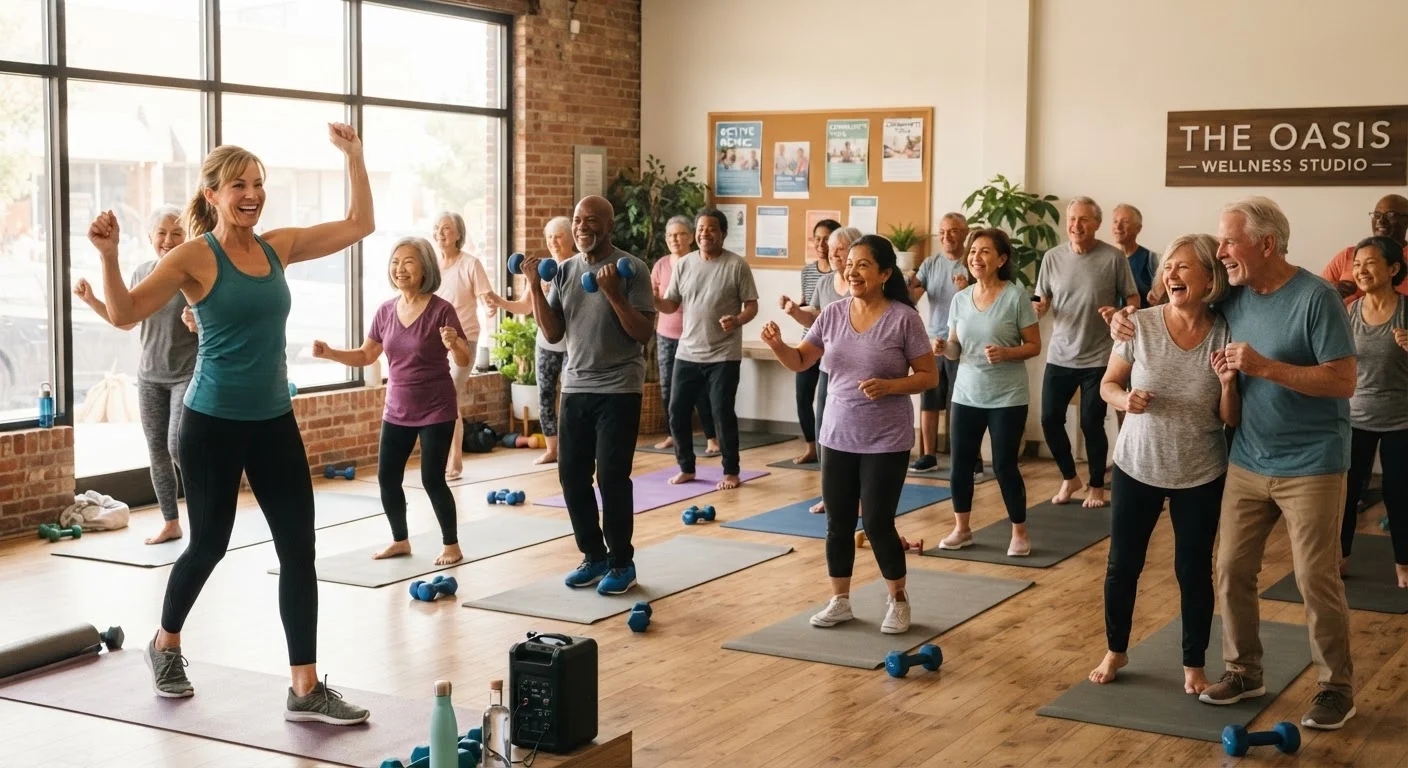
- Group fitness classes provide built-in social interaction, which research links to improved mental health and exercise adherence.
- Solo exercise offers greater flexibility in timing, intensity, and environment, which suits adults with variable schedules or health needs.
- Instructor-led classes typically offer structured programming and form guidance that solo exercisers must seek out independently.
- Loneliness and social isolation are genuine health risks for older adults, making the social dimension of exercise particularly meaningful.
- Many older adults benefit from blending both approaches rather than committing exclusively to one format.
Built-in accountability and structured scheduling
A class time on the calendar reduces the likelihood of skipping exercise. The social expectation of showing up — and being noticed if absent — is a documented motivator for sustained participation.
Social connection during physical activity
Group exercise provides regular, low-pressure interaction with peers, which supports emotional wellbeing alongside physical health — an especially meaningful benefit for older adults at risk of isolation.
Instructor guidance improves safety and form
Qualified instructors can cue technique, offer modifications for physical limitations, and recognize when a participant may be overdoing it — reducing injury risk compared to unsupervised exercise.
Structured progression and variety
Well-designed classes follow a logical warm-up, workout, and cool-down sequence, and rotate exercises to avoid plateau — programming most solo exercisers don't systematically apply on their own.
Motivating group energy and peer modeling
Exercising alongside others can elevate effort and enjoyment through what researchers call social facilitation. Seeing peers sustain activity can also shift an individual's perception of what's possible at their age.
Fixed schedules may not suit variable health needs
Older adults managing fatigue, chronic pain, or frequent medical appointments may find rigid class times difficult to maintain consistently, increasing the risk of missed sessions and dropout.
Class pace may not match individual capacity
Even in classes designed for older adults, intensity can vary widely. Following a group pace that exceeds one's current fitness level raises the risk of overexertion or injury.
Cost and access can be barriers
Gym memberships, studio fees, and transportation to class locations add up over time. In rural or underserved areas, appropriate group classes for older adults may simply not be available.
Social anxiety or hearing difficulties may reduce comfort
Some older adults find group settings stressful, particularly if they're new to exercise or have hearing loss that makes following verbal cues difficult in noisy environments.
Less personalization than solo or one-on-one training
An instructor managing a class of fifteen cannot consistently monitor every participant's form or adapt programming to individual medical histories, which may limit benefit for those with complex needs.
Our Verdict
Group fitness classes and solo exercise each bring real, evidence-supported benefits — and neither is universally superior. Group settings tend to strengthen consistency and social wellbeing, while solo training offers adaptability and personal control. The best routine is the one that fits an individual's health status, personality, and lifestyle well enough to sustain over time.
Older adults who struggle with motivation or social isolation are likely to benefit most from group classes, while those with specific medical needs, irregular schedules, or a strong preference for independence may find solo exercise more practical and sustainable.
Why the Choice Matters More as We Age
Physical activity is one of the most consistently supported strategies for healthy aging — linked to better cardiovascular function, maintained muscle mass, improved balance, and reduced cognitive decline risk. But how older adults exercise matters almost as much as whether they exercise at all.
The format of exercise affects not just physical outcomes but also enjoyment, safety, and long-term adherence — the factor most predictive of real-world health gains. Group fitness classes and solo workouts represent two fundamentally different approaches to staying active, each with meaningful trade-offs worth understanding before committing to a routine.
For a closer look at specific activity types suited to aging bodies, see our guide to low-impact activities that deliver real fitness gains.
The Case for Group Fitness Classes
Group exercise classes — whether water aerobics, chair yoga, tai chi, or low-impact cardio — offer a structure that many older adults find genuinely easier to follow than self-directed routines.
Built-in accountability and structured scheduling
A class time on the calendar reduces the likelihood of skipping exercise. The social expectation of showing up — and being noticed if absent — is a documented motivator for sustained participation.
Social connection during physical activity
Group exercise provides regular, low-pressure interaction with peers, which supports emotional wellbeing alongside physical health — an especially meaningful benefit for older adults at risk of isolation.
Instructor guidance improves safety and form
Qualified instructors can cue technique, offer modifications for physical limitations, and recognize when a participant may be overdoing it — reducing injury risk compared to unsupervised exercise.
Structured progression and variety
Well-designed classes follow a logical warm-up, workout, and cool-down sequence, and rotate exercises to avoid plateau — programming most solo exercisers don't systematically apply on their own.
Motivating group energy and peer modeling
Exercising alongside others can elevate effort and enjoyment through what researchers call social facilitation. Seeing peers sustain activity can also shift an individual's perception of what's possible at their age.
Social engagement during exercise may be particularly valuable for older adults. Research consistently identifies loneliness and social isolation as significant health risks in later life, and regular group participation can serve as a reliable touchpoint for human connection. To understand why that distinction matters beyond exercise, explore the difference between solitude and loneliness.
Instructors in group settings also tend to cue proper form and can modify exercises for participants with joint limitations or balance concerns — a layer of real-time guidance that solo exercisers don't automatically have.
The Case for Solo Exercise
Solo exercise — whether a morning walk, home strength routine, or independent swim — puts the individual in control of every variable: timing, intensity, duration, and environment. For older adults managing chronic conditions, recovery from injury, or unpredictable energy levels, that flexibility isn't a luxury — it's often a necessity.
Fixed schedules may not suit variable health needs
Older adults managing fatigue, chronic pain, or frequent medical appointments may find rigid class times difficult to maintain consistently, increasing the risk of missed sessions and dropout.
Class pace may not match individual capacity
Even in classes designed for older adults, intensity can vary widely. Following a group pace that exceeds one's current fitness level raises the risk of overexertion or injury.
Cost and access can be barriers
Gym memberships, studio fees, and transportation to class locations add up over time. In rural or underserved areas, appropriate group classes for older adults may simply not be available.
Social anxiety or hearing difficulties may reduce comfort
Some older adults find group settings stressful, particularly if they're new to exercise or have hearing loss that makes following verbal cues difficult in noisy environments.
Less personalization than solo or one-on-one training
An instructor managing a class of fifteen cannot consistently monitor every participant's form or adapt programming to individual medical histories, which may limit benefit for those with complex needs.
Exercising alone also removes the social pressure that some older adults find uncomfortable or intimidating in group settings. There's no performance anxiety, no keeping pace with others, and no need to adapt to a class schedule that may not align with medical appointments, fatigue patterns, or family obligations.
For those weighing where solo exercise fits — home versus a gym environment — this comparison of home and gym training covers the practical differences clearly.
~25%
Higher exercise adherence in group vs. solo settings
A study published in the Journal of the American Osteopathic Association found participants in group exercise programs showed meaningfully greater improvements in stress reduction and quality of life compared to solo exercisers.
50%
Older adults meeting physical activity guidelines
According to the CDC, fewer than half of U.S. adults aged 65 and older meet the recommended aerobic and muscle-strengthening activity guidelines, underscoring the importance of choosing formats that promote long-term participation.
Combining Both for a Sustainable Routine
The sharpest practical insight from research on exercise and aging is that adherence — consistently showing up over months and years — predicts outcomes far more reliably than any single workout format. For many older adults, a hybrid approach captures the best of both worlds: structured group sessions two or three times a week for social connection and guided programming, supplemented by independent activity on other days.
Cardio format is one area where this blending works well. A group water aerobics class twice weekly, paired with independent walks on alternate days, covers both social engagement and flexible self-pacing. Comparing walking, swimming, and cycling can help identify which independent cardio option best suits individual joint health and fitness goals.
Understanding what causes routines to break down is equally important. Common reasons older adults quit exercise — and how to build habits that last outlines realistic strategies for keeping momentum across both solo and group formats.
This article is for general informational purposes only and does not constitute medical advice. Older adults, particularly those managing chronic conditions or recovering from injury, should consult a qualified healthcare provider before beginning or significantly changing any exercise program.